
Maldives on a Budget – How to Plan Your Own Affordable Maldives Trip
The Maldives may be famous for luxury resorts, private islands and overwater villas, but an unforgettable Maldives holiday does not necessarily require a luxury budget. Independent travellers can stay on inhabited local islands, choose guesthouses and smaller hotels, eat in local restaurants, use speedboats or public ferries where practical and book excursions locally. This detailed guide explains how to organise your own Maldives trip, how to choose the right island, what costs to expect and where you can save money without missing the experiences that make the Maldives special.
Can the Maldives Really Be Affordable?
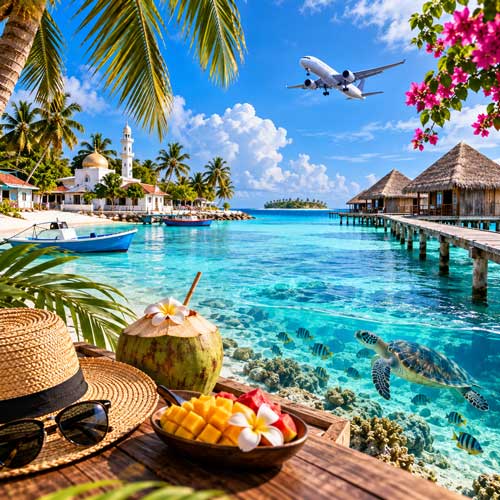
Yes. The Maldives has two very different tourism experiences. The image most travellers know is the private resort island with an overwater villa, private beach, restaurants and resort facilities. This can be spectacular, but it can also be expensive.
The alternative is staying on an inhabited local island. These islands are home to Maldivian communities and may have guesthouses, small hotels, local restaurants, cafés, dive centres and excursion operators.
Choosing a local island can dramatically change the structure of your travel budget because accommodation, meals and activities can often be purchased independently instead of as part of a resort package.
Local Island vs Resort Island – What Is the Difference?
A resort island is generally dedicated primarily to tourism. Accommodation, restaurants, activities and transfers are usually managed by the resort or its partners. This creates a convenient and controlled holiday experience, but guests have fewer opportunities to use competing local restaurants or accommodation providers.
A local island is an inhabited Maldivian community. Travellers stay alongside local residents and usually have a choice of guesthouses, restaurants and independent activity providers.
The local-island experience can therefore feel more independent and culturally connected, but visitors must also respect local customs and regulations.
What Is a Bikini Beach?
The Maldives is a Muslim-majority country and local islands follow local cultural and social rules. On inhabited islands, tourists should not assume that swimwear appropriate for a private resort is acceptable everywhere.
Many popular local islands have designated tourist beach areas commonly known as bikini beaches, where visitors can wear normal Western-style swimwear.
Outside designated tourist beach areas, travellers should dress respectfully and follow local rules. Before booking accommodation, check where the island's tourist beach is located and how easily it can be reached from your guesthouse.
Choosing the Right Local Island Is the Most Important Decision
There is no single best local island for every traveller. Some islands are close to Malé and inexpensive to reach. Others have better house reefs, quieter beaches, stronger diving opportunities or a more relaxed atmosphere.
Transfer cost and travel time should be considered together with hotel price. A guesthouse that appears €100 cheaper may not actually save money if reaching the island requires an expensive transfer.
Maafushi – One of the Easiest Islands for Independent Travellers
Maafushi became one of the best-known local islands for independent Maldives tourism. It has a large selection of guesthouses, hotels, restaurants, dive operators and excursion providers.
Competition between tourism businesses can make it easier to compare accommodation and activity prices. Excursions may include snorkelling, sandbank trips, dolphin cruises, diving and visits to nearby islands.
The trade-off is that Maafushi can feel busier and more developed than smaller local islands.
Thulusdhoo – A Good Option for Active Travellers
Thulusdhoo is known particularly for surfing and water-based activities. It can appeal to travellers who want more than simply lying on a beach.
Guesthouses, cafés and activity providers give independent travellers multiple choices, while its location can make access easier than reaching more distant atolls.
Check seasonal sea conditions if surfing or specific water activities are an important part of your trip.
Dhiffushi – Beach Holiday with a Local-Island Atmosphere
Dhiffushi is another option for travellers looking for attractive beaches without choosing a private resort. It can work well for couples and travellers who want a quieter holiday while retaining access to guesthouses and organised activities.
As with every local island, compare the location of your accommodation with the tourist beach, harbour and restaurants before booking.
Ukulhas – Beach and Snorkelling
Ukulhas is frequently considered by independent travellers looking for a combination of beach time, snorkelling and a relatively relaxed atmosphere.
When comparing accommodation, do not look only at room price. Check whether breakfast is included, how close the property is to the beach and whether the guesthouse can arrange reasonably priced transfers and excursions.
Rasdhoo – A Strong Choice for Diving
Rasdhoo can be particularly interesting for divers and travellers who want to spend a large part of their holiday in or under the water.
If diving is your priority, compare dive packages before choosing accommodation. Several dives purchased together may be priced differently from individual dives, and equipment rental can affect the final cost.
Dhigurah – For Marine-Life Experiences
Dhigurah is well known among travellers interested in marine life and has a long island shape with an attractive beach environment.
It is farther from Malé than some of the easiest budget islands, so transfer logistics and cost become more important. However, travellers may decide the additional journey is worthwhile for the location and available marine experiences.
Fulidhoo – For a Smaller-Island Feeling
Travellers who find the more developed local islands too busy may prefer a smaller island such as Fulidhoo. The atmosphere can feel more intimate and relaxed.
The disadvantage of a smaller tourism market is that there may be fewer restaurants, accommodation choices and excursion operators. Compare both price and available services before booking.
How to Choose Your Island Step by Step
Start with the experience you want rather than the hotel.
Step 1: Decide whether your priority is beach, snorkelling, diving, surfing, marine life or relaxation.
Step 2: Check transfer options from the airport.
Step 3: Compare total return transfer cost.
Step 4: Check the bikini beach location.
Step 5: Compare guesthouses and included meals.
Step 6: Research typical excursion availability.
Step 7: Calculate the total island cost rather than choosing the cheapest room.
Finding Affordable Flights from Europe to Malé
The international flight will often be one of the largest expenses of an independent Maldives trip. Search flights to Velana International Airport (MLE) and compare several departure airports if you have flexibility.
Direct flights can be convenient, but one-stop itineraries through major aviation hubs may provide more options. Always compare the final fare including baggage rather than only the advertised base price.
Check Nearby Departure Airports
If you live within reasonable travelling distance of several international airports, compare them. A different departure airport can sometimes reduce the long-haul fare enough to justify a train, bus or short positioning journey.
However, calculate the entire cost. Airport parking, additional baggage, hotels and separate positioning tickets can eliminate the apparent saving.
How Do You Get from Malé Airport to a Local Island?
After landing at Velana International Airport, you still need to reach your island. Depending on the destination, transportation may involve a public ferry, scheduled speedboat, private speedboat, domestic flight or, for some destinations and resorts, seaplane.
This is one of the most important logistical differences between planning a Maldives holiday and booking a normal city hotel.
Why You Should Check the Transfer Before Booking the Hotel
Do not book a non-refundable guesthouse simply because the room looks inexpensive. First determine exactly how you will reach the island.
Check the transfer timetable against your international flight arrival and departure times. If the final scheduled boat leaves before your flight lands, you may need an additional night near Malé or a more expensive private transfer.
The same problem can occur on departure if the first available boat does not reach the airport early enough for your flight.
Public Ferry vs Speedboat
Public ferries can be attractive to budget travellers because fares may be lower, but journey times are longer and schedules can be limited. Speedboats cost more but can save valuable holiday time and may operate more frequently on popular routes.
For a seven-day holiday, paying somewhat more for a faster transfer can sometimes be worthwhile because losing most of a day in each direction also has a value.
Accommodation – Guesthouses Change the Maldives Budget
The growth of guesthouse tourism on local islands changed the economics of independent Maldives travel. Instead of paying resort-level room prices, travellers can choose simple guesthouses, boutique properties and small hotels.
Facilities vary widely. Some rooms are basic, while newer guesthouses can provide air conditioning, private bathrooms, breakfast and modern interiors at prices far below luxury resort villas.
Check Taxes and Fees Before Comparing Hotels
Always compare the final payable accommodation price rather than the first nightly rate displayed in search results.
Taxes, tourism-related charges, service fees, meal plans and transfer costs can materially change the final amount. The exact structure can change over time, so verify the current total before confirming a booking.
Breakfast Included Can Be Worth More Than It Looks
When two guesthouses have similar prices, included breakfast can provide meaningful savings over a week. It also simplifies mornings before boat trips, diving or excursions.
Half-board may sometimes be useful on smaller islands with limited restaurants, but on islands with several local dining options it can reduce flexibility. Compare the price difference before automatically choosing a meal plan.
How Much Does Food Cost on a Local Island?
Food costs depend on the island and restaurant. Local cafés and simple restaurants can be much less expensive than dining inside a luxury resort.
A traveller using a mixture of local meals, cafés and occasional more tourist-oriented restaurants could plan approximately €20–40 per day for food as a broad starting estimate.
Seven days could therefore mean approximately €140–280 per person, depending on appetite and dining style.
Local Maldivian Food Worth Trying
Independent travel gives visitors more opportunities to try Maldivian food rather than eating exclusively from an international resort buffet.
Fish, especially tuna, is important in Maldivian cuisine. Coconut, rice, flatbreads and spicy flavours also appear frequently. Breakfast dishes and simple local meals can be an interesting part of the local-island experience.
What About Alcohol?
Local islands follow Maldivian laws and cultural rules regarding alcohol. Travellers should not expect alcohol to be available in the same way as on private resort islands.
Resort islands operate differently for international tourists. If alcohol is an important part of your holiday, understand the rules and availability before choosing a local-island trip.
Do You Need to Pay for the Beach?
One of the biggest advantages of a local-island holiday is that enjoying the sea and beach does not need to become an expensive daily activity.
A large part of a Maldives holiday can consist simply of swimming, relaxing, walking along the island and enjoying designated tourist beaches. This allows travellers to spend selectively on the experiences that matter most.
Snorkelling – One of the Best-Value Maldives Experiences
The Maldives is famous for its underwater environment. Depending on the island, snorkelling may be possible from accessible reef areas or through organised boat trips.
If snorkelling is a major priority, research the island's reef and access conditions before booking. A beautiful beach does not automatically mean that the best snorkelling is directly in front of your accommodation.
Sandbank Trips
A sandbank excursion is one of the classic Maldives experiences: a small area of white sand surrounded by turquoise ocean, sometimes with almost nothing else visible around it.
Local excursion operators may combine sandbanks with snorkelling, dolphin watching or lunch. Compare exactly what is included rather than comparing only the advertised price.
Dolphin Cruises
Dolphin-watching trips are widely associated with Maldives tourism. Sightings are wildlife encounters and therefore cannot be guaranteed.
When choosing an operator, consider trip duration, boat type, group size and responsible wildlife practices in addition to price.
Manta Rays and Whale Sharks
Some areas of the Maldives are particularly known for encounters with manta rays or whale sharks. Availability can depend on location and season.
If seeing specific marine animals is one of your main reasons for travelling, choose the island according to the relevant region and season rather than assuming every Maldives island offers identical wildlife experiences.
Scuba Diving
The Maldives is a major diving destination. Local islands with several dive centres can allow travellers to compare operators and packages.
Certified divers should compare the cost of individual dives with multi-dive packages and check whether equipment rental, boat fees and other charges are included.
Travellers interested in learning to dive should budget separately for training and certification.
Do You Need to Visit More Than One Island?
Not necessarily. Island hopping sounds attractive, but every move can add transfer costs, packing time and logistical complexity.
For a seven-day trip, staying on one carefully selected local island can provide better value and a more relaxing experience. For 10–14 days, combining two islands can make more sense.
Can You Visit a Luxury Resort Without Staying There?
Some travellers combine a local-island holiday with a resort experience through a day visit where such arrangements are available. Conditions, availability and inclusions vary by resort and operator.
This can provide a taste of the private-resort experience without paying for an entire week of resort accommodation. However, calculate transportation and day-access costs carefully before assuming it is inexpensive.
When Is the Maldives Cheapest?
Prices often reflect demand as well as weather. The most popular dry-season and holiday periods can bring higher accommodation and flight prices, while periods with a greater chance of rain may provide better offers.
Travelling outside peak demand can therefore reduce the cost, but lower prices may come with a greater risk of cloud, rain or unsettled weather.
Does Rainy Season Mean It Rains All Day?
Tropical weather is more complicated than a simple rainy-season label. Rain can arrive in showers or longer periods, and conditions can vary from island to island and from one year to another.
Choosing a lower-cost period means accepting some weather uncertainty. Do not interpret a cheaper wet-season rate as a guarantee of either bad weather or continuous sunshine.
When Should You Book?
Flights and accommodation for high-demand periods should generally be researched well in advance. For flexible travel dates, compare several weeks rather than searching only one fixed departure date.
Do not book the flight, hotel and island transfer independently without checking that the schedules work together.
What Does a €1,000 Maldives Trip Require?
Getting close to a total budget of €1,000 per person is possible only under favourable conditions. The international flight needs to be inexpensive, accommodation should be a reasonably priced local-island guesthouse, transfers should remain simple and paid activities need to be limited.
This should therefore be viewed as a budget challenge rather than a price that every traveller can reproduce on every date.
What Can Push the Budget Much Higher?
The biggest budget risks are expensive flights, premium accommodation, distant-island transfers, seaplanes, private boats, frequent diving, multiple excursions and travelling during peak holiday periods.
Food and drinks can also become a major expense if the trip shifts from local-island restaurants towards resort dining.
Do Not Compare Only the Hotel Price
The cheapest hotel does not necessarily create the cheapest holiday.
Imagine one guesthouse costs €300 for the week but requires an expensive transfer, while another costs €380 but can be reached by an affordable scheduled speedboat. The second property could produce the lower total holiday cost.
Always calculate flight + accommodation + transfer + food + activities together.
Budget Maldives for Couples
Couples can have an advantage because the accommodation cost of a double room is shared between two people. This can reduce the effective per-person cost compared with a solo traveller paying for an entire room.
Private transfers and some activities may also become more economical per person when costs are shared, although this depends on the provider.
Budget Maldives for Solo Travellers
Solo travellers should pay particular attention to accommodation pricing because there may be no meaningful single-person discount on a double room.
Joining group snorkelling trips and shared speedboat transfers can help control costs. Local islands with more tourism infrastructure may offer more opportunities to join existing groups.
Maldives with Children
A local-island Maldives holiday can also work for families, but convenience becomes particularly important. Check walking distances, beach access, boat-transfer duration, room configuration and food options before booking.
A slightly more expensive island with an easier transfer may be a better family choice than the absolute cheapest accommodation on a difficult-to-reach island.
Do You Need Cash?
Payment options vary between islands and businesses. Hotels and larger tourism providers may accept cards, while smaller purchases can sometimes be easier with cash.
Before travelling, check the current payment situation for your specific island and accommodation. Do not assume that every small restaurant, boat operator or shop accepts the same payment methods.
Internet in the Maldives
Mobile internet can be surprisingly useful even on a beach-focused holiday. Travellers may need connectivity for accommodation messages, boat-transfer information, weather forecasts, maps, airline notifications and communicating with excursion providers.
Wi-Fi may be available at accommodation, but having your own mobile data connection provides greater independence when away from the hotel.
Install Your eSIM Carefully
Check that your phone supports eSIM before purchase. Read the activation conditions of the selected package because some eSIM plans begin at purchase or installation while others start after connecting to the supported destination network.
Keep the QR code or installation information available and do not delete an installed travel eSIM unless you are certain it is no longer needed.
Useful Apps and Digital Tools
Before departure, prepare the tools you may need for airline information, accommodation bookings, maps, weather, messaging and currency conversion.
Download important reservations and travel documents for offline access as well. Mobile internet is useful, but essential travel information should not exist only inside an online account.
Sample 7-Day Independent Maldives Itinerary
Day 1: Arrive at Velana International Airport and transfer to your local island.
Day 2: Bikini beach, island walk and snorkelling.
Day 3: Organised snorkelling and sandbank excursion.
Day 4: Free beach day and local-island exploration.
Day 5: Marine-life excursion, diving or dolphin cruise.
Day 6: Relaxation, snorkelling and sunset.
Day 7: Transfer back to the airport and departure.
Keeping the itinerary centred on one island reduces unnecessary transfer costs.
Sample 10-Day Independent Maldives Itinerary
Days 1–4: First local island with beach, snorkelling and one excursion.
Day 5: Transfer to a second island if transport connections make sense.
Days 6–9: Different beach environment, diving, marine-life experience or relaxation.
Day 10: Return to Malé / airport and departure.
With ten days, combining two islands becomes more reasonable because the transfer consumes a smaller percentage of the total holiday.
Common Budget Maldives Mistake #1 – Booking the Cheapest Room First
Travellers sometimes see a low hotel price and book immediately. Only afterwards do they discover that the island is expensive or difficult to reach.
Reverse the process: choose suitable islands, check transfers, then compare accommodation.
Common Budget Maldives Mistake #2 – Ignoring Transfer Times
A cheap scheduled transfer is useful only if it operates when you need it. International flights arriving late or departing early can create additional accommodation or private-transfer costs.
Build the international flight and island transport into one timetable before paying for non-refundable reservations.
Common Budget Maldives Mistake #3 – Trying to Visit Too Many Islands
Every island change can involve another boat, another timetable and another transfer fee. On a short trip, excessive island hopping can cost both money and valuable beach time.
For seven days, one excellent island is often better than three rushed islands.
Common Budget Maldives Mistake #4 – Expecting a Local Island to Be a Resort
A local island provides a different experience from a private resort. There are local homes, community life, cultural expectations and designated tourist areas.
Travellers who understand this difference before booking are much more likely to appreciate the advantages of independent Maldives travel.
Common Budget Maldives Mistake #5 – Forgetting the Final Price
Always look beyond headline prices. Accommodation taxes and charges, baggage, transfers, equipment rental, excursions and other extras can change the total substantially.
Maintain one simple trip budget showing every expected expense in the same currency.
Can you visit the Maldives cheaply?
Yes. Staying on a local island in a guesthouse, eating in local restaurants and using shared transport can make the Maldives considerably more accessible than a traditional luxury-resort holiday. The international flight and island transfer remain important parts of the budget.
How much does one week in the Maldives cost?
For independent local-island travel, a broad planning range can be approximately €975–2,180 per person plus mobile internet and other personal expenses, including an estimated flight from Europe, seven nights of guesthouse accommodation, transfers, food and several activities. Actual prices can be lower or substantially higher depending on dates and travel style.
Can you travel to the Maldives for around €1,000?
It can be possible under favourable conditions, particularly with a low airfare, inexpensive guesthouse, affordable island transfer and limited paid excursions. However, €1,000 should be treated as a budget target rather than a guaranteed price.
What is the cheapest way to stay in the Maldives?
Local-island guesthouses are generally the first category budget-conscious travellers should research. Compare the final accommodation price together with the cost of reaching the island rather than choosing a room based only on its nightly rate.
What is a local island in the Maldives?
A local island is an inhabited Maldivian island where residents live and where tourism may include guesthouses, small hotels, restaurants and activity providers. It is different from a private resort island dedicated primarily to tourism.
Can you wear a bikini on a local island?
Tourist swimwear is generally associated with designated tourist beach areas commonly called bikini beaches on local islands. Travellers should dress respectfully outside designated areas and follow the current rules of the island they are visiting.
Is Maafushi good for a budget Maldives trip?
Maafushi is one of the best-known local islands for independent tourism and has numerous accommodation, restaurant and excursion options. This can make price comparison easier, although travellers seeking a very quiet or undeveloped island atmosphere may prefer another island.
Is a public ferry cheaper than a speedboat?
Public ferry services can be lower-cost where suitable routes and schedules are available. Speedboats are generally faster and may offer more practical schedules. The best option depends on the island, international flight times and how much holiday time you are willing to spend travelling.
How many islands should I visit in one week?
For a seven-day trip, staying primarily on one carefully chosen island can reduce transfer costs and maximise beach time. Island hopping becomes more practical on longer trips.
Do I need mobile internet in the Maldives?
It is not mandatory, but mobile internet can be useful for boat-transfer information, maps, accommodation communication, airline updates, weather information and contacting excursion providers.
Can I use an eSIM in the Maldives?
Compatible phones can use supported travel eSIM packages in the Maldives. Data allowance, validity, activation rules, network access and other conditions depend on the selected package. Check the current Maldives eSIM offers before travelling.
Is the Maldives suitable for independent travel?
Yes, particularly on established local islands with guesthouses and regular tourist services. Independent travel requires more planning than a complete resort package because the traveller is responsible for coordinating flights, island transfers, accommodation and activities.
Is a Maldives resort always better than a local island?
They provide different experiences. Resorts focus on privacy, facilities and an integrated holiday environment. Local islands can offer lower-cost accommodation, local restaurants and closer contact with everyday island life. The right choice depends on the type of holiday you want.