
Bałkany samochodem – Internet mobilny, roaming i eSIM kraj po kraju
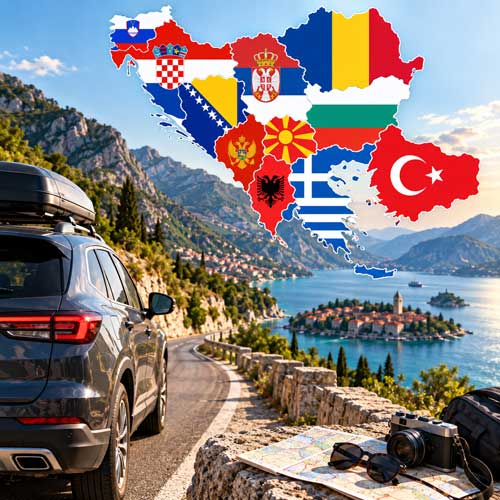
Podróż samochodem po Bałkanach może przenieść Cię przez kilka krajów w zaledwie kilka dni. Wyzwaniem jest to, że zasady roamingu mobilnego mogą zmieniać się za każdym razem, gdy przekraczasz granicę. Niektóre miejsca docelowe są objęte systemem EU Roam Like at Home, a inne nie. Ten przewodnik wyjaśnia internet mobilny, roaming, przekraczanie granic, nawigację i korzystanie z eSIM w Albanii, Bośni i Hercegowinie, Bułgarii, Chorwacji, Grecji, Macedonii Północnej, Czarnogórze, Rumunii, Serbii, Słowenii i Turcji.
Dlaczego mobilny internet ma znaczenie podczas road tripu po Bałkanach
Niezawodne połączenie mobilne jest szczególnie przydatne podczas podróżowania samochodem po Bałkanach. Możesz potrzebować danych mobilnych do nawigacji, informacji o ruchu na żywo, rezerwacji noclegów, wyszukiwania restauracji, stacji paliw, informacji o parkowaniu, pogody, tłumaczenia i komunikacji.
Podczas przekraczania kilku krajów zarządzanie łącznością mobilną może stać się bardziej skomplikowane niż podczas wakacji w jednym kraju.
Roaming w UE a Bałkany
System „Roam Like at Home” Unii Europejskiej pozwala uprawnionym klientom korzystać z usług mobilnych podczas podróży na objętym obszarze na regulowanych warunkach roamingu, z zastrzeżeniem obowiązujących zasad uczciwego korzystania.
Jednak kilka popularnych kierunków bałkańskich znajduje się poza obszarem „Roam Like at Home” UE. To jedna z najważniejszych rzeczy, które należy zrozumieć przed rozpoczęciem podróży samochodowej po Bałkanach obejmującej wiele krajów.
Albania – Mobile Internet & Roaming
Albania is a popular road-trip destination for its Adriatic and Ionian coastline, mountain scenery and routes connecting Montenegro with Greece.
Albania is not currently part of the EU Roam Like at Home area. Travellers using their home SIM should therefore check their operator's Albania roaming rates before enabling mobile data.
Albania is included in the Balkans eSIM coverage.
Bosnia and Herzegovina – Mobile Internet & Roaming
Bosnia and Herzegovina is frequently included in road trips through Croatia, Montenegro and Serbia. Popular stops include Sarajevo, Mostar and the surrounding mountain regions.
Bosnia and Herzegovina is not currently part of the EU Roam Like at Home area. Do not assume that an EU home SIM will continue under the same roaming conditions after crossing the border from Croatia.
Bosnia and Herzegovina is included in the Balkans eSIM coverage.
Bulgaria – Mobile Internet & Roaming
Bulgaria is an EU member state and is within the EU Roam Like at Home framework. It is also an important road-trip gateway between Central and Eastern Europe, Greece and Turkey.
Bulgaria is included in the Balkans eSIM coverage.
Croatia – Mobile Internet & Roaming
Croatia is one of the most popular road-trip destinations in Southeast Europe, with routes along the Adriatic coast and connections towards Slovenia, Bosnia and Herzegovina, Montenegro and Serbia.
Croatia is an EU member state and is within the EU Roam Like at Home framework.
Croatia is also included in the Balkans eSIM coverage.
Greece – Mobile Internet & Roaming
Greece is a common final destination on road trips through Albania, North Macedonia or Bulgaria. Mobile data is especially useful for navigation between mainland destinations, accommodation searches and ferry information.
Greece is an EU member state and is within the EU Roam Like at Home framework.
Greece is included in the Balkans eSIM coverage.
North Macedonia – Mobile Internet & Roaming
North Macedonia lies on an important road corridor between Serbia and Greece and is also a destination in its own right, with Skopje and Lake Ohrid among the best-known stops.
North Macedonia is not currently part of the EU Roam Like at Home area. Check your home operator's roaming rates before using your regular SIM for mobile data.
North Macedonia is included in the Balkans eSIM coverage.
Montenegro – Mobile Internet & Roaming
Montenegro is a classic Adriatic road-trip destination, particularly around Kotor, Budva and the mountainous interior. It is frequently combined with Croatia, Bosnia and Herzegovina and Albania.
Montenegro is not currently part of the EU Roam Like at Home area.
Montenegro is included in the Balkans eSIM coverage.
Romania – Mobile Internet & Roaming
Romania offers major road-trip routes through Transylvania, the Carpathians and towards Bulgaria and the Black Sea.
Romania is an EU member state and is within the EU Roam Like at Home framework.
Romania is included in the Balkans eSIM coverage.
Serbia – Mobile Internet & Roaming
Serbia is an important road connection between Central Europe and destinations such as Montenegro, Bulgaria, North Macedonia and Greece.
Serbia is not currently part of the EU Roam Like at Home area. Travellers relying on a home SIM should check their operator's Serbia roaming tariff before using mobile data.
Serbia is included in the Balkans eSIM coverage.
Slovenia – Mobile Internet & Roaming
Slovenia is a popular starting point or transit destination for road trips towards Croatia and the Adriatic coast.
Slovenia is an EU member state and is within the EU Roam Like at Home framework.
Slovenia is included in the Balkans eSIM coverage.
Turkey – Mobile Internet & Roaming
Turkey is a major road-trip destination and can be reached overland through Bulgaria or Greece. Istanbul is a common destination, while longer trips may continue towards the Aegean and Mediterranean coasts or central Turkey.
Turkey is not part of the EU Roam Like at Home area. Home-SIM roaming prices can therefore differ significantly depending on the operator.
Turkey is included in the Balkans eSIM coverage.
Crossing Borders – Watch Which Mobile Network You Are Using
When travelling by car, your phone can automatically search for and connect to available mobile networks as you approach or cross a border.
This normally makes connectivity convenient, but it also means you should understand which SIM is providing your mobile data and which roaming rules apply.
Check the Network Name After Crossing a Border
After entering a new country, look at the network name shown by your phone if you are uncertain which network is being used.
If you are using a regional travel eSIM, allow the device time to register on a supported local network after crossing the border.
Using Dual SIM on a Balkan Road Trip
Dual SIM can be particularly useful when travelling through several countries. You can keep your normal SIM active for your usual phone number while using a travel eSIM for mobile data.
However, check your phone settings carefully and make sure the intended eSIM is selected for mobile data.
Google Maps on a Balkan Road Trip
Google Maps can be extremely useful for navigation, accommodation, restaurants, fuel stations and attractions during a Balkan road trip.
Mobile data allows maps and traffic information to update while travelling, but downloading important areas for offline use before departure is a useful backup.
Waze and Live Traffic
Waze and other online navigation services can provide live traffic information, route changes and road alerts where supported.
Because these features depend on connectivity, having mobile data available across borders can make a multi-country road trip easier.
Do You Need Mobile Data at Border Crossings?
Mobile internet can be useful around border crossings for navigation, checking accommodation, communicating with hosts and adjusting your route.
However, coverage and congestion can vary, so important travel documents and essential information should also be available offline.
How Much Data Do You Need for a Balkan Road Trip?
Navigation itself is usually much less data-intensive than continuous video streaming. The amount of data you need therefore depends mainly on what else you do while travelling.
A driver using maps, messaging and occasional browsing has very different requirements from passengers watching YouTube or TikTok for several hours.
Passengers Can Use More Data Than the Driver
The driver may mainly use navigation and messaging, while passengers stream music, watch YouTube, browse TikTok or use social media throughout the journey.
If several people share one connection through hotspot, calculate the likely usage of the whole group rather than only the driver.
Using a Hotspot in the Car
A travel eSIM can potentially be useful for connecting a tablet or laptop during a road trip where hotspot is supported by the package.
Hotspot use can increase data consumption quickly, particularly when passengers stream video or a laptop downloads updates. Always check the hotspot conditions of the specific eSIM.
Mobile Coverage in Mountains and Remote Areas
The Balkans include extensive mountain ranges, rural roads, national parks and remote coastal areas. Mobile coverage can therefore vary along a route.
Even a good travel eSIM cannot create coverage where the available local mobile network has no usable signal. Keep important maps and travel information available offline.
Do You Need a Different SIM in Every Balkan Country?
Not necessarily. A regional travel eSIM can cover several destinations under one package, depending on its coverage list.
This can be particularly convenient for road trips because you do not need to search for a new local data solution every time you cross a border.
Install Your eSIM Before the Road Trip
Installing your travel eSIM before departure can make the first border crossing easier. Follow the activation instructions supplied with your specific eSIM because activation rules can differ between products.
Do not delete an installed eSIM simply because it does not connect immediately after crossing a border. First check the mobile-data line, data roaming settings and network registration.
Does EU roaming work in Serbia?
Serbia is not currently part of the EU Roam Like at Home area. Your home mobile operator may offer its own Serbia roaming package or special tariff, so check the applicable conditions before travelling.
Does EU roaming work in Montenegro?
Montenegro is not currently part of the EU Roam Like at Home area. Check your mobile operator's Montenegro roaming prices before using your home SIM for mobile data.
Does EU roaming work in Albania?
Albania is not currently part of the EU Roam Like at Home area. The EU has begun a process aimed at potentially extending the system to Western Balkan partners, but travellers should currently check their own operator's Albania roaming conditions.
Does EU roaming work in Bosnia and Herzegovina?
Bosnia and Herzegovina is not currently part of the EU Roam Like at Home area. Check the roaming conditions of your home operator before using mobile data there.
Does EU roaming work in North Macedonia?
North Macedonia is not currently part of the EU Roam Like at Home area. Travellers should check their home operator's roaming tariff or use another suitable mobile-data solution.
Does EU roaming work in Turkey?
Turkey is not part of the EU Roam Like at Home area. Roaming prices and packages depend on your home mobile operator, so check the conditions before travelling.
Can I use one eSIM across the Balkans?
Yes, if the regional eSIM specifically includes the countries on your route. The Balkans eSIM featured in this guide covers Albania, Bosnia and Herzegovina, Bulgaria, Croatia, Greece, North Macedonia, Montenegro, Romania, Serbia, Slovenia and Turkey.
Will my eSIM change networks when I cross a border?
A travel eSIM can register on supported partner networks in each covered destination. Network registration may take a short time after crossing a border. Keep automatic network selection enabled unless your eSIM provider gives different instructions.
Can I use Google Maps with a Balkans eSIM?
Yes, mobile data can be used for online navigation services such as Google Maps where your eSIM has a working data connection. Downloading offline maps as a backup is still recommended for remote areas or temporary coverage gaps.
How much mobile data do I need for a Balkan road trip?
For light navigation and messaging, a relatively small package may be enough. Regular social media and streaming require more. As a broad guide, 5–10 GB can suit lighter users, 10–20 GB can provide more flexibility, while heavy video, hotspot use or long journeys may require 50 GB or more.