
Bálcãs de carro – Internet móvel, roaming e eSIM país por país
Uma viagem de carro pelos Bálcãs pode levá-lo a vários países em apenas alguns dias. O desafio é que as regras de roaming móvel podem mudar cada vez que você cruza uma fronteira. Alguns destinos são cobertos pelo sistema EU Roam Like at Home, enquanto outros não. Este guia explica internet móvel, roaming, travessias de fronteira, navegação e uso de eSIM na Albânia, Bósnia e Herzegovina, Bulgária, Croácia, Grécia, Macedônia do Norte, Montenegro, Romênia, Sérvia, Eslovênia e Turquia.
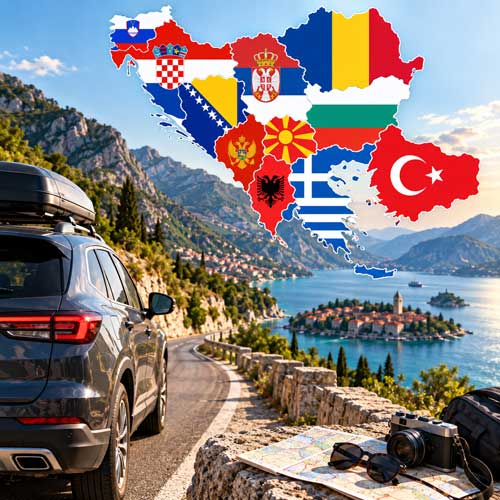
Porque é que a internet móvel é importante numa viagem de carro pelos Balcãs
Uma ligação móvel fiável é particularmente útil quando se viaja de carro pelos Balcãs. Podes precisar de dados móveis para navegação, trânsito em tempo real, reservas de alojamento, pesquisa de restaurantes, postos de combustível, informações de estacionamento, meteorologia, tradução e comunicação.
Ao atravessar vários países, gerir a conectividade móvel pode tornar-se mais complicado do que numa viagem a um único país.
Roaming da UE e os Balcãs
O sistema «Roam Like at Home» da União Europeia permite que os clientes elegíveis utilizem serviços móveis durante as viagens dentro da área abrangida, sob condições de roaming regulamentadas, sujeitas às regras de utilização razoável aplicáveis.
No entanto, vários destinos populares dos Balcãs estão fora da área «Roam Like at Home» da UE. Esta é uma das coisas mais importantes a compreender antes de iniciar uma viagem rodoviária pelos Balcãs que abranja vários países.
Albânia – Internet móvel e roaming
A Albânia é um destino popular para viagens de carro pela sua costa adriática e jónica, paisagens montanhosas e rotas que ligam Montenegro à Grécia.
A Albânia não faz atualmente parte da área Roam Like at Home da UE. Os viajantes que utilizam o seu SIM de origem devem, por isso, verificar as tarifas de roaming na Albânia do seu operador antes de ativarem os dados móveis.
A Albânia está incluída na cobertura eSIM dos Balcãs.
Bósnia e Herzegovina – Internet móvel e roaming
A Bósnia e Herzegovina é frequentemente incluída em viagens rodoviárias pela Croácia, Montenegro e Sérvia. Paradas populares incluem Sarajevo, Mostar e as regiões montanhosas ao redor.
A Bósnia e Herzegovina atualmente não faz parte da área Roam Like at Home da UE. Não presuma que um SIM nacional da UE continuará sob as mesmas condições de roaming após cruzar a fronteira da Croácia.
A Bósnia e Herzegovina está incluída na cobertura eSIM dos Balcãs.
Bulgária – Internet móvel e roaming
A Bulgária é um Estado-Membro da UE e está abrangida pelo quadro da UE Roam Like at Home. É também uma importante porta de entrada para viagens rodoviárias entre a Europa Central e Oriental, a Grécia e a Turquia.
A Bulgária está incluída na cobertura eSIM dos Balcãs.
Croácia – Internet móvel e roaming
A Croácia é um dos destinos de road trip mais populares do Sudeste da Europa, com rotas ao longo da costa adriática e ligações para a Eslovénia, Bósnia e Herzegovina, Montenegro e Sérvia.
A Croácia é um Estado-Membro da UE e está abrangida pelo quadro da UE Roam Like at Home.
A Croácia também está incluída na cobertura eSIM dos Balcãs.
Grécia – Internet móvel e roaming
A Grécia é um destino final comum em viagens de carro através da Albânia, Macedónia do Norte ou Bulgária. Os dados móveis são especialmente úteis para navegação entre destinos continentais, procura de alojamento e informações sobre ferries.
A Grécia é um Estado-Membro da UE e está abrangida pelo quadro Roam Like at Home da UE.
A Grécia está incluída na cobertura eSIM dos Balcãs.
Macedónia do Norte – Internet móvel e roaming
A Macedónia do Norte fica num importante corredor rodoviário entre a Sérvia e a Grécia e é também um destino por direito próprio, com Skopje e o Lago Ohrid entre as paragens mais conhecidas.
A Macedónia do Norte não faz atualmente parte da área Roam Like at Home da UE. Verifique as tarifas de roaming do seu operador de origem antes de usar o seu SIM habitual para dados móveis.
A Macedónia do Norte está incluída na cobertura eSIM dos Balcãs.
Montenegro – Internet móvel e roaming
Montenegro é um destino clássico de road trip no Adriático, especialmente em torno de Kotor, Budva e no interior montanhoso. É frequentemente combinado com a Croácia, Bósnia e Herzegovina e Albânia.
Montenegro atualmente não faz parte da área Roam Like at Home da UE.
Montenegro está incluído na cobertura eSIM dos Balcãs.
Romania – Mobile Internet & Roaming
Romania offers major road-trip routes through Transylvania, the Carpathians and towards Bulgaria and the Black Sea.
Romania is an EU member state and is within the EU Roam Like at Home framework.
Romania is included in the Balkans eSIM coverage.
Serbia – Mobile Internet & Roaming
Serbia is an important road connection between Central Europe and destinations such as Montenegro, Bulgaria, North Macedonia and Greece.
Serbia is not currently part of the EU Roam Like at Home area. Travellers relying on a home SIM should check their operator's Serbia roaming tariff before using mobile data.
Serbia is included in the Balkans eSIM coverage.
Slovenia – Mobile Internet & Roaming
Slovenia is a popular starting point or transit destination for road trips towards Croatia and the Adriatic coast.
Slovenia is an EU member state and is within the EU Roam Like at Home framework.
Slovenia is included in the Balkans eSIM coverage.
Turkey – Mobile Internet & Roaming
Turkey is a major road-trip destination and can be reached overland through Bulgaria or Greece. Istanbul is a common destination, while longer trips may continue towards the Aegean and Mediterranean coasts or central Turkey.
Turkey is not part of the EU Roam Like at Home area. Home-SIM roaming prices can therefore differ significantly depending on the operator.
Turkey is included in the Balkans eSIM coverage.
Crossing Borders – Watch Which Mobile Network You Are Using
When travelling by car, your phone can automatically search for and connect to available mobile networks as you approach or cross a border.
This normally makes connectivity convenient, but it also means you should understand which SIM is providing your mobile data and which roaming rules apply.
Check the Network Name After Crossing a Border
After entering a new country, look at the network name shown by your phone if you are uncertain which network is being used.
If you are using a regional travel eSIM, allow the device time to register on a supported local network after crossing the border.
Using Dual SIM on a Balkan Road Trip
Dual SIM can be particularly useful when travelling through several countries. You can keep your normal SIM active for your usual phone number while using a travel eSIM for mobile data.
However, check your phone settings carefully and make sure the intended eSIM is selected for mobile data.
Google Maps on a Balkan Road Trip
Google Maps can be extremely useful for navigation, accommodation, restaurants, fuel stations and attractions during a Balkan road trip.
Mobile data allows maps and traffic information to update while travelling, but downloading important areas for offline use before departure is a useful backup.
Waze and Live Traffic
Waze and other online navigation services can provide live traffic information, route changes and road alerts where supported.
Because these features depend on connectivity, having mobile data available across borders can make a multi-country road trip easier.
Do You Need Mobile Data at Border Crossings?
Mobile internet can be useful around border crossings for navigation, checking accommodation, communicating with hosts and adjusting your route.
However, coverage and congestion can vary, so important travel documents and essential information should also be available offline.
How Much Data Do You Need for a Balkan Road Trip?
Navigation itself is usually much less data-intensive than continuous video streaming. The amount of data you need therefore depends mainly on what else you do while travelling.
A driver using maps, messaging and occasional browsing has very different requirements from passengers watching YouTube or TikTok for several hours.
Passengers Can Use More Data Than the Driver
The driver may mainly use navigation and messaging, while passengers stream music, watch YouTube, browse TikTok or use social media throughout the journey.
If several people share one connection through hotspot, calculate the likely usage of the whole group rather than only the driver.
Using a Hotspot in the Car
A travel eSIM can potentially be useful for connecting a tablet or laptop during a road trip where hotspot is supported by the package.
Hotspot use can increase data consumption quickly, particularly when passengers stream video or a laptop downloads updates. Always check the hotspot conditions of the specific eSIM.
Mobile Coverage in Mountains and Remote Areas
The Balkans include extensive mountain ranges, rural roads, national parks and remote coastal areas. Mobile coverage can therefore vary along a route.
Even a good travel eSIM cannot create coverage where the available local mobile network has no usable signal. Keep important maps and travel information available offline.
Do You Need a Different SIM in Every Balkan Country?
Not necessarily. A regional travel eSIM can cover several destinations under one package, depending on its coverage list.
This can be particularly convenient for road trips because you do not need to search for a new local data solution every time you cross a border.
Install Your eSIM Before the Road Trip
Installing your travel eSIM before departure can make the first border crossing easier. Follow the activation instructions supplied with your specific eSIM because activation rules can differ between products.
Do not delete an installed eSIM simply because it does not connect immediately after crossing a border. First check the mobile-data line, data roaming settings and network registration.
Does EU roaming work in Serbia?
Serbia is not currently part of the EU Roam Like at Home area. Your home mobile operator may offer its own Serbia roaming package or special tariff, so check the applicable conditions before travelling.
Does EU roaming work in Montenegro?
Montenegro is not currently part of the EU Roam Like at Home area. Check your mobile operator's Montenegro roaming prices before using your home SIM for mobile data.
Does EU roaming work in Albania?
Albania is not currently part of the EU Roam Like at Home area. The EU has begun a process aimed at potentially extending the system to Western Balkan partners, but travellers should currently check their own operator's Albania roaming conditions.
Does EU roaming work in Bosnia and Herzegovina?
Bosnia and Herzegovina is not currently part of the EU Roam Like at Home area. Check the roaming conditions of your home operator before using mobile data there.
Does EU roaming work in North Macedonia?
North Macedonia is not currently part of the EU Roam Like at Home area. Travellers should check their home operator's roaming tariff or use another suitable mobile-data solution.
Does EU roaming work in Turkey?
Turkey is not part of the EU Roam Like at Home area. Roaming prices and packages depend on your home mobile operator, so check the conditions before travelling.
Can I use one eSIM across the Balkans?
Yes, if the regional eSIM specifically includes the countries on your route. The Balkans eSIM featured in this guide covers Albania, Bosnia and Herzegovina, Bulgaria, Croatia, Greece, North Macedonia, Montenegro, Romania, Serbia, Slovenia and Turkey.
Will my eSIM change networks when I cross a border?
A travel eSIM can register on supported partner networks in each covered destination. Network registration may take a short time after crossing a border. Keep automatic network selection enabled unless your eSIM provider gives different instructions.
Can I use Google Maps with a Balkans eSIM?
Yes, mobile data can be used for online navigation services such as Google Maps where your eSIM has a working data connection. Downloading offline maps as a backup is still recommended for remote areas or temporary coverage gaps.
How much mobile data do I need for a Balkan road trip?
For light navigation and messaging, a relatively small package may be enough. Regular social media and streaming require more. As a broad guide, 5–10 GB can suit lighter users, 10–20 GB can provide more flexibility, while heavy video, hotspot use or long journeys may require 50 GB or more.