
Thailand Travel Guide 2026 – Complete Guide to Beaches, Islands, Costs, Culture & Internet
Planning a trip to Thailand? This complete Thailand travel guide covers everything you need to know before you go: the best places to visit, Bangkok, Phuket, Krabi, Chiang Mai, tropical islands, beaches, temples, Thai culture, weather, accommodation, travel costs, food, transport, mobile networks, 4G and 5G coverage, eSIM options and practical travel tips. Whether you are visiting Thailand for one week or staying for a month, use this guide to plan your journey.
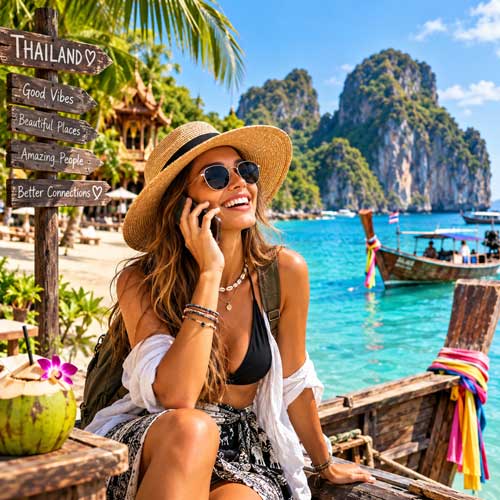
Why Visit Thailand?
Thailand is one of Southeast Asia's most diverse travel destinations. Visitors can combine tropical islands and beaches with historic temples, mountain landscapes, national parks, street food, modern cities and traditional Thai culture. Thailand works equally well for backpackers, couples, families, luxury travellers and digital nomads.
Best Time to Visit Thailand
Thailand can be visited throughout the year, but the best time depends on the region. Many travellers prefer the generally cooler and drier months for sightseeing and beach holidays. Tropical temperatures remain common throughout the year, while rainfall and humidity increase during monsoon periods.
Thailand Weather and Monsoon Seasons
Thailand has a tropical climate, but weather patterns are not identical across the country. Bangkok, northern Thailand, the Andaman coast and the Gulf islands can experience different rainfall patterns. Travellers planning island hopping, diving or boat excursions should check the local forecast for their specific destination rather than relying on a single national weather forecast.
Thailand in High Season vs Low Season
High season usually brings more favourable weather in many popular destinations but also higher hotel prices and larger crowds. Travelling during shoulder or green season can mean cheaper accommodation and fewer visitors, although tropical rain and rougher sea conditions can affect some island excursions.
Bangkok – Thailand's Vibrant Capital
Bangkok is one of Asia's most exciting cities. Historic temples and royal buildings sit alongside skyscrapers, rooftop bars, enormous shopping centres, local markets and some of the world's most famous street food. Most first-time visitors should allow several days to explore the city.
Grand Palace and Wat Phra Kaew
The Grand Palace is one of Bangkok's most important landmarks. Inside the complex is Wat Phra Kaew, the Temple of the Emerald Buddha. Visitors should wear respectful clothing covering shoulders and knees and follow local rules at religious sites.
Wat Pho and the Reclining Buddha
Wat Pho is famous for its enormous reclining Buddha and is located close to the Grand Palace. It is one of Bangkok's essential temple experiences and can easily be combined with nearby historic attractions.
Wat Arun – Temple of Dawn
Wat Arun is located beside the Chao Phraya River and is one of Bangkok's most recognisable landmarks. Its distinctive central tower makes it especially impressive from the opposite side of the river.
Bangkok Chinatown and Yaowarat
Bangkok's Chinatown is famous for markets, traditional shops and food. Yaowarat Road becomes particularly lively after sunset and is one of the city's most popular areas for exploring Thai-Chinese street food.
Bangkok Markets and Shopping
Bangkok offers everything from street markets and Chatuchak Weekend Market to enormous modern shopping centres. Travellers interested in shopping can easily spend an entire day exploring different parts of the city.
Ayutthaya – Ancient Capital of Siam
Ayutthaya is one of Thailand's most important historical destinations. The former capital contains impressive temple ruins and historic monuments and is a popular day trip or overnight destination from Bangkok.
Sukhothai Historical Park
Sukhothai is known for ancient temples, Buddha statues and ruins connected with one of Thailand's early kingdoms. Cycling through the historical park is a popular way to explore the area.
Chiang Mai – Northern Thailand
Chiang Mai combines historic temples, markets and traditional northern Thai culture with cafés, restaurants, mountains and nature. The city is popular with backpackers, families, long-stay travellers and digital nomads.
Doi Suthep
Wat Phra That Doi Suthep is located on a mountain overlooking Chiang Mai and is one of northern Thailand's best-known temples. Its elevated position provides impressive views towards the city.
Doi Inthanon National Park
Doi Inthanon is one of northern Thailand's major natural attractions. Mountain landscapes, waterfalls, forest trails and viewpoints make it a popular escape from the warmer lowlands.
Chiang Rai and the White Temple
Chiang Rai is famous for distinctive temples and northern landscapes. Wat Rong Khun, widely known as the White Temple, is one of the region's most photographed modern landmarks.
Golden Triangle
The Golden Triangle is the region where Thailand, Laos and Myanmar meet around the Mekong River. Visitors come for river scenery, borderland landscapes and the history of this part of Southeast Asia.
Kanchanaburi and the River Kwai
Kanchanaburi combines history and nature. Visitors can explore sites connected with the Thailand-Burma Railway as well as rivers, forests, caves, waterfalls and national parks.
Erawan Waterfalls
Erawan National Park is famous for its multi-level waterfall surrounded by tropical forest. It is one of the most popular nature excursions in the Kanchanaburi region.
Khao Yai National Park
Khao Yai is one of Thailand's best-known national parks. Forests, waterfalls, viewpoints and wildlife make it an attractive nature destination within reach of Bangkok.
Phuket – Thailand's Famous Island
Phuket is Thailand's largest island and one of its most popular international holiday destinations. Visitors can choose between busy resort areas, quieter beaches, nightlife, restaurants, cultural attractions and boat excursions to surrounding islands.
Phuket Old Town
Phuket Old Town offers colourful historic architecture, cafés, restaurants, markets and local shops. It provides a very different atmosphere from Phuket's beach resorts.
Krabi – Limestone Cliffs and Tropical Beaches
Krabi is famous for turquoise water, dramatic limestone formations, tropical beaches and offshore islands. Ao Nang is one of the main tourism centres and a convenient starting point for boat excursions.
Railay Beach
Railay is surrounded by enormous limestone cliffs and is one of Thailand's most recognisable coastal destinations. It is known for beaches, spectacular scenery and rock climbing.
Phi Phi Islands
The Phi Phi Islands are among Thailand's most famous island destinations. Limestone cliffs, clear water, beaches and boat excursions attract visitors from both Phuket and Krabi.
Maya Bay – Phi Phi Leh
Maya Bay on Phi Phi Leh is one of Thailand's most recognisable coastal landscapes. The bay is surrounded by dramatic limestone cliffs and turquoise water. Environmental protection measures and access rules can change, so visitors should check current conditions before travelling.
Phang Nga Bay and James Bond Island
Phang Nga Bay is famous for limestone formations rising vertically from the sea. Boat trips explore caves, lagoons and islands, including the distinctive rock formations around the area commonly known as James Bond Island.
Similan Islands
The Similan Islands are famous for clear water, beaches, marine life, snorkelling and diving. Access is seasonal and can be restricted during the monsoon period, so always check current national park information before planning your trip.
Khao Sok National Park
Khao Sok offers rainforest, limestone mountains and spectacular lake scenery. It is an excellent destination for travellers who want to combine southern Thailand's beaches with jungle and nature experiences.
Koh Samui
Koh Samui is one of Thailand's best-known Gulf islands. It combines beaches, resorts, restaurants, nightlife and convenient access to neighbouring islands and Ang Thong National Marine Park.
Ang Thong National Marine Park
Ang Thong is a spectacular archipelago near Koh Samui. Boat trips allow visitors to experience limestone islands, beaches, viewpoints and tropical marine scenery.
Koh Phangan
Koh Phangan is internationally known for the Full Moon Party, but the island also has quieter beaches, forests, waterfalls and relaxed coastal communities.
Koh Tao – Diving and Snorkelling
Koh Tao is one of Thailand's best-known diving destinations. Diving schools, snorkelling locations, beaches and a relaxed island atmosphere make it popular with younger travellers and diving enthusiasts.
Koh Lanta
Koh Lanta offers long beaches and a generally more relaxed atmosphere than some of Thailand's busiest islands. It is popular with couples, families and travellers looking for a slower island experience.
Koh Lipe
Koh Lipe is a small island in southern Thailand near the Malaysian border. Clear Andaman Sea water and tropical beaches make it particularly attractive to travellers looking for a smaller island destination.
Koh Chang
Koh Chang is a large island in eastern Thailand near Cambodia. Beaches, rainforest, waterfalls and nearby islands make it an alternative to the better-known southern island destinations.
Pattaya
Pattaya is a major seaside destination relatively close to Bangkok. The city is known for nightlife, restaurants, entertainment and excursions to nearby islands such as Koh Larn.
Hua Hin
Hua Hin is a popular beach destination southwest of Bangkok. Resorts, restaurants and its relatively convenient location make it attractive to travellers who want a seaside stay without flying to southern Thailand.
Thai Culture and Traditions
Thai culture places strong emphasis on politeness, respect and social harmony. Buddhism has a major influence on everyday life, architecture, festivals and customs. Visitors who respect local traditions will generally find Thailand extremely welcoming.
Thai Temple Etiquette
Dress respectfully when visiting Buddhist temples. Shoulders and knees should generally be covered, shoes may need to be removed before entering certain areas, and visitors should avoid touching religious objects unless permitted. Follow signs and local instructions at each temple.
What to Wear in Thailand
Lightweight and breathable clothing is useful in Thailand's tropical climate. Beachwear is normal at beaches and resorts, but more conservative clothing is appropriate at temples, religious sites and some traditional communities.
Thai Language – Useful Words
Thai is the official language. English is commonly encountered in Bangkok and major tourist destinations, although proficiency varies outside tourism centres. Learning simple Thai greetings such as Sawasdee can be appreciated by local people.
Festivals in Thailand
Thailand hosts colourful festivals throughout the year. Songkran, the traditional Thai New Year, is famous for nationwide water celebrations, while Loy Krathong is known for decorative floating offerings and evening ceremonies. Festival dates and local events should be checked before travel.
Thai Food – What Should You Try?
Thai cuisine is one of the highlights of travelling in Thailand. Popular dishes include Pad Thai, Tom Yum, Green Curry, Massaman Curry, Pad Kra Pao, Som Tam, Khao Soi and Mango Sticky Rice. Regional cuisine varies considerably between northern, central and southern Thailand.
Street Food in Thailand
Street food and local markets are part of everyday Thai life and can provide excellent value. Busy stalls with high customer turnover are generally a sensible choice. Food courts in shopping centres are another convenient option for inexpensive local meals.
Is Thailand Expensive?
Thailand can still offer excellent value compared with many European destinations, but prices vary dramatically by location and travel style. Chiang Mai and smaller northern destinations can be considerably cheaper than Phuket, Koh Samui and premium island resorts. Accommodation and tourism-related prices can also rise during high season.
Food Prices in Thailand
Local Thai food is generally inexpensive compared with tourist-oriented restaurants. Simple street-food dishes and local meals can cost a fraction of the price charged by beachfront restaurants, international restaurants and luxury hotels. Phuket and popular islands are usually more expensive than northern Thailand.
Thailand Accommodation Prices
Thailand has accommodation for almost every budget. Travellers can choose between hostel dormitories, guesthouses, apartments, three- and four-star hotels, boutique properties, beach resorts and luxury villas. Basic accommodation can be inexpensive, while premium beachfront resorts can cost many times more, particularly during peak travel periods.
Where to Stay in Thailand
Choose accommodation based on the type of trip you want. Bangkok is ideal for city exploration and transport connections, Chiang Mai for culture and northern Thailand, Phuket for large resorts and nightlife, Krabi for dramatic coastal scenery, Koh Samui for resort holidays and Koh Tao for diving.
Hotels vs Hostels vs Resorts
Hostels are popular with solo travellers and backpackers, while guesthouses and small hotels can provide excellent value for couples. Resorts dominate many beach destinations and range from affordable properties to ultra-luxury accommodation with private pools and beachfront access.
When Should You Book Hotels?
Booking early can be particularly useful during popular travel periods, major festivals and around Christmas and New Year. Travellers visiting islands during peak season may find that the best-value beachfront accommodation sells out well in advance.
Money, Cash and Credit Cards
Thailand uses the Thai Baht (THB). Cards are widely accepted at many hotels, shopping centres and established restaurants, but cash remains important for markets, street food, smaller businesses and some local transport.
ATMs and Currency Exchange
ATMs are widely available in cities and major tourist destinations. Travellers should check the fees charged by both the Thai ATM operator and their own bank. Currency exchange offices are common in major tourist areas, but exchange rates can vary.
Tipping in Thailand
Tipping practices in Thailand are generally less formal than in some Western countries. Tips may be appreciated for good service in restaurants, hotels, taxis, spas and tours, but travellers should check whether a service charge has already been included.
Getting Around Thailand
Thailand has an extensive transport network. Domestic flights are useful for long distances, while trains, buses and minivans connect many cities. Ferries and speedboats serve the islands, and taxis or app-based transport services are available in many tourist destinations.
Domestic Flights in Thailand
Flying can save considerable time when travelling between Bangkok, Chiang Mai, Phuket, Krabi and other distant regions. Multiple airlines operate domestic routes, although schedules and baggage conditions vary.
Trains in Thailand
Thailand's railway network can be an enjoyable way to travel between Bangkok and destinations in the north and south. Overnight trains can also reduce the need for a hotel night while covering long distances.
Ferries and Island Hopping
Ferries and speedboats connect many Thai islands. Services can be seasonal and weather-dependent, so allow additional time when connecting an island ferry with an international flight.
Driving and Scooter Rental
Thailand drives on the left. Travellers considering a rental car or scooter should confirm licence and insurance requirements and understand local traffic conditions. Scooter accidents are a significant risk in tourist destinations, so inexperienced riders should consider alternative transport.
Mobile Internet in Thailand
Thailand has a modern mobile telecommunications infrastructure, and mobile data is widely available throughout major cities and tourist destinations. Travellers can use local SIM cards, roaming or travel eSIM services depending on their device and travel requirements.
Mobile Networks in Thailand – AIS and True/dtac
Thailand's mobile market is dominated by AIS and the True/dtac group. Both provide extensive mobile services and 4G and 5G connectivity. Network availability can vary according to location, device, frequency support and local network conditions.
Thailand 4G Coverage
4G coverage is extensive across Thailand's populated areas and major tourist routes. Bangkok, Chiang Mai, Phuket, Pattaya, Krabi and other major destinations generally have strong mobile connectivity. Coverage can become less predictable in remote mountain areas, national parks, offshore locations and less-developed islands.
Thailand 5G Coverage
5G is widely available in Bangkok and other major urban and tourist areas and continues to expand. Actual 5G availability depends on the network, device compatibility and exact location. Travellers should expect the strongest 5G availability in cities and heavily visited tourism areas rather than assuming continuous 5G coverage everywhere in the country.
Mobile Coverage on Thai Islands
Popular destinations such as Phuket, Koh Samui and major resort areas generally have good mobile service. Coverage can vary on smaller islands, isolated beaches, boat routes and areas surrounded by mountains or cliffs. A phone may switch between 5G and 4G depending on local conditions.
Is Mobile Internet Fast in Thailand?
Mobile internet performance in Thailand can be very good in urban areas. Actual speed depends on network congestion, location, signal quality, device capability and the mobile package being used. Travellers should not assume that maximum advertised network speeds will be available everywhere.
Wi-Fi in Thailand
Wi-Fi is widely available in hotels, cafés, restaurants, coworking spaces and shopping centres. However, public Wi-Fi quality and security can vary, making mobile data particularly useful for navigation, banking, transport apps and communication while travelling.
Why Use an eSIM in Thailand?
An eSIM can make arriving in Thailand easier because compatible smartphones can connect without physically replacing a SIM card. It is particularly convenient for maps, messaging, hotel bookings, transport apps and everyday mobile internet while travelling.
When Should You Install Your Thailand eSIM?
The listed Thailand eSIM packages activate upon installation. Install the eSIM when you are ready for the validity period to begin. Before purchasing, make sure your smartphone supports eSIM technology and is not network-locked.
Travelling Thailand with Children
Thailand can be a family-friendly destination, particularly in major resort areas where family hotels, pools, beaches, restaurants and organised activities are widely available. Families should consider travel distances, tropical heat and transfer times when planning multi-destination itineraries.
Thailand for Digital Nomads
Bangkok and Chiang Mai are especially popular with remote workers because of their accommodation choices, cafés, coworking spaces and internet connectivity. Phuket, Koh Samui and other destinations can also work for longer stays, although costs are generally higher in major island resorts.
Useful Apps for Thailand
Navigation, translation, airline, hotel and transport apps can make travelling in Thailand much easier. Having reliable mobile data from the moment you arrive can be particularly useful for maps, ride booking, accommodation communication and checking ferry or flight information.
Is Thailand Safe for Tourists?
Thailand receives large numbers of international visitors and most trips are trouble-free, but travellers should use normal precautions. Pay attention to road safety, personal belongings, nightlife environments, water activities and local rules. Travel advice and local conditions can change, so check current official guidance before departure.
Common Tourist Scams and Problems
As in many major tourism destinations, visitors may encounter inflated prices, misleading offers or unofficial transport and tour services. Confirm prices before accepting services, use reputable booking channels and be cautious when an unsolicited offer appears unusually cheap or urgent.
Health and Tropical Climate
Thailand's heat and humidity can be challenging for visitors arriving from cooler climates. Drink sufficient water, protect yourself from strong sunlight and use appropriate mosquito protection. Travellers with specific medical requirements should plan medication and insurance before departure.
Electricity and Power Plugs in Thailand
Travellers should check whether their chargers and electrical devices are compatible with Thailand's voltage and socket types. A universal travel adapter can be useful when travelling with multiple devices.
How Many Days Do You Need in Thailand?
One week is enough for a focused trip, such as Bangkok plus one beach destination. Ten to fourteen days allow travellers to combine Bangkok with northern Thailand or several southern destinations. Three to four weeks provide enough time for a broader journey through multiple regions without rushing.
Phuket or Krabi – Which Should You Choose?
Phuket offers a larger tourism infrastructure, extensive nightlife, shopping and a wider choice of large resorts. Krabi is particularly attractive for travellers interested in dramatic limestone scenery, Railay and island excursions. Many travellers combine both destinations.
Koh Samui or Phuket?
Both are major island destinations. Phuket has a larger tourism infrastructure and convenient access to the Andaman coast, while Koh Samui provides access to Koh Phangan, Koh Tao and Ang Thong National Marine Park. Weather patterns can also differ between the two regions.
Is Thailand expensive for tourists?
Thailand can suit both budget and luxury travellers. Northern Thailand is generally cheaper than major island resorts, while Phuket, Koh Samui and premium beachfront destinations can be significantly more expensive.
How much money should I take to Thailand?
Your budget depends on accommodation, food, transport and activities. Budget travellers may plan around 1,000–1,500 THB per person per day, while mid-range and luxury travel can cost several times more. International flights and major excursions should be budgeted separately.
Do I need cash in Thailand?
Yes. Cards are widely accepted in many hotels and larger businesses, but cash remains useful for markets, street food, smaller restaurants and some local transport.
Does Thailand have 5G?
Yes. Thailand has extensive 5G services, particularly in Bangkok and major urban and tourist destinations. Availability and speed depend on the network, exact location, device and mobile package.
Which mobile networks operate in Thailand?
AIS and the True/dtac group are the major mobile network groups serving Thailand. Both provide extensive 4G and 5G services.
Is mobile coverage good in Thailand?
Mobile coverage is generally strong in cities and major tourist destinations. Signal quality can vary in remote mountains, national parks, isolated beaches, offshore areas and smaller islands.
Can I use an eSIM in Thailand?
Yes, if your smartphone supports eSIM technology and is not network-locked. A travel eSIM can provide mobile connectivity without replacing your physical SIM card.
When does the Thailand eSIM activate?
The Thailand eSIM packages listed in this guide activate upon installation. Install the eSIM when you are ready for the validity period to begin.
Does the Thailand eSIM include unlimited data?
Yes. The Thailand eSIM offers listed in this guide include unlimited mobile data for their respective 8-day, 15-day or 30-day validity periods.
Is the Thailand eSIM speed throttled?
According to the specifications of the listed packages, they provide full-speed 5G network access without throttling. Actual connection speed still depends on local coverage, network conditions and device compatibility.
What is the best area to stay in Thailand?
There is no single best area. Bangkok is ideal for city experiences, Chiang Mai for northern culture, Phuket for large resorts and nightlife, Krabi for limestone scenery, Koh Samui for island resorts and Koh Tao for diving.
How long should I stay in Thailand?
Seven days works for a focused two-destination trip. Ten to fourteen days is more comfortable for combining Bangkok, northern Thailand and a beach destination. Three weeks or more allows a much broader journey.