









Balkans eSIM and Travel Guide: Stay Connected Across Southeast Europe
Essential travel information, mobile internet advice and useful tips for your journey to BALKANS.
Discover the Balkans with Reliable Mobile Internet

The Balkans is a captivating region of Southeast Europe, stretching from the Adriatic Sea to the Black Sea. It encompasses a diverse mix of countries, each with its own unique culture, history, and natural beauty. From the sun‑drenched Dalmatian coast of Croatia to the rugged peaks of the Dinaric Alps, and from the vibrant streets of Belgrade to the ancient ruins of Athens, the Balkans offer an unforgettable travel experience. Whether you are island‑hopping in Greece, exploring medieval towns in Bosnia and Herzegovina, or hiking in Slovenia’s Julian Alps, staying connected is essential for a smooth journey.
Reliable mobile internet helps you navigate winding coastal roads, book last‑minute accommodation, and access digital tickets for ferries or museums. It allows you to communicate with locals using translation apps, stay in touch with family, and even handle remote work tasks. In an emergency, having a data connection can provide vital information. While traditional options like buying a local SIM card or using your home operator’s roaming exist, an eSIM can be a practical alternative. An eSIM eliminates the need to swap physical cards, offers flexibility to buy a plan before departure, and often provides convenient regional coverage. However, it is not always the cheapest choice, so compare options based on your data needs. The key advantage is avoiding the hassle of finding a local store upon arrival and having connectivity as soon as you land. This guide will help you understand the mobile landscape in the Balkans and how to make the most of your trip.
Mobile Internet in the Balkans: Coverage and Performance

The Balkans generally enjoy good mobile internet coverage, particularly in urban areas and popular tourist destinations. 4G/LTE networks are widely available, and many operators have rolled out 5G in major cities, though its availability is not universal and should not be taken for granted. The region’s geography – with mountains, deep valleys, and numerous islands – means that coverage can be patchier in remote rural areas, on certain mountain passes, or on smaller, less‑visited islands. Even on well‑served islands, signal strength may vary depending on the specific location and the operator.
In capital cities like Zagreb, Sofia, Bucharest, and Athens, you can expect consistent 4G and, in many spots, 5G connectivity. Tourist hotspots along the Adriatic coast, such as Dubrovnik, Split, and Kotor, also offer reliable data services, though the ancient stone walls of old towns may sometimes weaken indoor signals. In contrast, when you venture into national parks like Durmitor in Montenegro or the remote corners of the Albanian Alps, you might encounter slower speeds or temporary signal loss. The same applies to some mountainous areas in Bulgaria and Romania, where infrastructure is less dense.
Indoor coverage in concrete or historic buildings can be challenging, and network congestion may occur during peak summer months when coastal towns are packed with visitors. Speeds can fluctuate based on local demand, weather conditions, and your device’s capabilities. The actual experience will depend on your specific location, device compatibility, network availability at that moment, and the eSIM plan you choose. Some eSIM providers partner with multiple local networks, which can improve your chances of staying connected, but seamless automatic switching is not always guaranteed, and you might need to manually select a network if the signal is weak.
Mobile Network Operators in the Balkans

The Balkans is not a single market; each country has its own set of mobile operators, often including both well‑established national players and smaller virtual operators. The most prominent mobile network operators that frequently partner with international eSIM providers include A1 Telekom Austria Group (operating in countries like Slovenia, Croatia, Serbia, and Bulgaria under various brands), Deutsche Telekom‑affiliated operators (such as T‑Mobile and Magenta Telekom in several markets), Vodafone (with a strong presence in Greece, Albania, and other nations), and Telekom Srbija. In addition, there are local champions like Yettel (in Bulgaria, Serbia, and Hungary) and Cosmote (Greece).
When you purchase a Balkan eSIM, the provider may partner with one or more of these operators. The partner network(s) available to you will depend on the specific plan you select. Some plans are fixed to a single network, while others may allow access to multiple networks, but this is not universal. 5G access depends on three factors: your eSIM plan’s inclusions, your device’s band support, and the local network’s deployment. Even if an operator offers 5G, your eSIM profile might limit you to 4G. Virtual operators, which are common in the region, often piggyback on the infrastructure of these major networks, so coverage is indirectly provided by the underlying provider.
Manual network selection is sometimes possible, but not all eSIM profiles support it. If you experience poor data speeds, you might try switching networks, but there is no guarantee the new network will accept your eSIM’s registration. Keep in mind that while many phones can automatically connect to available networks, automatic switching between all operators is not a standard feature, and the phone will typically lock onto one network unless you intervene. Always check your eSIM plan’s details for specifics on supported networks and services.
Must‑See Destinations and How to Use Mobile Internet While Exploring

The Balkans are a treasure trove of historical sites, breathtaking landscapes, and vibrant cities. A well‑planned itinerary might include the iconic walled city of Dubrovnik, Croatia, where mobile internet can help you skip long ticket lines by pre‑booking and downloading audio guides. Further south in Montenegro, the Bay of Kotor offers stunning fjord‑like scenery; using navigation apps is invaluable on the narrow, winding roads. In Serbia, Belgrade’s Kalemegdan Fortress and its lively nightlife district require data for restaurant reviews and transport booking. Romania’s Transylvania region, with its fairy‑tale castles like Bran and Peleș, benefits from translation apps to understand historical signs in Romanian.
Nature lovers will appreciate Slovenia’s Lake Bled and the Triglav National Park, where you can check weather updates and trail conditions. Croatia’s Plitvice Lakes National Park, a UNESCO site, can be navigated with park maps saved offline or via real‑time updates on bus schedules. In Albania, the UNESCO city of Berat and the Riviera beaches near Sarandë are easier to reach when you can look up local bus timetables. Greece’s ancient ruins, from the Acropolis in Athens to the Oracle of Delphi, often have digital ticketing systems that require internet access.
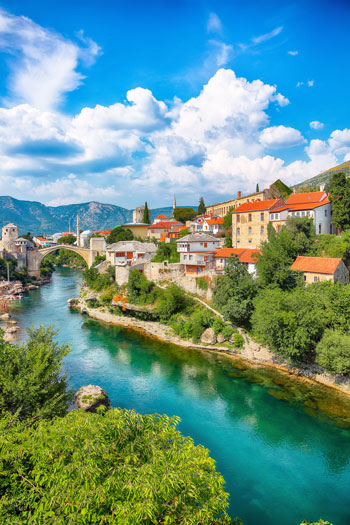
When visiting Bosnia and Herzegovina, the historic bridge in Mostar and the old bazaar in Sarajevo provide rich cultural experiences; having data allows you to learn about historical contexts on the go. In Bulgaria, the Rila Monastery and the old town of Plovdiv are must‑sees. For island‑hoppers, Croatia’s Hvar and Korčula islands, or Greece’s Santorini and Mykonos, rely heavily on ferry schedules – real‑time updates via apps can prevent missed connections. Across the region, mobile internet aids in translating menus, finding hidden local eateries, and even sharing your journey with friends in real time, making sightseeing smoother and more enriching.
Local Traditions, Cuisine, and Practical Cultural Insights

The Balkans are a cultural mosaic, reflecting influences from the Ottoman Empire, Austro‑Hungarian rule, and Slavic heritage. One of the most enjoyable aspects of travel here is the food. Each country boasts distinctive dishes: try cevapi in Bosnia and Serbia, a grilled minced meat served with flatbread and onions; sarma (stuffed cabbage rolls) across the region; and fresh seafood along the Adriatic. Coffee culture is deeply ingrained – in Bosnia, drinking traditional Bosnian coffee is a ritual of leisure, while Greece has its famous frappé. Rakija, a potent fruit brandy, is often offered as a welcome drink; it is polite to accept a small sip even if you are not a drinker.
Local traditions vary widely. In rural areas of Romania and Bulgaria, you might still see horse‑drawn carts alongside cars. Festivals are a vibrant part of life: the Guča Trumpet Festival in Serbia draws huge crowds, and Croatia’s Dubrovnik Summer Festival showcases theatre and music. Religious holidays like Orthodox Easter are celebrated with processions and feasts. When visiting monasteries or mosques, dress modestly – covering shoulders and knees is appreciated.
Practical etiquette includes greeting with a handshake and maintaining eye contact. In many Balkan countries, nodding means “no” and shaking the head means “yes” – a potential source of confusion. Tipping is customary in restaurants, usually rounding up the bill. Transport varies: in cities, public transit is reliable, but for remote areas, renting a car is recommended, though driving styles can be assertive. Learning a few words like “hvala” (thank you) in Serbo‑Croatian or “efharisto” in Greek goes a long way. Internet access enhances these experiences by helping you understand local customs through quick online searches, translating menus, or locating less‑touristy spots that offer authentic encounters. The warmth of Balkan hospitality, combined with a little digital help, ensures a memorable trip.
How to Install and Activate Your Balkans eSIM

Before purchasing a Balkans eSIM, verify that your smartphone supports eSIM technology and is network‑unlocked. Most recent flagship models from Apple, Google, Samsung, and others include eSIM capability, but it is always wise to check your device settings or manufacturer’s website. If your phone is locked to a particular carrier, it may not accept an eSIM from another provider. Contact your home operator to unlock it if needed.
Once you have purchased an eSIM plan, you will typically receive a QR code via email. It is best to install the eSIM while connected to a stable Wi‑Fi network, before you travel or as soon as you arrive at your accommodation. Open your phone’s settings, navigate to the cellular or mobile data section, and choose the option to add an eSIM. Scan the QR code or enter the provided manual details. After the profile is added, you may be asked to label the new line – naming it “Balkan Travel” helps with management.
Then, configure your data settings: set the eSIM as your default line for mobile data. Some phones allow you to keep your primary SIM for calls and texts while routing data through the eSIM. An important step is to enable data roaming on the eSIM line if the provider instructs you to do so; otherwise, the eSIM might not connect to a local network. To avoid accidental charges on your primary SIM, turn off its data roaming and ensure it is not selected for data. Remember that receiving SMS or calls on your primary line might still incur roaming fees, so consider keeping it in airplane mode with Wi‑Fi only, or use it only for emergencies.
Keep the QR code and activation details secure in case you need to reinstall the eSIM later. Do not delete the eSIM profile unless the provider confirms it can be reinstalled or replaced; many are single‑use. Activation timing can vary: some plans activate immediately upon installation, while others only start when the eSIM first connects to a supported network in the destination. If you encounter issues, try restarting your device, checking that the APN settings are correct (as provided), manually selecting a network, or briefly toggling airplane mode. With proper setup, your eSIM should provide seamless connectivity throughout the Balkans.
Ready to travel to BALKANS?
Choose your eSIM before departure and connect to mobile internet as soon as you arrive.