









Bolivia eSIM Travel Guide: Stay Connected with Local Mobile Data
Essential travel information, mobile internet advice and useful tips for your journey to Bolivia.
Introduction to Bolivia as a Travel Destination

Bolivia is a country of dramatic contrasts, where snow-capped Andean peaks meet vast salt flats, dense Amazon rainforest, and high-altitude cities rich in indigenous culture. From the otherworldly landscapes of the Salar de Uyuni to the bustling streets of La Paz, Bolivia offers adventures that feel both remote and deeply authentic. Navigating this diverse terrain requires a reliable internet connection to make the most of your journey.
Having mobile data while traveling in Bolivia can significantly enhance your experience. Whether you are using GPS to navigate winding mountain roads, booking last-minute accommodation in a colonial town, or accessing digital tickets for a flight from El Alto International Airport, connectivity keeps you informed and flexible. Communication with locals through translation apps can enrich cultural exchanges, while instant access to weather updates or emergency information is crucial in remote highlands or jungle areas.
For digital nomads or those needing to stay in touch with work, a dependable data connection allows for remote work from cafés in Sucre or hotels in Santa Cruz. An eSIM offers a practical way to access mobile data without the need to purchase a physical SIM card upon arrival or rely on your home operator’s roaming, which may involve uncertain charges. By downloading an eSIM profile before you travel or upon arrival via Wi-Fi, you can activate a local data plan on your compatible device, often within minutes. While an eSIM may not always be the cheapest option, its convenience and flexibility make it an attractive choice for many visitors to Bolivia.
Mobile Internet in Bolivia: Coverage, Speed, and What to Expect

Mobile internet in Bolivia has improved steadily, with 4G LTE now widely available in major cities and larger towns. In urban centers like La Paz, Santa Cruz, and Cochabamba, you can generally expect reliable data speeds suitable for browsing, social media, and video calls. However, as you move into rural areas, the mountainous terrain, dense forests, and vast salt plains can lead to patchy coverage and slower speeds.
5G networks are currently in the early stages of deployment in Bolivia. While some operators have begun limited trials in select urban zones, widespread 5G access is not yet available. Travelers should not rely on 5G connectivity and should set their expectations to 4G or even 3G in many locations. The actual performance you experience will depend on your device, your chosen eSIM plan, and the partner network that plan uses in a given area.
In popular tourist destinations, coverage can vary. Around Lake Titicaca and the Isla del Sol, signal strength may be inconsistent due to the surrounding hills. The Salar de Uyuni, while remote, often has pocketed coverage near towns like Uyuni and Colchani, but once you venture deep into the salt flats, signals typically disappear. The Yungas region and the road to Coroico can have weak or no coverage in valleys. National parks such as Madidi or Amboró generally have very limited to no mobile service. In contrast, the city of Potosí and the Silver Mountain tours usually maintain a reasonable 3G or 4G signal.
Indoor coverage in built-up areas is usually adequate, but thick-walled colonial buildings or underground locations can weaken signals. During local festivals or in crowded markets like El Alto’s sprawling Thursday and Sunday market, network congestion can slow data speeds noticeably. Factors such as weather, device antenna quality, and network load can all affect your experience. Always check the specific coverage maps provided by your eSIM provider for the partner network assigned to your plan.
Mobile Network Operators in Bolivia and eSIM Partner Networks

Bolivia’s mobile telecommunications market is served by a few well-established operators, each with its own infrastructure and coverage footprint. The three primary networks are Entel, Tigo, and Viva. Understanding these operators can help you set realistic expectations for your eSIM connectivity.
Entel is the state-owned telecommunications company and has the most extensive network across Bolivia. It reaches many rural and remote areas, making it a frequent choice for travelers heading off the beaten path. Entel has invested in 4G LTE and offers solid coverage in towns and along major highways, though speeds and reliability can vary.
Tigo is a privately owned operator with strong urban coverage and competitive data speeds. In cities like Santa Cruz, Cochabamba, and La Paz, Tigo often provides good 4G performance. Its rural coverage is less comprehensive than Entel’s, but it remains a reliable option in populated regions.
Viva (Nuevatel PCS de Bolivia) is another private operator. It has historically focused on urban areas and offers competitive data plans. Viva’s network has expanded, but its reach in very remote areas may be more limited. Like Tigo, Viva can deliver fast data in cities but may weaken in the countryside.
When you purchase an eSIM for Bolivia, the provider typically partners with one or more of these operators. Your eSIM plan might connect to only one specific network, or it could automatically select from several available networks depending on the agreement. However, automatic switching between operators is not guaranteed, and in some cases, manual network selection may be restricted. This means you might only use the partner network assigned, even if another network has a stronger signal locally. Before buying, review the plan details to see which networks are supported. Additionally, 5G access, if available, depends on the eSIM plan, your device’s compatibility, and the network’s infrastructure. Many eSIM plans for Bolivia still rely on 4G and 3G. Virtual network operators may also exist but use the physical infrastructure of these main providers.
Top Sights and Destinations in Bolivia – and How Connectivity Helps

Bolivia is a treasure trove of natural wonders and vibrant culture. Planning your route with a reliable mobile connection can turn a good trip into a great one. Here are some of the must-see attractions and practical ways your eSIM data can assist.
La Paz and El Alto: The world’s highest administrative capital stuns with its canyon-set center and the surrounding snow-dusted Illimani mountain. Ride the Mi Teleférico cable car network for panoramic views. Use your phone to check cable car routes, translate menus at market stalls, or book a walking tour. In El Alto, the sprawling market and Cholets (flamboyant neo-Andean architecture) are fascinating; navigation apps can help you find specific stalls or galleries.
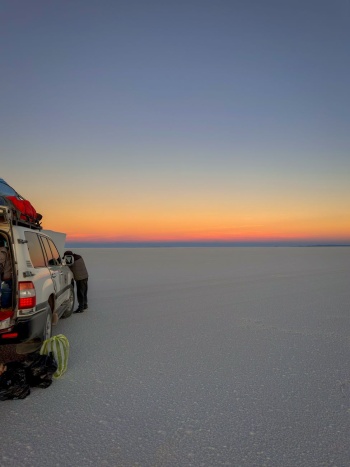
Salar de Uyuni and the Southwest Circuit: The endless white salt flats are Bolivia’s iconic sight. Most travelers join multi-day 4x4 tours. While deep inside the salar there is no signal, towns like Uyuni and San Pedro de Quemes offer connectivity to confirm tour details, share stunning photos, or check weather before heading to the high-altitude lagoons.
Lake Titicaca and Isla del Sol: The sacred lake of the Incas is perfect for boating and hiking. On Isla del Sol, internet access can be patchy, but in Copacabana, you can use data to research the island’s legends, make accommodation searches, or arrange return transport.
Sucre: Bolivia’s constitutional capital is a UNESCO World Heritage site known for its whitewashed buildings and dinosaur footprints at Cal Orcko. Reliable city-wide 4G allows you to pull up historical facts, book interactive museum visits, or find the best local chocolate shops.
Potosí and Cerro Rico: The historic mining city offers tours of the infamous Silver Mountain. A guide is essential; use your eSIM to locate reputable tour operators and read recent safety reviews online before booking.
Madidi National Park: One of the most biodiverse places on Earth, accessed from Rurrenabaque. Mobile signal is virtually nonexistent in the park, but in Rurrenabaque you can organize jungle tours, check flight availability, and let loved ones know you’re heading offline.
Jesuit Missions of the Chiquitos: Scattered east of Santa Cruz, these UNESCO-listed churches are a blend of European and indigenous artistry. Driving between them, a working data connection proves valuable for navigation and learning about each mission’s history on the go.
From ordering a taxi via a ride-hailing app in Santa Cruz to live-translating a museum plaque, a steady internet connection opens up Bolivia in ways a guidebook cannot match.
Interesting Facts, Culture, and Practical Tips for Bolivia

Bolivia’s rich cultural tapestry is woven from its indigenous heritage, colonial history, and breathtaking geography. Understanding a few key customs and facts can make your visit more meaningful.
Cultural diversity and languages: Bolivia recognizes 36 official languages, with Spanish, Quechua, Aymara, and Guaraní being the most spoken. In rural markets, you might hear Aymara or Quechua before Spanish. Learning a few greetings like “Jallalla” (Aymara) or “Sumaq” (Quechua) can earn warm smiles.
Festivals and celebrations: The Carnaval de Oruro is a UNESCO Masterpiece of the Oral and Intangible Heritage of Humanity, featuring elaborate dances like the Diablada. Thousands of costumed performers and musicians flood the streets. During such events, networks may become congested, so patience is needed when using mobile data.
Food and gastronomy: Bolivian cuisine varies by region. Try salteñas (baked empanadas filled with juicy stew), anticuchos (grilled beef heart skewers), and the hearty soup called sopa de maní. In the highlands, you’ll find quinoa in many forms, while the lowlands offer tropical fruits and freshwater fish. Street food is popular, but it’s wise to check hygiene standards. Use your phone to look up recommended eateries or translate menus.
Altitude and health: Much of Bolivia sits above 3,500 meters. Soroche (altitude sickness) is common in La Paz and Potosí. Take it easy upon arrival, stay hydrated, and consider coca tea, a traditional remedy. A data connection lets you quickly research symptoms or locate a pharmacy if needed.
Transportation quirks: In La Paz, the cable car system (teleférico) is not just a tourist attraction but a primary mode of transport. Colorful minibuses follow set routes, shouting destinations. For long distances, “flota” buses connect cities, but schedules can be flexible. Booking bus tickets online via your eSIM data can save time and hassle at chaotic terminals.
Etiquette and customs: Bolivians appreciate politeness. A handshake and “buen día” go a long way. When visiting churches or sacred indigenous sites, dress modestly and ask before photographing people, especially in rural areas. Bargaining in markets is expected but should remain friendly. Tipping is not obligatory but welcomed in tourist restaurants.
Lesser-known gems: Beyond the main highlights, consider Samaipata’s El Fuerte ruins, the wine region around Tarija, or the vibrant Carnaval de Oruro. Having internet access lets you discover these hidden spots, check opening times, and share your discoveries in real time.
How to Install and Activate Your Bolivia eSIM

Installing an eSIM for your trip to Bolivia is a straightforward process, but a few preparation steps can prevent common issues. Most modern smartphones support eSIM, but you should confirm that your specific model is compatible and that your device is unlocked from any carrier restrictions. Without an unlocked phone, the eSIM may not work.
Before you travel, you will typically receive a QR code or an activation code from your eSIM provider. You can install the eSIM profile in advance, but activation timing varies. Some plans activate immediately upon installation, while others only start when the eSIM connects to a supported network in Bolivia. Be sure to read the provider’s instructions carefully to avoid premature plan activation.
To install, connect your device to a stable Wi-Fi network. Open your phone’s settings and choose the option to add a cellular plan (often found under Mobile Data or Cellular settings). Use your camera to scan the QR code or enter the details manually. Once the profile downloads, label your eSIM, for example, “Bolivia Travel,” to distinguish it from your primary line.
After installation, set the eSIM as your default line for mobile data. If you plan to use data only, you can disable data switching to prevent your primary SIM from using data unintentionally. Depending on the eSIM provider, you may also need to enable data roaming for the eSIM line, even while in Bolivia, because the partner network may be considered a roaming network from the eSIM’s perspective.
It is crucial to avoid unexpected charges on your primary SIM. Turn off data roaming on your home line, or keep it switched off in settings. If you need to make calls or send SMS with your regular number, be aware that roaming rates may apply. You can keep the primary line active for calls and texts while routing all data through the eSIM.
Keep your QR code and activation details in a secure place during your trip. If you accidentally delete the eSIM, you may need them to reinstall. Note that many eSIMs can only be installed once—deleting them could result in losing the plan permanently unless the provider supports reinstallation.
If you encounter issues after activation, try restarting your device. Check that the eSIM’s APN settings match those given by your provider, as incorrect APN details can block data. Manually selecting a network may help if automatic selection fails, though this option is not always available. Remember that actual network performance depends on your location, network load, and the partner operator’s infrastructure. With proper setup, your eSIM will keep you connected across Bolivia’s stunning landscapes.
Ready to travel to Bolivia?
Choose your eSIM before departure and connect to mobile internet as soon as you arrive.