











Brazil eSIM Guide: Stay Connected While Traveling in South America's Largest Country
Essential travel information, mobile internet advice and useful tips for your journey to Brazil.
Why Reliable Mobile Internet Matters in Brazil

Brazil is a country of staggering diversity, from the vibrant streets of Rio de Janeiro and the vast Amazon rainforest to the colonial charm of Salvador and the modernist architecture of Brasília. For any traveler, reliable mobile internet has become essential. Navigating bustling cities like São Paulo requires real-time maps and transit apps, while booking last-minute accommodations, flights, or bus tickets is often done on the go. Digital tickets for attractions, museums, and even some public transport are now commonplace. Communication via WhatsApp, which is widely used in Brazil, keeps you in touch with locals and fellow travelers. Translation apps help bridge the language gap, as English is not always spoken outside tourist areas. For digital nomads, a stable connection enables remote work from beachside cafés or coworking spaces. In an emergency, access to online information can be critical.
An eSIM offers a modern, hassle-free alternative to physical SIM cards and traditional roaming. It allows you to install a data plan before departure or upon arrival without swapping out your primary SIM. While an eSIM may not always be the cheapest option, its convenience—no need to visit a store, preserving your home number for calls and texts, and often immediate activation—makes it an attractive choice for many visitors to Brazil. Using an eSIM can help avoid potentially high roaming charges from your home operator while still letting you stay connected with your existing number for calls and messages via dual-SIM functionality.
Brazil’s Mobile Internet Landscape

Brazil's mobile network coverage is extensive in urban and coastal areas but can be unreliable in remote regions. 4G LTE is widely available in major cities like Rio de Janeiro, São Paulo, Brasília, and Belo Horizonte, as well as along the densely populated coastline. Many tourist hotspots, including Iguazu Falls and the beach towns of the Northeast, have decent service. However, once you venture into the interior, the Amazon, the Pantanal wetlands, or mountainous areas such as the Serra do Mar, coverage can become sparse or non-existent. Even on some well-traveled highways, you may encounter dead zones.
5G is being rolled out in Brazil, initially in state capitals and larger cities. While it promises faster speeds, do not assume that every eSIM plan or device will support it. In reality, 5G availability depends on your plan, your phone's compatibility with Brazilian bands, and the local network's infrastructure at your location. Even in cities, indoor coverage may vary—thick concrete buildings, shopping malls, and basements can weaken signals. During major events like Carnival or New Year's Eve in Copacabana, networks can become congested, leading to slower data.
Factors affecting your experience include your device's modem, the specific eSIM provider's partner networks, and environmental conditions. Note that eSIMs typically do not offer guaranteed automatic switching between multiple networks; the available network depends on the selected plan. It's wise to download offline maps and essential documents before heading into areas with questionable reception.
Major Mobile Network Operators in Brazil

Brazil's telecom landscape is dominated by a few large operators, each with its own strengths and coverage footprints. Vivo (Telefônica Brazil) is known for its extensive coverage, especially in remote areas, and generally reliable service. Claro offers competitive data speeds and broad urban coverage, often with 5G in major cities. TIM has a strong presence in metropolitan regions and has been expanding its network aggressively. Oi, once a major player, underwent restructuring and now focuses on certain regions, but its infrastructure still covers many parts of the country. Additionally, virtual operators (MVNOs) lease capacity from these big networks, offering alternative plans.
When you purchase a travel eSIM for Brazil, the provider may partner with one or more of these operators. The actual network you connect to can depend on your specific plan—some plans give access to a single partner, while others may allow manual selection between available operators. However, automatic switching is not a universal feature. 5G access is never guaranteed; it depends on the plan's provisioning, device compatibility, and the network's current deployment. Always check the eSIM provider's details before purchase to understand which network(s) are supported and what speeds to expect.
Top Sights and How Connectivity Enhances Your Visit

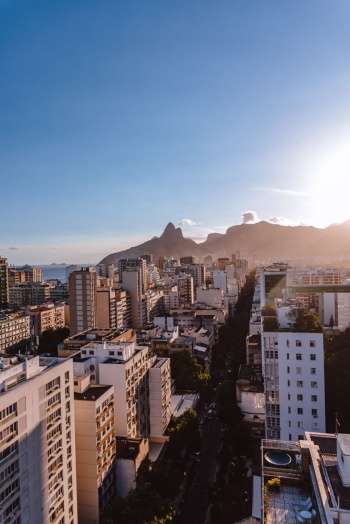
Brazil brims with unforgettable sights, and staying connected enhances every experience. Rio de Janeiro is the iconic postcard city, home to Christ the Redeemer atop Corcovado and Sugarloaf Mountain. Use your mobile internet to book skip-the-line tickets and check weather conditions before heading up. The city's famous beaches—Copacabana and Ipanema—are free to enjoy, but you can use apps to find beachfront kiosks and real-time safety info.
São Paulo, the economic powerhouse, offers world-class museums like MASP and Pinacoteca, plus an unparalleled dining scene. Online maps are essential to navigate its sprawling neighborhoods. Salvador in Bahia is the heart of Afro-Brazilian culture; wander the Pelourinho district's colorful colonial streets while translation apps help you follow the local dialect. Nearby, the beaches of Morro de São Paulo are reachable with easily booked ferries.
For nature lovers, Iguaçu Falls on the border with Argentina is a must. Download the park's app for trail maps and wildlife guides. The Amazon rainforest near Manaus offers jungle lodges and river cruises—connectivity may be extremely limited, so plan accordingly. The Pantanal is the best place to spot jaguars, but signal is rare. Further east, Lençóis Maranhenses dazzles with white dunes and turquoise lagoons; again, don't count on mobile service.
Historic towns like Ouro Preto and Paraty are full of cobblestone charm; GPS helps you locate pousadas, and online reviews guide restaurant choices. The stunning archipelago of Fernando de Noronha has limited and expensive connectivity, so download what you need beforehand. Throughout your journey, mobile internet simplifies everything from ordering a taxi via Uber to sharing photos with loved ones.
Cultural Insights and Practical Facts for Travelers

Brazil is the fifth-largest country in the world and the only one in the Americas where Portuguese is the official language. While many Brazilians in tourist services speak some English, learning basic Portuguese greetings and phrases will win you smiles and open doors. The culture is a rich tapestry woven from Indigenous, African, and European influences, reflected in the music: samba and pagode in Rio, axé in Salvador, forró in the Northeast, and sertanejo in the interior. The cuisine is equally diverse—feijoada, a hearty black bean stew with pork, is the national dish, typically enjoyed on Saturdays. In the Amazon, exotic fruits like cupuaçu and bacuri are turned into juices and desserts. Churrasco (Brazilian barbecue) is a social event, with rodízio-style restaurants found in every city.
Festivals color the calendar: Carnival is the world's biggest party, but locals also love Festa Junina in June, with traditional dancing and foods. Coffee is a daily ritual; Brazilians drink it strong and sweet, often as cafezinho. When it comes to daily life, note that punctuality is more relaxed than in some cultures, and personal space is smaller—expect warm handshakes and cheek kisses. In cities, be mindful of your surroundings and avoid displaying valuables. Public transport is generally good, with metro systems in Rio and São Paulo. For longer distances, buses are the main option, as the rail network is minimal. Remote destinations like Chapada Diamantina or the Jalapão desert demand offline preparation, but the detours are worth it for the raw beauty and lesser-crowded experiences.
How to Install and Activate Your Brazil eSIM

Getting your eSIM up and running for Brazil is straightforward if you follow a few key steps. First, confirm that your smartphone supports eSIM—most newer iPhones (XS/XR and later), Google Pixels, and many Samsung Galaxy models are compatible, but always check your device specifications. Ensure your phone is unlocked, as carrier-locked devices will not accept an eSIM from another provider.
When you purchase your travel eSIM, you will typically receive a QR code and/or manual activation details. It's best to install the eSIM while you still have a stable Wi‑Fi connection, either before departure or in your accommodation. Scan the QR code in your phone's settings (under Cellular or Mobile Data) and follow the prompts. After installation, label your eSIM plan clearly (e.g., 'Brazil Travel') to distinguish it from your primary line.
Configure your phone to use the eSIM for mobile data, and be careful with your primary SIM to avoid accidental roaming charges. Consider turning off data roaming on your primary line and, if possible, disable automatic network selection on it. Some eSIM plans require you to enable data roaming on the eSIM itself—check your provider's instructions. Remember that activation timing varies: some plans activate upon installation, others only when you connect to a supported network in Brazil.
Keep your QR code and activation details stored safely, as you may need them for reinstallation. Do not delete an eSIM unless the provider confirms it can be re-downloaded, as many plans are one-time use. If you encounter connection issues, try restarting your device, checking APN settings against the provider's guide, and manually selecting a network if allowed. With a little preparation, you'll have seamless connectivity to navigate and enjoy Brazil.
Ready to travel to Brazil?
Choose your eSIM before departure and connect to mobile internet as soon as you arrive.