











Stay Connected in Colombia: Your Essential eSIM Travel Guide
Essential travel information, mobile internet advice and useful tips for your journey to Colombia.
Why Connectivity Matters in Colombia

Colombia, a vibrant country in northwest South America, captivates visitors with its diverse landscapes, tropical beaches, Andean peaks, lush Amazon rainforest, and colonial cities. From the bustling streets of Bogotá to the colorful Cartagena Old Town, and from the coffee-scented valleys of the Eje Cafetero to the pristine Caribbean coast, Colombia offers an unforgettable travel experience. As you navigate this dynamic destination, staying connected becomes essential. Reliable mobile internet empowers you to use mapping apps for navigating cities and rural routes, book accommodations on the go, manage transport apps for hailing rides, and access digital tickets for flights, buses, and attractions. It also keeps you in touch with friends and family through messaging and video calls, assists with language translation when needed, and provides a lifeline to emergency information. For remote workers, Colombia's growing digital nomad scene makes dependable data a priority. While roaming with your home SIM is an option, it can lead to unexpected charges. A practical alternative is a travel eSIM, which lets you download a data plan directly to your compatible device before or during your trip, avoiding the need to swap physical SIM cards. An eSIM is not always the cheapest solution, but it offers convenience and immediate connectivity upon arrival, helping you make the most of your Colombian adventure.
Mobile Internet in Colombia: What to Expect

Mobile internet in Colombia has improved significantly, with extensive 4G LTE coverage in urban centers and many tourist areas. Major cities such as Bogotá, Medellín, Cali, Barranquilla, and Cartagena generally offer reliable 4G signals, enabling smooth web browsing, streaming, and app usage. In recent years, 5G networks have begun rolling out in selected zones of large cities, but availability is limited and not guaranteed; most users will still rely on 4G. Rural and remote areas, including parts of the Amazon, the Pacific coast, and high Andean villages, often have patchy or no coverage. Even popular destinations like Tayrona National Park or the coffee region may have weak signals in valleys or inside dense structures. Islands such as San Andrés and Providencia have service, but it can be inconsistent. Indoor coverage can vary; thick concrete walls in colonial buildings or basement-level restaurants might weaken signals. In crowded places like festivals or busy markets, network congestion can reduce speeds. The actual performance depends on location, your device, the network you connect to, and the specific eSIM plan you select. Some eSIMs partner with more than one local network, which may provide broader reach, but automatic switching is not guaranteed—you may need to manually select a network if allowed by your plan. Always check your eSIM provider’s coverage map for the most accurate information.
Mobile Network Operators in Colombia

Colombia’s telecom market is served by several major providers, with the three largest being Claro, Movistar, and Tigo. Claro (América Móvil) is the dominant operator, offering the broadest coverage across the country, including many rural areas; it is often the default partner for eSIM providers. Movistar (Telefónica) provides strong service in cities and larger towns, with decent coverage in some suburban areas. Tigo (Millicom) has a solid network in urban centers and tourist hotspots, though its rural footprint is smaller. Other operators include ETB and regional providers, but their networks are mostly limited to specific areas. Virtual network operators (MVNOs) like Virgin Mobile and WOM use the infrastructure of Claro or Tigo to offer services, but they may have different coverage constraints. When purchasing an eSIM for Colombia, the provider usually partners with one or more of these operators. The specific network(s) available to you depend on the plan you buy; some plans may only use Claro, while others might allow manual selection between two or three networks. Manual network selection is a feature that may or may not be enabled by your plan. Additionally, 5G access is not universal: even if your eSIM connects to a network that has 5G, your plan might not include it, or your device might not support the required bands. Always verify with your eSIM provider which networks you can use and whether 5G is supported before purchasing.
Top Sights and Experiences in Colombia

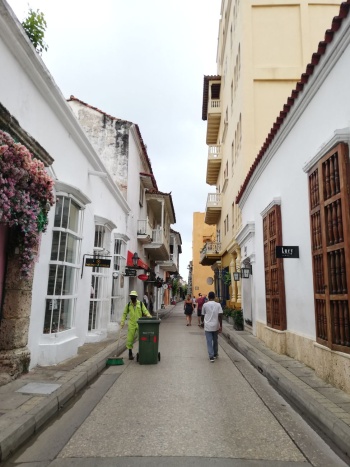
Colombia offers a wealth of attractions for every kind of traveler. In the capital Bogotá, explore the historic La Candelaria district with its cobblestone streets, the Gold Museum (Museo del Oro) housing thousands of pre-Hispanic gold artifacts, and the Monserrate mountain for panoramic city views. Having internet access allows you to buy skip-the-line tickets online, navigate the TransMilenio bus system, and translate museum descriptions. Medellín, once infamous, is now a model of innovation; ride the Metrocable to Santo Domingo for stunning barrio art and views, visit the Botanical Garden, and dive into the city’s nightlife in El Poblado. Use your data to check real-time event listings and book restaurant reservations. The Caribbean coast is dominated by Cartagena de Indias, a UNESCO World Heritage site with colorful colonial architecture, the imposing Castillo San Felipe, and the nearby Rosario Islands for snorkeling. Digital guides enhance your walking tours, and you can share live updates from these photogenic spots. The coffee region (Eje Cafetero) around Salento, Manizales, and Armenia offers verdant plantations; a mobile connection helps you arrange coffee farm tours and find authentic finca stays. For nature lovers, Tayrona National Park features jungle-lined beaches like Cabo San Juan—check weather and tide information on the go. The Amazon basin near Leticia and the Pacific coast near Nuquí provide off-the-beaten-path adventures, but connectivity is limited; download offline maps and guides in advance. In the southwest, Cali is the salsa capital; look up dance classes and club schedules. The rainbow-hued river Caño Cristales and the Tatacoa Desert are other wonders. Throughout your journey, reliable data ensures you can adapt plans, book onward transport, and share your Colombian discoveries with the world.
Colombian Culture and Practical Tips

Colombia’s cultural richness is a blend of indigenous, African, and Spanish influences, creating a vibrant tapestry of traditions. Food is a highlight: arepas (corn cakes) are a staple, bandeja paisa is a hearty platter from the Antioquia region, and fresh ceviche on the coast. In Bogotá, ajiaco (chicken and potato soup) warms you in the cool highland climate. Regional differences are pronounced: coastal areas have a more Caribbean, laid-back vibe, while the Andean cities are more business-oriented and formal. Salsa music pulses through Cali, while vallenato rules in the north. Festivals are numerous: the Barranquilla Carnival is a UNESCO-recognized explosion of color and dance, and Medellín’s Feria de las Flores showcases elaborate floral displays. Colombians are generally warm and polite; a handshake or a kiss on the cheek (for women) is common greeting. When dining, it’s customary to say “buen provecho” before starting. For transport, buses and domestic flights connect most regions, but schedules can be informal—use your eSIM to check real-time platforms like RedBus or to book cheap flights. Tipping is not always expected but appreciated. A practical tip: carry small cash, as street vendors and smaller towns often don’t accept cards. Also, altitude sickness can affect you in Bogotá; use your phone to read up on symptoms. Colombians dress neatly; avoid overly casual attire in cities. Breakfast is light, lunch is the main meal, and dinner is often a light snack. Embrace the “tranquilo” mindset; things may not always run on schedule, and that’s part of the charm.
How to Install and Activate Your Colombia eSIM

Before you travel, check that your smartphone supports eSIM technology—most recent iPhones (XR and newer), Google Pixels, and high-end Samsung Galaxy devices do. Also, ensure your phone is unlocked, meaning it isn’t tied to a single carrier; otherwise, the eSIM may not work. Purchase your Colombia eSIM from a reputable provider; you’ll typically receive a QR code via email. Install the eSIM while you still have a reliable Wi-Fi connection, at home or at your hotel. Go to your device’s cellular or mobile data settings, choose “Add Cellular Plan” or similar, and scan the QR code. Alternatively, you might enter details manually. Once installed, label the eSIM (e.g., “Colombia eSIM”) for easy identification. For data, configure the eSIM as your default mobile data line. Your physical SIM remains active for calls and messages if needed, but to avoid unexpected roaming charges, turn off data roaming on that primary line and disable “Allow Mobile Data Switching” (on iPhones). Depending on the eSIM provider’s instructions, you may need to enable data roaming for the eSIM itself. The plan may activate immediately upon installation or only when you connect to a supported Colombian network. Keep the QR code and any activation details safe in case you need to reinstall later. Do not delete the eSIM profile unless the provider confirms it can be reactivated; many eSIMs are single-use. If you face issues after arrival, try restarting your phone, checking APN settings, or manually selecting a network if permitted. Always consult your provider’s support if problems persist.
Ready to travel to Colombia?
Choose your eSIM before departure and connect to mobile internet as soon as you arrive.