









Congo Republic eSIM and Travel Guide: Stay Connected in Central Africa
Essential travel information, mobile internet advice and useful tips for your journey to Congo Republic.
Introduction to Congo Republic

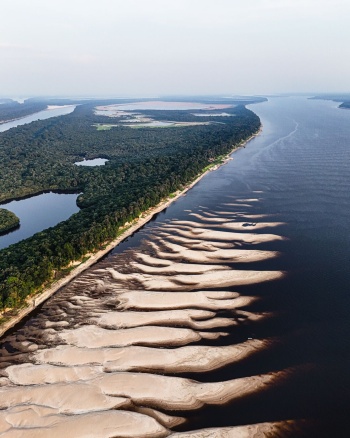
The Republic of Congo, often called Congo-Brazzaville to distinguish it from its larger neighbour, is a Central African nation of dense rainforests, powerful rivers and vibrant urban life. From the bustling streets of Brazzaville to the serene lagoons of Conkouati-Douli National Park, the country offers a raw and authentic African experience that remains largely off the beaten tourist trail. Travellers come to explore the mighty Congo River, trek through pristine equatorial jungles in search of western lowland gorillas, or soak up the rhythms of Congolese rumba in open-air bars. While the country’s tourism infrastructure is still developing, the rewards for adventurous visitors are immense.
In this environment, reliable mobile internet becomes a crucial tool. Navigating the sprawling capital, making last-minute hotel bookings, or arranging boat trips along the Congo River often requires a data connection. Many local services and transport options are not always listed online with real-time updates, so having the ability to communicate via messaging apps or make VoIP calls can smooth out travel uncertainties. An eSIM offers a practical way to stay connected without hunting for a physical SIM card shop or worrying about network‑locked devices. While it may not always be the cheapest option, it provides immediate connectivity upon arrival or even before leaving home, which can be a big advantage for those who want to hit the ground running.
Beyond basic logistics, internet access supports translation apps for navigating French-language menus and local dialects, allows you to share your experiences in real time, and helps you access important safety information. For remote workers, an eSIM provides a backup connection if Wi‑Fi is unreliable, which is often the case outside major hotels. It is also a useful alternative to your home operator’s roaming package, which can incur unexpected charges if not carefully managed. In Congo, where physical SIM registration can be time-consuming, an eSIM that activates quickly is especially appealing.
Mobile Internet in Congo Republic

The mobile internet landscape in Congo Republic has seen steady improvements over the past decade, with 4G networks now available in the largest cities and some secondary towns. However, the country’s challenging geography and limited investment mean that coverage is far from uniform. In the centres of Brazzaville and Pointe-Noire, you can often expect usable 4G speeds that support video calls, streaming and online navigation without major interruptions. Yet even within these cities, building materials and dense construction can weaken indoor signals, and speeds may drop during peak evening hours when many users are online.
Outside the main urban corridors, connectivity becomes more variable. Many smaller towns and rural areas rely on 3G or even 2G networks, and data rates can be too slow for anything beyond basic messaging and email. In the deep interior, including large parts of the Congo Basin rainforest, coverage may be entirely absent or restricted to very narrow strips along major roads. Travellers heading to national parks such as Odzala-Kokoua or Nouabalé-Ndoki should not count on any signal once they leave the park headquarters or main lodges. Similarly, boat trips on the Congo River and its tributaries often pass through dead zones.
As for 5G, operators have conducted trials, but commercial 5G service is not yet widely available to consumers. Even where it is technically present, device compatibility and plan limitations may restrict access. The eSIM plans available for Congo Republic typically rely on 4G and 3G networks, and any mention of 5G should be verified against the specific plan’s details. Congestion at large events, markets or transport hubs can temporarily reduce speeds, and outages due to power supply fluctuations are not uncommon. Network performance will also depend on your device’s supported bands, the eSIM provider’s roaming agreements, and the partner network you are connected to in that moment.
Mobile Network Operators in Congo Republic

The Congolese mobile market is principally served by two established network operators: MTN Congo and Airtel Congo. These companies have built the backbone of the country’s telecommunications infrastructure and are the main partners for international roaming and eSIM providers.
MTN Congo is a subsidiary of the South Africa‑based MTN Group, one of Africa’s largest telecom operators. MTN Congo was one of the first operators in the country and has historically maintained a strong presence in urban and semi‑urban areas. Its network offers 4G coverage in Brazzaville, Pointe‑Noire, Dolisie, Nkayi and several other populated locations. In more remote provinces, MTN’s footprint is limited, and travellers should expect 3G or 2G fallback.
Airtel Congo is part of the Indian telecommunications conglomerate Airtel Africa. Over the years, Airtel has invested in expanding its reach and is now a major competitor, with an extensive network across much of the country. Its 4G service is similarly concentrated in principal cities and along major transport routes. Airtel Congo is often noted for its relatively affordable data bundles aimed at prepaid customers, though prices and offers change frequently.
Together, these two operators account for almost all mobile subscriptions in Congo Republic. There is no nationally owned mobile operator of significant size, and mobile virtual network operators (MVNOs) are not prominent. When you use a travel eSIM in Congo, your device will typically connect to either the MTN or Airtel network – sometimes both, depending on the plan and roaming agreements. Manual network selection may be available on some eSIMs, but it is not guaranteed. Automatic switching between networks is also not a standard feature and should not be assumed. The actual quality of your connection will vary with your location and the specific arrangements of your eSIM provider.
Sightseeing and Experiences in Congo Republic

Congo Republic rewards travellers who are willing to venture beyond comfortable city centres. The capital, Brazzaville, sits directly across the river from Kinshasa and offers a fascinating blend of French colonial architecture, modern African art and riverside promenades. The Basilique Sainte‑Anne, with its distinctive green tiled roof, and the Nabemba Tower, the city’s tallest building, are two iconic landmarks. The Poto‑Poto neighbourhood is the beating heart of Brazzaville’s music and art scene, where you can visit painters’ workshops and hear live Congolese rumba. Mobile maps are useful here because street names can be inconsistent and the informal layout can be confusing.
The coastal city of Pointe‑Noire is the country’s economic hub and offers a more relaxed seaside atmosphere. Beaches such as Côte Sauvage and Pointe‑Indienne attract weekend crowds, while the Gorges de Diosso provide dramatic red sandstone cliffs just outside the city. For a quieter experience, the Conkouati‑Douli National Park combines lagoons, savannah and dense forests where you can observe chimpanzees, forest elephants and marine turtles – a true off‑grid adventure where a satellite messenger is more useful than an eSIM.
In the north, Odzala‑Kokoua National Park is one of Africa’s oldest protected areas and a prime location for gorilla tracking. Multi‑day treks through pristine rainforest bring you close to western lowland gorillas, forest buffalo and myriad bird species. This experience is remote, and internet is only available at some upmarket lodges. Further up the Congo River, the Sangha Trinational area – shared with Cameroon and the Central African Republic – includes Nouabalé‑Ndoki National Park, a UNESCO World Heritage site with Ndoki Rainforest. Reaching these areas requires internal flights and boat transfers, making it essential to plan ahead and download offline maps. Throughout your travels, an eSIM can assist with domestic flight checks, weather updates, and keeping in touch with guides and operators.
Interesting Facts and Cultural Insights

The Republic of Congo is often overshadowed by its giant neighbour, yet it possesses a distinct cultural identity shaped by its history as a French colony and its position astride the equator. French is the official language, but Lingala and Kituba (also called Munukutuba) are the most widely spoken national languages. Lingala, in particular, dominates the music and everyday communication in Brazzaville and beyond. For travellers, learning a few basic Lingala phrases can open doors and draw warm smiles.
Congolese music is world‑renowned. Congolese rumba and soukous have influenced dance floors across Africa and Europe. In Brazzaville, live bands play in maquis (open‑air restaurants) and nightclubs, especially in the Poto‑Poto and Bacongo districts. The Pan‑African Music Festival (FESPAM), held biennially in Brazzaville, attracts artists from across the continent and is a highlight for music lovers. If you plan to attend, having mobile data helps track last‑minute venue changes and line‑ups.
Food is a central part of social life. Typical dishes include saka saka (pounded cassava leaves cooked with palm oil), moambe chicken (chicken in a rich palm nut sauce), and grilled fish fresh from the Congo River. Street food such as brochettes (skewered meat) and beignets (doughnuts) are widely available in markets. Meals are often communal, and it’s polite to wash your hands before eating, as many dishes are eaten with the right hand. Tipping is not mandatory but is appreciated, and bargaining is expected in markets, though with a friendly and respectful attitude.
Daily life varies starkly between urban and rural settings. In Brazzaville, many people commute by shared taxi or minibus, and traffic can be chaotic. Power outages are common, and water supply can be intermittent, so patience is essential. Outside cities, community life revolves around the village, farming and fishing. Travellers should dress modestly, especially in rural areas and when visiting religious sites, and always ask permission before photographing people. The country is safe for tourists, but as with any destination, it’s wise to stay informed about local conditions and keep valuables secure. An eSIM can be a subtle way to carry a backup communication line without drawing unwanted attention.
eSIM Activation and Practical Tips

Activating an eSIM for Congo Republic is a straightforward process, but it requires a few important preliminary checks. First, confirm that your device supports eSIM. Most recent flagship smartphones from Apple, Samsung, Google and others include eSIM functionality, but some regional variants do not. You should also verify that your phone is network‑unlocked; a device locked to a specific carrier will not accept an eSIM from another provider.
Once you have purchased an eSIM plan, the provider will deliver a QR code and often a set of manual installation details. It is strongly recommended to install the eSIM while you are still in a place with stable Wi‑Fi. Scanning the QR code in your device’s cellular or mobile data settings will add the new plan. If scanning fails, you can enter the activation code and SM‑DP+ address manually. During installation, your device may ask you to label the new plan – choose a descriptive name like “Congo eSIM” – and to set your default line for voice and data.
After installation, some eSIMs activate immediately, while others only begin to work when they connect to a supported network in Congo. This means you may see a “No Service” message until you arrive. Once in the country, turn on the eSIM line and make sure it is selected for mobile data. Depending on the provider, you might need to enable data roaming on the eSIM specifically. Do not enable roaming on your primary physical SIM unless you intend to pay those charges. To avoid accidental data usage on your primary line, you can turn it off temporarily or set it to voice/SMS only, leaving data exclusively to the eSIM. Watch out: if your primary SIM is still active, even background activity can trigger roaming charges, so it’s safest to disable it or use the “Allow Mobile Data Switching” feature carefully.
If you encounter connection problems, a device restart often resolves issues. Next, check the APN (Access Point Name) settings against those provided by your eSIM issuer. Sometimes you may need to manually select a network operator – go to the line’s network selection screen and try “MTN‑Congo” or “Airtel‑Congo” manually. Do not delete an eSIM unless you have confirmation from the provider that it can be reinstalled; many eSIMs are single‑use and deleting it will render the plan unusable. Keep your QR code and activation details safe until your trip is over. Finally, remember that network performance in Congo will vary with location, and an eSIM does not guarantee constant high‑speed data – but with these steps, you’ll be as prepared as possible to stay connected.
Ready to travel to Congo Republic?
Choose your eSIM before departure and connect to mobile internet as soon as you arrive.