












Israel Travel Guide: eSIM and Internet Tips for Your Journey
Essential travel information, mobile internet advice and useful tips for your journey to Israel.
Stay Connected in Israel with an eSIM

Israel is a land of extraordinary contrasts, where ancient history and modern innovation coexist in a compact, sun-drenched landscape. From the sacred streets of Jerusalem to the vibrant nightlife of Tel Aviv, and from the mineral-rich Dead Sea to the serene deserts of the Negev, the country offers a travel experience unlike any other. Whether you are exploring archaeological wonders, sampling world-class cuisine, conducting business, or simply unwinding on a Mediterranean beach, reliable mobile internet has become an essential companion for the modern traveller.
Having access to the internet on your phone or tablet allows you to navigate confidently with apps like Google Maps or Waze, book last-minute accommodation, purchase digital tickets for museums and public transport, stay in touch with family and friends via messaging and video calls, and translate Hebrew or Arabic signs in real time. For digital nomads and remote workers, a stable connection means you can keep up with emails and virtual meetings while enjoying the Israeli sunshine. Additionally, in emergencies—such as needing to consult local news or contact your embassy—constant connectivity provides peace of mind.
Instead of relying on your home operator’s roaming service or hunting for a physical SIM card upon arrival, an eSIM can be a convenient way to get online. An eSIM is embedded directly in your device and can be activated before you even leave home, eliminating the need to swap tiny plastic cards or visit a local shop. While it may not always be the cheapest option, its ease of use, instant activation, and the ability to keep your regular number for calls and texts make it an attractive choice for many visitors to Israel.
Mobile Internet in Israel: Coverage, Speed, and What to Expect

Israel boasts a well-developed telecommunications infrastructure, with extensive 4G LTE coverage that reaches most populated areas. In recent years, operators have also deployed 5G networks in major cities such as Tel Aviv, Jerusalem, Haifa, and Be’er Sheva. However, 5G availability cannot be guaranteed everywhere, and even where it exists, actual speeds depend on factors like network load, your device’s capabilities, and the specific eSIM plan you select.
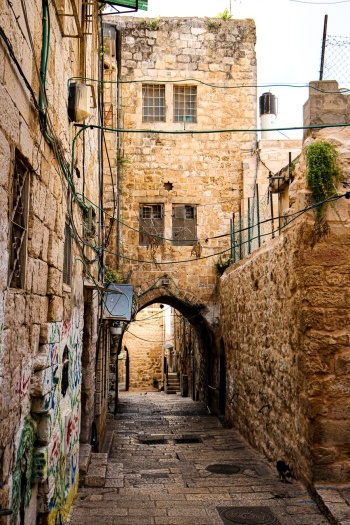
In urban centres and popular tourist hubs, you can generally expect fast and reliable data connections. Tel Aviv, known for its tech-savvy atmosphere and high density of startups, offers robust mobile internet in cafés, along the beachfront promenade, and throughout its bustling neighbourhoods. Jerusalem’s historic core, with its ancient stone architecture, may occasionally present indoor coverage challenges, but most hotels, restaurants, and public spaces provide good connectivity. In the coastal plain, the Galilee, and around the Dead Sea, signal strength is typically strong, though remote desert areas, such as deep stretches of the Negev or the Arava Valley, can experience weak or intermittent coverage. When visiting nature reserves like Ein Gedi or Masada, you might find that data speeds slow down in the most isolated spots.
Indoor coverage is generally dependable in modern buildings, but thick-walled structures—including some older buildings in Jerusalem’s Old City or historical sites—can attenuate signals. During large public gatherings, festivals, or holidays, mobile networks may become congested, temporarily reducing speeds. It is also worth noting that Israel’s terrain varies dramatically; mountainous regions in the north and the deep rift of the Dead Sea can influence signal propagation.
Your actual experience will depend on your location, the device you use, the partner network(s) supported by your eSIM plan, and the prevailing network conditions. eSIMs do not guarantee a perfect connection in every corner of the country, but for the vast majority of travellers, they provide a practical and sufficient internet solution.
Mobile Network Operators in Israel

The Israeli mobile market is served by several established network operators, each with its own infrastructure and coverage characteristics. The principal physical network operators are Cellcom, Partner Communications (formerly known as Orange Israel), Pelephone, and HOT Mobile. In addition, there are virtual operators such as Golan Telecom, 012 Mobile, and Rami Levy Communications that lease network capacity from one of the larger players.
Cellcom is one of the largest and oldest mobile providers in Israel, operating its own extensive 4G network and rolling out 5G in numerous cities. It offers broad coverage across the country, including many rural areas.
Partner Communications maintains a strong network, historically marketed under the Orange brand, with widespread 4G and growing 5G availability, particularly in metropolitan zones.
Pelephone, a subsidiary of Bezeq, also runs its own nationwide network and has been active in 5G deployment, providing competitive data services.
HOT Mobile, part of the HOT group, utilises its own infrastructure and shares roaming agreements to extend coverage.
When you purchase an eSIM for Israel from a provider like esimtravelnet.com, the plan may rely on one or more of these partner networks. The specific network(s) you can access will depend on the plan you choose; some plans give access to a single operator, while others may allow you to connect to multiple networks. Manual network selection might be available on certain devices, but it is never guaranteed, and automatic network switching is not a universal feature. 5G access is also plan- and device-dependent and cannot be assumed simply because a network offers it. Virtual operators typically provide coverage similar to their host network, but performance may be prioritised differently.
Understanding which network your eSIM plan connects to can help set realistic expectations, but in practice, most travellers will find that coverage is sufficient for day-to-day activities like maps, messaging, and web browsing.
Top Sightseeing Destinations and How Mobile Internet Helps

Israel packs an astonishing variety of sights into a small area, making it possible to explore ancient ruins, vibrant cities, and natural wonders in a single trip. Reliable mobile internet enhances every experience, from planning your route to enriching your understanding of the sites.
Jerusalem
The spiritual heart of three major religions, Jerusalem is an unmissable destination. The Old City, a UNESCO World Heritage site, encloses the Western Wall, the Church of the Holy Sepulchre, and the Dome of the Rock. Wandering through its narrow, bustling lanes, you can use your phone to access audio guides, check opening hours, or translate plaques. Booking a guided tour online or purchasing a combined ticket for the Tower of David and other museums is convenient with an active data connection. Beyond the walls, the Israel Museum houses the Dead Sea Scrolls, and the poignant Yad Vashem memorial reminds visitors of the Holocaust’s history.
Tel Aviv
Tel Aviv is a thriving Mediterranean metropolis known for its beaches, Bauhaus architecture (the White City, also a UNESCO site), and round-the-clock energy. Apps like Gett or Moovit help you navigate the city’s public transport and bike-sharing systems. You can instantly check surf conditions, find a beachside café, or reserve a table at one of the city’s acclaimed restaurants. The ancient port of Jaffa, now part of Tel Aviv, is perfect for a sunset stroll, and digital maps will guide you to its hidden galleries and flea market.
Dead Sea and Masada
Floating in the hyper-saline Dead Sea and hiking up Masada at sunrise are quintessential Israeli experiences. Mobile internet allows you to monitor weather conditions—vital in this extreme desert environment—and book a spa treatment or a guide for the Masada snake path. Note that coverage near the Dead Sea shore can be patchy in some spots, so downloading offline maps beforehand is a smart precaution.
Northern Israel
The Galilee and Golan Heights offer lush landscapes, the Sea of Galilee, and significant Christian sites such as Nazareth and Capernaum. By using your phone, you can find up-to-date information on hiking trails in the Golan, locate a winery for a tasting, or arrange a jeep tour. Akko (Acre), with its Crusader-era underground city and vibrant shuk (market), benefits from online translation tools and historical background research on the spot.
Eilat and the Negev Desert
At the southern tip, Eilat is a resort city on the Red Sea, notable for snorkelling, dolphin encounters, and the Timna Park geological formations. Further inland, the Negev’s Ramon Crater offers dramatic desert scenery. Internet access lets you check dive conditions, book a desert stargazing trip, or navigate the isolated highways safely. Since coverage can be limited in deep desert areas, offline maps and emergency preparedness are essential.
Throughout your travels, having internet access means you can quickly look up the history of a landmark, read reviews, and share your experiences in real time, making each visit richer and more convenient.
Interesting Facts and Cultural Tips for Israel

Israel is a fascinating blend of traditions, religions, and modern lifestyles that can surprise even seasoned travellers. Understanding a few cultural nuances will enrich your visit and help avoid misunderstandings.
Shabbat (the Sabbath) is observed from Friday sunset to Saturday sundown. In many areas, particularly Jerusalem and other religious communities, public transport shuts down, and many businesses close. In Tel Aviv, the atmosphere is more relaxed, but some services may still be limited. Planning travel and meals around Shabbat is wise; your phone can be invaluable for checking which buses are running or finding open restaurants.
Kashrut (dietary laws) influence much of the food scene. Many restaurants are kosher, meaning they do not mix meat and dairy and adhere to other rules. However, Tel Aviv boasts a vibrant secular culinary world with countless non-kosher eateries. Street food is a highlight: falafel, hummus, shawarma, and sabich are staples, while shakshuka (eggs poached in spicy tomato sauce) is a popular breakfast dish. In markets like Jerusalem’s Machane Yehuda, you can use translation apps to decipher Hebrew descriptions of spices and sweets.
Israel’s population is diverse—Jews, Muslims, Christians, Druze, and others—and both Hebrew and Arabic are official languages. English is widely spoken, especially in the service sector, but learning a few basic Hebrew phrases (like “shalom” for hello and “toda” for thank you) is appreciated. Russian and French are also common due to large immigrant communities.
Transport habits vary: trains and buses connect major cities, but on Shabbat they do not operate. Shared taxis called “sherut” run on fixed routes and often function on Shabbat. Ridesharing apps are popular, but you may need a local payment method; sometimes cash is easier. In markets, bargaining is expected for non-food items, but not in regular stores.
Festivals can impact your itinerary. Passover, Rosh Hashanah, Yom Kippur, and Sukkot see closures and altered schedules. On Yom Kippur, even highways are empty of cars, and walking or cycling becomes the norm. During Hanukkah, public menorah lightings and sufganiyot (jelly doughnuts) are everywhere. Independence Day features fireworks and street parties.
Tipping is customary in restaurants—around 10–15% is standard if service is not included. Safety-wise, Israel is generally secure for tourists, but it is advisable to stay informed about current events through reliable news apps and to heed local advice. Dress modestly when visiting religious sites, carrying a scarf or extra layer in your daypack.
Venture beyond the typical tourist trail to places like the artist colony of Ein Hod, the ancient synagogue ruins in Bar’am, or the multicultural port city of Akko, and you will discover layers of history and hospitality that make Israel an endlessly rewarding destination.
How to Activate Your eSIM for Israel

Getting your eSIM up and running before or upon arrival in Israel is straightforward if you follow a few essential steps. Start by confirming that your smartphone or tablet supports eSIM technology. Most recent models from Apple (iPhone XS and newer), Google (Pixel 3 and later), Samsung (Galaxy S20 series onwards), and other major brands include this feature, but it is always wise to check your device specifications. Additionally, ensure your device is network-unlocked; a phone locked to a specific carrier may not accept an eSIM from another provider.
When you purchase an eSIM plan, you will typically receive a QR code via email or through the provider’s app. It is best to complete the installation while you have a stable Wi‑Fi connection, either at home or at your accommodation in Israel. On your device, navigate to the cellular or mobile data settings, choose the option to add a cellular plan, and scan the QR code. If scanning is not possible, you can enter the activation details manually using the SM‑DP+ address and activation code provided by the eSIM provider.
Once the eSIM profile is installed, label it clearly (for example, “Israel Data”) to distinguish it from your primary SIM. Then, configure your device to use the eSIM for mobile data. Be sure to turn off mobile data on your primary line to prevent accidental usage and possible roaming charges. Some eSIMs require you to enable data roaming for that line; check the instructions from your provider, as this setting is necessary even within Israel for certain partner networks.
Activation timing varies. Some eSIMs activate immediately upon installation, while others only connect once you land and your device registers on a supported network in Israel. Do not delete the eSIM after your trip unless the provider explicitly confirms that it cannot be reinstalled; many plans are single-use. Keep a copy of the QR code and activation information in a secure place until you no longer need the service.
If you encounter issues after installation, start by restarting your device. Verify that the APN (Access Point Name) settings match those supplied by your eSIM provider; you may need to enter them manually. Trying a manual network selection or toggling airplane mode on and off can also help. Remember that coverage and performance will vary by location and network, so if you are in a remote area, moving to a more populated spot may restore connectivity.
By following these guidelines, you can enjoy seamless mobile internet throughout your journey in Israel, leaving you free to explore, navigate, and share your experiences with confidence.
Ready to travel to Israel?
Choose your eSIM before departure and connect to mobile internet as soon as you arrive.