









Montserrat eSIM and Travel Guide: Stay Connected on the Emerald Isle
Essential travel information, mobile internet advice and useful tips for your journey to Montserrat.
Introduction to Montserrat

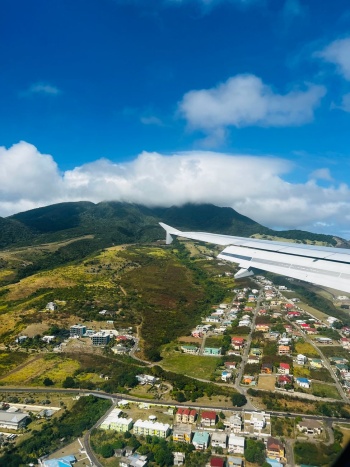
Montserrat is a small British Overseas Territory in the Leeward Islands of the Caribbean, often called the "Emerald Isle" due to its lush green hills and Irish heritage. Despite its tiny size—just 102 square kilometres—the island offers a unique blend of dramatic volcanic landscapes, black sand beaches, and a resilient local culture. The Soufrière Hills volcano dominates the southern part of the island, and its eruptions in the 1990s led to the abandonment of the capital, Plymouth, which remains an eerie modern-day Pompeii. Today, most of the population lives in the northern safe zone, where new settlements like Brades and Little Bay serve as the administrative and commercial hubs.
Travellers to Montserrat will find that reliable mobile internet can greatly enhance their visit. Navigation apps help you explore winding mountain roads and find hidden trails, while online booking platforms allow you to secure accommodation in guesthouses or villas, often run by friendly locals. Digital tickets and reservation confirmations for events, island tours, or ferry services reduce the need for printed paperwork. Communication apps keep you in touch with family and friends back home without facing high roaming charges from your regular mobile provider. While English is the official language, translation apps may still be useful for understanding local dialects or signs. For digital nomads, having a stable connection supports remote work, making Montserrat an off-the-beaten-path option to work amidst nature. In emergencies—such as volcanic activity updates or hurricane warnings—real-time information from official sources is crucial. An eSIM offers a convenient way to access mobile data without the hassle of swapping physical SIM cards. It can be installed before departure or upon arrival, providing flexibility as an alternative to your home operator's roaming. While not always the cheapest option, it saves time and allows you to keep your primary number active for calls and texts.
Mobile Internet in Montserrat

Mobile internet in Montserrat is primarily provided through 4G LTE networks, with decent coverage in the populated northern areas. As a small island with a population of around 5,000, the network infrastructure is modest but generally sufficient for tourists in most developed and frequently visited locations. The capital, Brades, and the main port area of Little Bay typically enjoy strong 4G signals, allowing for smooth browsing, social media use, and messaging. In other settlements like Davy Hill, St. John's, and Lookout, coverage remains consistent, though speeds may vary depending on the time of day and network load.
However, it is important to manage expectations regarding coverage across the entire island. The rugged terrain and mountainous interior, covered in dense rainforest, can create dead zones or weak signals. The southern part of Montserrat, including the Exclusion Zone around the Soufrière Hills volcano, has limited to no mobile service due to restricted access and lack of infrastructure. Even within the safe zone, remote hiking trails and secluded beaches may have patchy reception. Indoor coverage inside concrete buildings or thick-walled structures might also be weaker, so stepping outside can improve connectivity.
As of now, 5G is not available in Montserrat, and there have been no public announcements of its imminent rollout. Travellers should not expect 5G speeds; 4G is the current highest standard. Congestion is rarely a major issue due to the low population density, but during festivals or events like the St. Patrick's Festival, temporary spikes in usage could slow data speeds. Weather conditions, particularly heavy tropical rain, can occasionally affect signal quality. Actual coverage and performance will depend on your device's compatibility with local network bands, the specific eSIM plan you choose, and the partner network it connects to.
Mobile Network Operators in Montserrat

Montserrat's mobile communications are served by two established operators: Digicel Montserrat and Flow Montserrat. Both are subsidiaries of larger Caribbean telecom groups and have been present on the island for many years, offering voice and data services to residents and visitors.
Digicel Montserrat is part of the Digicel Group, which operates in numerous Caribbean and Pacific markets. It provides widespread 2G, 3G, and 4G LTE coverage, with a focus on the northern safe zone. Digicel is often praised for its reliable network in built-up areas and its range of prepaid plans for short-term visitors. While it invests in network upgrades, the mountainous topography can still limit coverage in certain spots.
Flow Montserrat, previously known as Lime and originally Cable & Wireless, is another major player. Flow offers similar 2G, 3G, and 4G services and has a strong presence in the Caribbean. In Montserrat, its network competes closely with Digicel, and many locals choose based on personal preference or pricing. Both operators have retail outlets in Brades where you can purchase physical SIM cards or top up credit.
When using an eSIM for Montserrat, the provider will typically partner with one or both of these networks. Your eSIM plan may connect to either Digicel or Flow depending on the roaming agreements the eSIM provider has in place. Some eSIMs allow for manual network selection, giving you the option to switch if one network has a stronger signal in your location, but this feature is not guaranteed. It is essential to check the details of your specific eSIM plan to understand which networks are supported. Also, note that 5G is not offered by any operator in Montserrat, so eSIMs advertising 5G capabilities will not provide 5G speeds here. Virtual operators or global SIM providers may also use the infrastructure of Digicel or Flow, so coverage and speed will be identical to the host network.
Sightseeing and Activities in Montserrat

Montserrat may be small, but it packs a remarkable array of sights and experiences that cater to nature lovers, history buffs, and culture enthusiasts. The island's star attraction is undoubtedly the Soufrière Hills Volcano, which began erupting in 1995 and forever changed the landscape. Visiting the Montserrat Volcano Observatory (MVO) is a must. Located in Flemmings, the observatory offers a fascinating insight into the science of volcanology. You can see real-time monitoring equipment, learn about past eruptions, and on clear days, enjoy spectacular views of the steaming dome. Using mobile internet here allows you to check the latest activity reports or book guided tours in advance.
The abandoned capital, Plymouth, now lies buried under ash and mud, creating a modern Pompeii. While entry to the Exclusion Zone is tightly controlled, authorized tours offer a safe way to witness the ghostly remains of the city—a deeply moving experience. Booking these tours often requires online reservations, and having connectivity helps you coordinate with tour operators and stay updated on access conditions.
For hikers, Montserrat's lush trails are a delight. The Oriole Walkway, a moderate trail through tropical forest, rewards with birdlife and glimpses of the Montserrat oriole, the national bird. Other popular hikes include the Cot Trail and the trail to Rendezvous Bay, Montserrat's only white sand beach. Rendezvous Bay is accessible only by a challenging hike or boat, so offline maps or GPS can be valuable if signal is lost along the way. Woodlands Beach and Little Bay Beach offer black volcanic sand and calm waters for swimming and snorkelling. At Little Bay, you can also see the new port development and perhaps spot sea turtles.
Cultural highlights include the Montserrat Cultural Centre, funded by Sir George Martin's recording studio legacy, hosting performances and exhibits. The Montserrat National Trust in Salem has a botanical garden and a small museum that delves into the island's history, from Amerindian inhabitants to the Irish settlers and the volcano crisis. Throughout your travels, mobile internet helps you access up-to-date ferry schedules to and from Antigua, check weather conditions, and share your adventures in real time. Apps like Google Maps can assist with navigating the winding roads, though downloading offline maps is wise for areas with poor reception.
Interesting Facts and Cultural Tips for Montserrat

Montserrat's nickname, "The Emerald Isle of the Caribbean," hints at its dual heritage: a lush, green landscape resembling Ireland and a historical connection dating back to the 17th century when Irish indentured servants and settlers arrived. Today, the island's flag features a woman holding a harp and a cross, reflecting this legacy. St. Patrick's Day on March 17 is a public holiday, but it commemorates not only the patron saint of Ireland but also the 1768 slave rebellion. The week-long St. Patrick's Festival blends Irish and African traditions with parades, music, food, and a freedom run. It's an ideal time to visit if you want to experience Montserrat's vibrant spirit.
The local cuisine is a delicious fusion of Caribbean and Irish influences. Goat water, a hearty stew made with goat meat, breadfruit, and spices, is the national dish and a must-try. Another local delicacy is "mountain chicken," which are actually large frog legs, not poultry. Due to disease, the dish is now rare, but you might find it during special occasions. Fresh seafood like mahi-mahi and snapper, along with roadside barbecue stands, round out the food scene. Bush tea made from local herbs is often served as a remedy or a refreshing drink.
Daily life on Montserrat is laid-back, and locals are known for their warmth and hospitality. A friendly "good morning" or "good afternoon" goes a long way. Dress is generally casual, but modest attire is appreciated when visiting churches or official buildings. Tipping is not mandatory but welcome for good service. The island has a low crime rate, but normal precautions apply.
Transportation is limited: there is no public bus system, so renting a car or using taxis is essential. Roads are narrow and winding, with steep drops, so confident driving is needed. Petrol stations are sparse, so fill up when you can. For those without a vehicle, some guesthouses offer shuttle services or can arrange tours. Understanding these practicalities ahead of time can make your stay smoother, and mobile internet is invaluable for coordinating rides and checking maps.
eSIM Installation and Activation Guide

Installing and activating an eSIM for your trip to Montserrat is a straightforward process, but it requires careful attention to a few key steps. First, confirm that your smartphone or tablet supports eSIM technology. Most newer models from Apple, Samsung, Google, and other major brands include eSIM functionality, but you should check your device settings or manufacturer specifications. Additionally, ensure that your device is network unlocked, meaning it is not restricted to a single carrier. If you purchased your phone through a carrier, contact them if you are unsure about its unlock status.
Before installation, connect to a stable Wi-Fi network. Most eSIM providers will supply you with a QR code either via email or on their website after purchase. Open your device's settings, navigate to the cellular or mobile data section, and select the option to add a cellular plan. Use your camera to scan the QR code. Alternatively, you may need to enter activation details manually, such as an SM-DP+ address and an activation code, which will be provided alongside the QR code. Follow the on-screen prompts to complete the installation. Some eSIMs allow you to label the plan, which is helpful to distinguish it from your primary SIM.
After installation, you must set the eSIM as the default line for mobile data. In your device settings, choose the eSIM for cellular data, but keep your primary SIM active for calls and texts if you wish. It is crucial to enable data roaming on the eSIM line, as many travel eSIMs require roaming to be turned on to connect to local networks—even though you are physically in Montserrat. Without this setting, data may not work.
To avoid unexpected charges on your primary SIM, ensure that it is not used for data while roaming. You can disable data roaming on your primary line and rely solely on the eSIM for internet access. Also, keep your QR code and activation details saved or printed in a secure place, in case you need to reinstall later. Do not delete an eSIM profile unless your provider confirms that it can be reinstalled, as many plans are single-use. If you encounter issues, try restarting your device, checking that APN settings are correct (sometimes provided by the eSIM provider), or manually selecting a network that your eSIM supports. Remember that activation may occur immediately upon installation or only when you arrive in Montserrat and connect to a supported network—this varies by provider, so read your plan's instructions carefully.
Ready to travel to Montserrat?
Choose your eSIM before departure and connect to mobile internet as soon as you arrive.