









Panama eSIM and Travel Guide: Stay Connected Across the Canal Country
Essential travel information, mobile internet advice and useful tips for your journey to Panama.
Panama: A Crossroads of the Americas, and Why Connectivity Matters

Panama is far more than its famous canal. This slender isthmus bridges two continents and two oceans, offering a compelling blend of buzzing urban life, pristine Caribbean and Pacific beaches, misty cloud forests, and indigenous cultures. Whether you are navigating the colonial streets of Casco Viejo, hiking in the highlands of Boquete, or island-hopping in the San Blas archipelago, reliable mobile internet can significantly enhance your journey. With instant access to maps and navigation, you can confidently explore Panama City's sprawling districts or find your way to remote trailheads without worrying about getting lost.
Mobile data is also a practical tool for booking last-minute accommodation, reserving intercity bus tickets, or arranging boat transfers to islands. Digital tickets for attractions such as the Panama Canal visitor centers or the Biomuseo can save time queuing. Communication becomes easier with translation apps when venturing into areas where English is less widely spoken, and staying in touch with family or sharing your experiences on social media is effortless. For remote workers, Panama's growing digital nomad community benefits from cafés and coworking spaces where a stable connection is essential for video calls and file transfers. Access to emergency information, weather updates, and travel advisories is also at your fingertips.
When it comes to staying connected, an eSIM can be a convenient alternative to searching for a local physical SIM card upon arrival or relying on your home operator’s roaming service. Without the need to swap plastic cards, you can keep your primary number active for calls and texts while using an eSIM plan for local data. However, the most suitable option depends on your specific needs, and comparing data packages in advance is always wise.
Mobile Internet in Panama: What to Expect Across the Country

Panama's mobile network infrastructure is generally well-developed in urban centers and along the corridor between Panama City and Colón, where 4G LTE coverage is widely available. In the capital and larger towns like David, Santiago, and Chitré, you can expect reliable speeds suitable for streaming, video calls, and online browsing. However, once you venture into more remote regions—such as the highlands of Chiriquí, the dense rainforests of Darién, or the scattered islands of Guna Yala—network availability can become patchy. In some coastal areas and national parks, signal strength may weaken or drop entirely.
While 5G deployment is gradually underway in Panama, it is not yet ubiquitous. As of recent reports, 5G coverage is primarily found in select zones of Panama City and may not be accessible to every eSIM user. Whether you can connect to 5G depends on the specific eSIM plan, your device's compatibility with the local frequency bands, and the partner network used by your provider. Many eSIM plans will rely on 4G or LTE for the majority of the country.
Tourist hotspots like Bocas del Toro, Boquete, and El Valle de Antón generally have acceptable mobile service in populated areas, but indoor coverage in concrete buildings or thick-walled colonial structures can sometimes be inconsistent. During festivals or major events, such as Carnaval in Las Tablas, network congestion may temporarily reduce speeds. Peninsula and island destinations, including the Pearl Islands and parts of the Azuero Peninsula, may experience weaker signals, particularly on less inhabited stretches. The mountainous terrain of western Panama can also obstruct signals in valleys.
Actual coverage and performance depend on a variety of factors: your location, the device in use, the eSIM provider’s partner network in that specific area, and even atmospheric conditions. For the best experience, ensure your phone supports the LTE bands used in Panama (commonly Band 2, 4, 7, and 28). If you plan to travel extensively beyond urban centers, it is sensible to download offline maps and essential information as a backup.
Panama's Mobile Network Operators and eSIM Partner Networks

Panama is served by several established mobile network operators that provide national coverage. The largest operators are +Móvil (owned by Cable & Wireless Panama), Digicel, Claro (América Móvil), and Tigo (Millicom, which acquired Telefónica’s Movistar operations in Panama). Each of these companies operates its own physical network infrastructure, and they compete for subscribers across various regions.
+Móvil, often considered the market leader in terms of subscriber numbers and coverage, offers extensive 4G availability and is frequently the backbone for many mobile services. Digicel is especially popular for its presence in the Caribbean coastal areas and among communities in Bocas del Toro and the islands. Claro, part of the América Móvil group, has a solid footprint across the country, including Panama City and the interior. Tigo, which absorbed the former Movistar network, provides competitive data services and is part of the Millicom group.
When you purchase an eSIM plan for Panama from an international provider, that provider will typically partner with one or more of these local operators. Which network your eSIM connects to depends on the plan you choose. Some eSIM plans grant access to a single network, while others may support multiple partner networks, potentially allowing manual switching. However, automatic network switching is not guaranteed; your device may stay on one network unless you manually select another in your phone’s settings, provided the feature is enabled on your plan.
Access to 5G is determined by the specific plan, the partner network’s 5G deployment, and your device’s compatibility. Not all eSIMs for Panama include 5G, and even when they do, coverage is limited to select urban zones. Additionally, there are mobile virtual network operators (MVNOs) that lease infrastructure from the big operators and resell services under different brands. While they may offer cost-effective packages, they are typically not directly partnered with international eSIM providers. For the most predictable experience, check with your eSIM provider which local network(s) your plan will use and whether manual network selection is supported.
Exploring Panama: Must-See Destinations and How Connectivity Helps

Panama packs an astonishing variety of experiences into a compact territory. The country's most iconic landmark is, of course, the Panama Canal. The Miraflores Locks Visitor Center, just outside Panama City, provides an excellent introduction to the canal's history and engineering marvels. Having mobile internet on hand allows you to check ship transit schedules in real time, purchase entry tickets online, and even access augmented reality apps that enhance the visit.
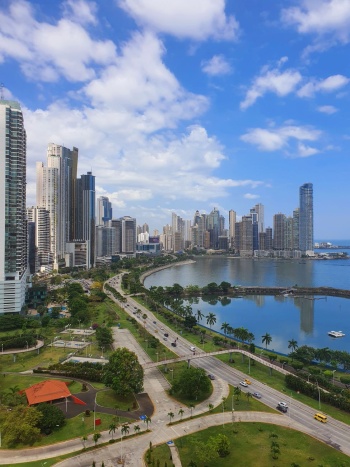
Panama City itself is a destination worth days of exploration. The modern skyline of skyscrapers contrasts with the UNESCO World Heritage site of Casco Viejo, where cobblestone streets are lined with restored colonial buildings, rooftop bars, art galleries, and boutique hotels. With a reliable data connection, you can navigate the narrow alleys, look up restaurant reviews, and make reservations on the go. Nearby, the Panama Canal Museum and the Biomuseo (designed by Frank Gehry) offer air-conditioned cultural escapes. Using translation apps can help decipher Spanish-language exhibits or communicate with local guides.
Beyond the capital, the country splits into diverse regions. To the west, the highlands of Chiriquí offer a cooler climate and lush landscapes. The town of Boquete is famous for coffee tours, hiking trails like the Quetzal Trail, and adventure sports such as white-water rafting. While in Boquete, you can use your eSIM to check weather forecasts before a mountain hike, book guided expeditions, or share panoramic photos. Further up, the town of Volcán and the La Amistad International Park provide more rugged and remote experiences where offline maps are essential due to sporadic signal.
The Caribbean coast is a paradise for beach lovers. Bocas del Toro is an archipelago with crystal-clear waters, vibrant coral reefs, and a relaxed Afro-Caribbean vibe. On Isla Colón and Isla Carenero, you’ll find reliable mobile reception in town, but as you sail to more distant cays, the signal fades. Having data allows you to coordinate water taxi pickups and stay in touch with tour operators. Similarly, the Guna Yala (San Blas) indigenous territory draws travelers with its idyllic coconut-palm-fringed islands. Connectivity here is extremely limited; some larger islands may have patchy towers, but many areas are off-grid. In such places, an eSIM can be useful when you are within range of a signal, but planning ahead and downloading critical information is vital.
On the Pacific side, the Azuero Peninsula is known for its traditional folklore, colorful festivals, and surf-friendly beaches like Playa Venao. Towns such as Pedasí and Las Tablas are welcoming and have adequate mobile coverage. Further south, the island of Coiba, a former penal colony and now a national marine park, is a UNESCO site renowned for diving and wildlife. Coverage is absent on Coiba itself, so plan your connectivity before departure. Throughout your travels, an eSIM helps you navigate rural highways, find authentic fondas (small eateries), and discover hidden waterfalls or hot springs via travel blogs and review sites.
Panamanian Culture, Interesting Facts, and Practical Tips

Panama’s culture is a vibrant mix of indigenous, African, Spanish, and North American influences. You’ll notice it in the cuisine, music, and daily rhythms. The national dish, sancocho, is a hearty chicken soup often served with rice and avocado, and it’s a comforting staple found everywhere from market stalls to family gatherings. Seafood is abundant, with ceviche de corvina being a popular beachside snack. In Bocas, try Caribbean-style rondón; in the Azuero, sample mondongo. With an internet connection, you can look up local food guides and locate hidden street-food gems.
Panamanians are generally warm and polite. A useful custom is greeting shopkeepers with “buenos días” or “buenas” upon entering and saying “gracias” when leaving. Punctuality is more relaxed outside of business settings, and it is common to use “usted” as a formal address until familiarity is established. The country celebrates several colorful festivals. Carnaval, the four days preceding Ash Wednesday, is a nationwide explosion of parades, music, and water fights, with Las Tablas hosting one of the most famous celebrations. Semana Santa sees many city dwellers heading to the beach, while religious processions fill the streets. Independence Day in November is marked by patriotic parades.
Panama uses the US dollar as its official currency (called the balboa, though only coins are minted locally). This simplifies transactions for American visitors, but having data allows you to check exchange rates for other currencies and use mobile banking apps if needed. The country has a reliable and affordable public transportation system. In Panama City, the Metro is modern and air-conditioned, and buses connect most towns. For longer distances, comfortable air-conditioned coaches run along the Interamericana highway. Using Google Maps or the local app “Mi Bus” can help you navigate routes and stops, though real-time tracking isn’t always available.
One lesser-known gem is the mountain town of Santa Fe in Veraguas, a quiet alternative to Boquete with waterfalls, rivers, and orchid trails. In the Darién gap, experienced adventurers can explore pristine rainforests and visit Emberá villages, but this region requires careful planning and a knowledgeable guide. For the culturally curious, the traditional pollera dress is a symbol of national pride, and you may see women wearing intricately embroidered garments during festivals. Learning a few words in the Ngäbere language, spoken by the Ngäbe-Buglé people, can be appreciated in the comarca regions. With an eSIM, you can access language-learning resources and cultural articles to deepen your understanding of Panama’s diverse heritage.
Activating Your Panama eSIM: A Step-by-Step Guide

Before purchasing an eSIM for Panama, it is essential to ensure your device is eSIM-compatible and network-unlocked. Most recent smartphones from Apple (iPhone XR and newer), Samsung (Galaxy S20 series and newer), Google Pixel, and other brands include eSIM functionality, but it is wise to check your manufacturer’s specifications. An unlocked device is necessary; if your phone is tied to a specific carrier, contact them to request unlocking, as carrier-locked phones will not accept eSIMs from other providers.
Once you have purchased your eSIM plan, you will receive a QR code or an activation code via email. It is recommended to install the eSIM while connected to a stable Wi-Fi network at home or in a well-connected spot. Go to your device’s cellular or mobile data settings and choose the option to add a new plan. Use your camera to scan the QR code, or manually enter the provided details. The installation process usually takes a minute or two. After the eSIM is added, you can label it for easy identification, such as “Panama Data” or “Travel eSIM.”
Timing the activation is important. Some eSIM plans activate immediately upon installation, while others only start once they connect to a supported network in the destination country. Check your provider’s instructions so you do not inadvertently start the plan’s validity period too early. Upon arriving in Panama, ensure that you select the newly installed eSIM as the default line for mobile data. You may need to turn on data roaming for the eSIM line, as many international plans rely on a local partner and require the roaming toggle to be switched on—this does not mean you are using your home carrier’s roaming service.
To avoid unexpected charges, it is crucial to prevent data usage on your primary SIM. Keep your home line enabled solely for calls and texts, and switch off its data roaming and mobile data access. On iPhones, you can disable “Allow Mobile Data Switching” to stop the device from using the wrong line if the eSIM signal weakens. This helps avoid roaming fees from your home operator. Keep a copy of the QR code and any activation details in a safe place; you may need them again if you accidentally delete the eSIM. Do not remove the eSIM unless your provider confirms it can be reinstalled, as some eSIM profiles are single-use.
If you encounter connection issues, first try restarting your device. Check that the correct APN (Access Point Name) is set according to your provider’s instructions. Manual network selection can sometimes resolve problems if the device fails to connect automatically. Remember that specific performance and network availability depend on your eSIM plan and the local partner’s coverage in the area you are visiting.
Ready to travel to Panama?
Choose your eSIM before departure and connect to mobile internet as soon as you arrive.