












Qatar eSIM Travel Guide: Stay Connected with Seamless Mobile Data
Essential travel information, mobile internet advice and useful tips for your journey to Qatar.
Introduction to Staying Connected in Qatar

Qatar has rapidly emerged as one of the most dynamic destinations in the Middle East, blending its rich cultural heritage with visionary modernity. From the gleaming skyscrapers of Doha's West Bay to the timeless dunes of the Arabian Desert, visitors are greeted by a land of striking contrasts. Whether you are exploring the bustling alleys of Souq Waqif, attending a world‑class exhibition at the National Museum of Qatar, or simply navigating the city for business meetings, reliable mobile internet is no longer a luxury – it has become an essential travel tool.
Having mobile data at your fingertips allows you to use navigation apps like Google Maps to find your way through new districts, book accommodation or transport via apps such as Uber or the local Karwa service, and store digital tickets for attractions and events directly on your phone. Communication with friends, family or local contacts through WhatsApp and other messaging services stays seamless, while translation apps help bridge the language gap with Arabic. For those who need to work remotely, a stable connection means you can answer emails or join video calls from a café by the Corniche or a hotel lobby. In an emergency, quick access to local information can be vital.
An eSIM offers a convenient alternative to traditional physical travel SIM cards or your home operator's roaming service. With an eSIM you can download a data plan before departure and activate it upon arrival without ever swapping plastic cards. This means you can keep your primary SIM for calls and texts while avoiding the potential roaming charges that can arise if you accidentally use your primary line for data. While eSIMs are not automatically the cheapest option in every case, their flexibility and ease of use make them an attractive choice for many travellers heading to Qatar.
Mobile Internet and Network Coverage in Qatar

Qatar boasts one of the most advanced mobile telecommunications infrastructures in the Gulf region, reflecting the country's considerable investment in digital connectivity. In major cities – particularly Doha, Al Rayyan, and Lusail – 4G LTE coverage is robust and widely available, making everyday browsing, streaming and app use smooth and responsive. The compact size of Qatar means that most populated areas, including coastal resorts and tourist zones, benefit from reliable signal strength.
5G networks are increasingly available, with operators rolling out coverage across Doha, key commercial districts, stadiums, airports and other high‑traffic venues. However, 5G is not yet universally present throughout the country, and its availability depends on your device's compatibility, the specific eSIM plan you have chosen and the local network's deployment in a given location. In rural and remote desert areas, such as the interior around the Inland Sea (Khor Al Adaid), coverage may be limited to 3G or may become patchy, particularly far from settled communities. Mobile internet can weaken in valleys or behind large sand dunes.
Indoor coverage is generally excellent in modern buildings, shopping malls, hotels and underground metro stations, thanks to a high density of cell sites and widespread indoor antenna systems. During large events – like the FIFA World Cup 2022 or national celebrations – network congestion can occur in crowded places, which may temporarily reduce data speeds. Overall, users can expect a dependable mobile internet experience in almost all areas where visitors typically go, but actual performance always varies according to location, device, network load and the specifics of the eSIM plan you purchase.
Mobile Network Operators in Qatar and eSIM Partner Networks

Qatar's mobile telecommunications market is served by two principal and well‑established operators: Ooredoo Qatar and Vodafone Qatar. Both companies have built extensive networks covering the vast majority of the population.
Ooredoo Qatar is the country's longest‑serving provider, originally founded as Qtel. It offers 4G LTE and growing 5G coverage across Qatar and is known for a wide range of prepaid and postpaid plans. Its network underpins many international roaming agreements, making it a common partner for eSIM providers.
Vodafone Qatar entered the market later as the second operator and has since become a strong competitor, delivering comparable 4G and 5G services. As part of the global Vodafone Group, it benefits from international technical expertise.
When you use a travel eSIM, the underlying network your device connects to depends on the partnerships built into your chosen plan. An eSIM provider may offer access to only one of these networks, or it may allow connectivity to both – though this often requires manual network selection if your device permits. Even when both networks are available, your phone will not always switch automatically between them; it typically latches onto the strongest signal from the network assigned by the eSIM profile. 5G access is a plan‑specific feature and also depends on local 5G deployment. Some smaller or virtual operators resell services on the infrastructure of Ooredoo or Vodafone, but for an eSIM user, the experience is largely defined by which major network is available and the coverage map at your actual location.
Must-See Sights and How Mobile Data Enhances Your Visit

Qatar may be small, but it packs an impressive variety of attractions that blend ultra‑modern architecture with deep‑rooted tradition. Your mobile internet connection will be an invaluable companion as you explore.
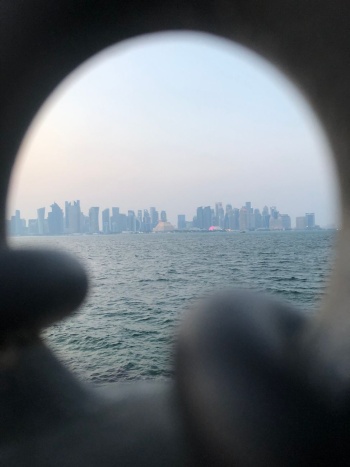
Begin in Doha, the capital, where the seven‑kilometre Corniche promenade curves around a crescent bay, offering sweeping views of the skyline. At its southern end stands the iconic Museum of Islamic Art, a Pritzker‑prize‑winning building housing one of the world's finest collections of Islamic artefacts. Just inland, Souq Waqif is a lively traditional market where you can wander through alleys fragrant with spices, perfumes and grilled meats. Use your phone to translate words, locate specific shops or read about the history of the souq as you walk.
A short drive north leads to Katara Cultural Village, a hub of theatres, galleries and dining, often hosting festivals and performances. Many attractions now use digital tickets, so having mobile data lets you scan QR codes at entry points without paper. Across the bay, The Pearl‑Qatar is an artificial island of upscale residences, boutiques and marinas – perfect for a leisurely afternoon.
Sports enthusiasts should visit Lusail, a futuristic planned city that hosted the FIFA World Cup final. The Lusail Stadium and surrounding boulevards demonstrate extraordinary urban design. Further afield, history buffs will appreciate the Al Zubarah Archaeological Site, a UNESCO World Heritage location featuring an 18th‑century fort and the remnants of a pearl‑fishing town. Navigation apps help you reach these less central sites with ease.
Nature lovers and adventure seekers can head south to the Inland Sea (Khor Al Adaid), where desert dunes plunge into the sea. Off‑road safaris, camel riding and overnight camping are popular here. While remote, many desert camps now offer patchy mobile reception; an offline map downloaded in advance can be a useful backup. Beaches like Sealine Beach and Fuwairit Beach offer opportunities for swimming, kite surfing and relaxing. Throughout your travels, an eSIM keeps you connected so you can share stunning photographs, check opening times and make last‑minute bookings for the many restaurants and activities Qatar has to offer.
Qatari Culture, Traditions and Practical Travel Tips

Qatar's culture is rooted in Bedouin heritage, Islamic traditions and a remarkable openness to the world. Understanding a few local customs can enrich your visit. Arabic coffee (gahwa) and dates are symbols of hospitality; you may be offered them in shops, hotels or even at public events. When receiving coffee, it is polite to take a small cup and shake it gently from side to side when you have had enough, otherwise your host will keep refilling it.
Dress modestly in public places: shoulders and knees should generally be covered, especially when visiting mosques, government buildings or traditional areas. During the holy month of Ramadan, eating, drinking or smoking in public during daylight hours is prohibited for everyone, including visitors, and many restaurants close during the day, opening only after sunset for iftar. National Day on 18 December is a spectacular celebration with parades, fireworks and patriotic displays.
Qatari cuisine features richly spiced dishes: machboos (fragrant rice with meat or seafood) is the national dish, while luqaimat (sweet dumplings drizzled with date syrup) is a beloved dessert. Dining out in Doha is an international affair, but be mindful that pork and alcohol are only available in licensed venues, typically located in international hotels.
Transportation is modern and efficient: the driverless Doha Metro links key areas, and ride‑hailing apps are widely used. Public displays of affection should be kept to a minimum, and always ask permission before photographing local people, especially women. Lesser‑known gems include the mangroves of Al Thakira, a serene kayaking spot north of Doha, and the eerie Film City set in the desert near Zekreet. These quiet locations offer a different perspective on Qatar's landscape.
How to Install and Activate an eSIM for Qatar

Before you can enjoy mobile data in Qatar using an eSIM, a few simple preparation steps are necessary. First, verify that your device supports eSIM functionality – most recent smartphones including iPhone XS and later, Google Pixel 3 and later, and many Samsung Galaxy models are compatible. Also ensure your phone is network‑unlocked; a locked device will only work with its original carrier.
Installation is typically handled via a QR code provided by your eSIM provider. It is strongly recommended to do this while connected to a reliable Wi‑Fi network, because the process requires an internet connection to download the eSIM profile. Go to your device's cellular or mobile data settings, choose "Add Cellular Plan" and scan the QR code. You can also manually enter the activation details if provided. Once installed, you can label the eSIM (for example "Qatar Trip") to distinguish it from your primary line.
Next, configure your data settings: set the eSIM as the line for mobile data, and make sure data switching is turned off. This prevents your primary SIM from accidentally using mobile data and incurring roaming charges. Note that some eSIM plans require you to enable data roaming on the eSIM line – follow your provider's specific instructions. Activation may happen immediately upon installation, or it might only complete when your device connects to a supported partner network after arriving in Qatar. If you experience connection issues, a device restart, checking the APN settings against your provider's details, or attempting manual network selection can often resolve the problem. Always keep your QR code or activation information secure, and do not delete the eSIM unless your provider confirms it can be reinstalled, because some plans cannot be recovered once removed.
Ready to travel to Qatar?
Choose your eSIM before departure and connect to mobile internet as soon as you arrive.