












Russia eSIM & Travel Guide: Stay Connected Across the Largest Country
Essential travel information, mobile internet advice and useful tips for your journey to Russia.
Introduction to Russia

Russia is a country of staggering scale and diversity, stretching across 11 time zones from Eastern Europe to the Far East. It offers travelers everything from imperial palaces and world-class museums to vast Siberian wilderness and vibrant modern cities. Whether you are exploring the golden domes of Moscow, navigating the canals of St. Petersburg, or venturing along the Trans-Siberian railway, staying connected is essential. Reliable mobile internet helps with navigation on complex metro systems and remote highways, booking last‑minute accommodation or domestic flights, accessing digital tickets for museums and trains, and using translation apps to decipher Cyrillic menus and signs. It also enables you to stay in touch with family and friends, share your experiences in real time, and, if needed, work remotely. In emergencies, it gives you instant access to local assistance numbers and travel advisories.
An eSIM can be a convenient alternative to traditional roaming or physical local SIM cards. Instead of fumbling with tiny SIM trays or risking high roaming charges from your home operator, you can install a digital data plan before you even leave home. While an eSIM may not always be the cheapest option for every traveler, it offers valuable flexibility, especially for short stays or multi‑country trips. It allows you to keep your primary number for calls and texts while using a local data connection, and you avoid the hassle of visiting a store to buy a physical SIM. For a country as vast and varied as Russia, having dependable mobile internet from the moment you land can make your journey smoother and more enjoyable.
Mobile Internet in Russia

Russia’s mobile infrastructure is well‑developed in urban centres. In large cities such as Moscow, St. Petersburg, Kazan, and Yekaterinburg, you can generally expect good 4G LTE coverage and respectable speeds for everyday tasks like streaming, navigation, and video calls. Network operators have invested heavily in metropolitan areas, and you will often find a strong signal indoors in shopping malls, hotels, and public transport hubs. However, the sheer size of the country means that coverage declines sharply once you leave major population centres. In rural villages, along remote stretches of the Trans‑Siberian railway, and in mountainous regions such as the Caucasus or Kamchatka, you may encounter only basic 2G connectivity, or no service at all.
5G networks are not yet widely available in Russia. Some operators have launched limited 5G test zones in parts of Moscow and a few other cities, but consistent, nationwide 5G coverage remains a future prospect. Travelers should not rely on 5G connectivity during their visit. Even in well‑covered 4G areas, speed and signal quality can vary. In tourist hotspots like Red Square or the Hermitage, network congestion during peak hours may slow your connection. Building materials also play a role – thick concrete walls in older structures can weaken indoor reception. Your actual experience will depend on several factors: your device’s compatibility with the local frequency bands, the specific eSIM plan you choose, and which partner network that plan uses. Not all eSIM providers give you access to every Russian operator, and automatic network switching is not guaranteed. Always check the coverage map for your chosen plan and prepare offline backups for navigation in remote areas.
Mobile Network Operators

Russia’s mobile market is dominated by four major operators, each with its own infrastructure and coverage footprint. MTS is the largest provider by subscriber numbers and offers solid 4G coverage across most populated regions. It is a reliable choice for urban and suburban travel. MegaFon is often praised for its high‑speed data network and extensive LTE deployment, frequently leading independent speed tests. Beeline (VimpelCom) also provides good service in cities and towns, though its rural reach can be less comprehensive. Tele2 has grown rapidly from a regional player to a national competitor, and its merger with Rostelecom’s mobile assets has further improved its coverage, especially along transport corridors.
In addition to these primary operators, there are virtual mobile operators (MVNOs) such as Yota, which relies on MegaFon’s network, and others that target niche markets. When you purchase an eSIM for Russia, your data plan will typically connect through one or more of these established networks. The exact network partner – or partners – depends entirely on the specific eSIM plan you select. Some providers offer multi‑network eSIMs that can switch between operators, but this is not a universal feature. Manual network selection may be available in your device settings, but it is not always supported by the eSIM profile. 5G access is also plan‑ and device‑dependent, and given the limited rollout, it is rarely a practical advantage in Russia today. Most travel eSIMs are data‑only, meaning you will not receive a local phone number for voice calls or SMS unless explicitly stated.
Sightseeing Highlights

Russia’s wealth of historical, cultural, and natural attractions can easily fill several months of travel. Below are some of the most rewarding destinations, with a note on how mobile connectivity can enhance your visit.
Moscow
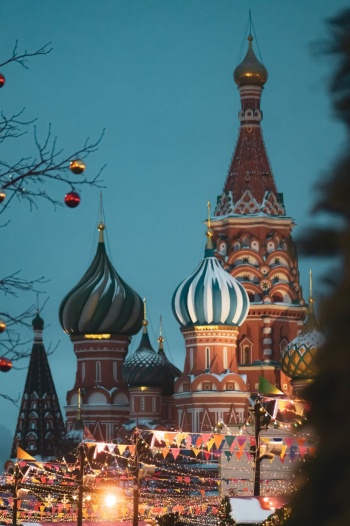
The capital is a dynamic blend of history and modernity. The Red Square, flanked by the colourful onion domes of St. Basil’s Cathedral, the Kremlin walls, and the State Historical Museum, is the symbolic heart of the country. Inside the Kremlin you can visit ancient cathedrals and the Armoury Chamber. Art lovers will spend hours in the Tretyakov Gallery, while the Bolshoi Theatre offers world‑class ballet and opera. Gorky Park and the soaring viewpoints of the Moscow‑City skyscrapers show a more contemporary side. With your eSIM, you can book tickets online to avoid long queues, navigate the vast metro system – itself a sight with its marble and chandeliered stations – and use augmented‑reality apps to reconstruct historical scenes.
St. Petersburg
Russia’s imperial capital is a UNESCO‑listed city of canals and pastel palaces. The Hermitage Museum, housed in the Winter Palace, contains over three million works of art. A hydrofoil ride takes you to the grand Peterhof Palace with its gilded fountains, and the Catherine Palace in Pushkin showcases the legendary Amber Room. The Church of the Savior on Spilled Blood dazzles with its mosaic interior. During the summer White Nights, the city never really gets dark. Mobile data lets you access audio guides, check live boat tour availability, and instantly share photos from the impossibly elegant open bridges.
Golden Ring
Northeast of Moscow, a ring of ancient towns preserves Russia’s medieval heritage. Suzdal feels like an open‑air museum with its wooden houses and onion‑domed cathedrals. Vladimir has magnificent 12th‑century limestone carvings, while Sergiev Posad is the country’s spiritual centre with its lavra monastery. Connectivity here is generally adequate for maps and translations, though smaller villages may have weaker signals.
Lake Baikal
In Siberia, this vast freshwater lake – the deepest in the world – is a natural wonder. In summer you can hike the Great Baikal Trail, kayak, or take a boat to Olkhon Island. In winter the frozen surface becomes a translucent highway for ice skaters and dog sleds. Coverage around the lake is limited outside of major settlements like Irkutsk and Listvyanka, so an eSIM is useful for sharing experiences when you do have a signal, but offline maps are essential for navigation.
Kamchatka and the Far East
For adventure seekers, the volcanic landscapes of the Kamchatka Peninsula offer trekking, geyser valleys, and brown bear sightings. The region is remote and infrastructure is sparse. Mobile coverage exists near Petropavlovsk‑Kamchatsky but fades quickly. Your eSIM can keep you connected for planning and emergencies in town, but don’t expect a signal in the wilderness.
Sochi and the Caucasus
The Black Sea resort of Sochi combines subtropical beaches with the nearby Krasnaya Polyana ski slopes in the Caucasus Mountains. The city‑wide 4G coverage makes it easy to share beach days and find après‑ski spots, while mountain areas may have patchier reception depending on your operator.
Interesting Facts and Cultural Tips

Russia’s cultural tapestry is as vast as its geography. Hospitality is deeply ingrained; if you are invited into a Russian home, it is customary to bring a small gift such as flowers (remember, always an odd number – even numbers are for funerals), chocolates, or a bottle of something. At the table, expect to be offered plenty of food and drink. Traditional cuisine is hearty and comforting: try borscht (a beetroot soup served with sour cream), pelmeni (small dumplings filled with meat), blini (thin pancakes) with caviar or jam, and beef Stroganoff. Tea is the national drink, often brewed strong and served from a samovar.
Public transport in cities is efficient and affordable. The Moscow Metro deserves special mention: it is one of the busiest in the world and its older stations are adorned with marble, mosaics, and chandeliers – touring them is a sightseeing activity in itself. Trains are the best way to cover long distances, with sleeper compartments on overnight routes offering a unique social experience. Just remember to bring your own mug and tea bags; a hot‑water samovar is always available at the end of the carriage.
Religion plays a visible role in daily life, with Russian Orthodox churches found everywhere. When visiting, women should cover their heads and wear skirts; men should remove hats. Festivals punctuate the calendar: Maslenitsa (Pancake Week) before Lent is a joyful celebration with outdoor games, sleigh rides, and the burning of an effigy to say goodbye to winter. New Year’s Eve is the biggest holiday of the year, far more festive than Christmas (which falls on 7 January according to the Orthodox calendar). Soviet history is still palpable in monuments, statues, and the sprawling VDNKh exhibition complex in Moscow.
Lesser‑known gems include the Solovetsky Islands in the White Sea, with a haunting monastery‑turned‑gulag, and the historic city of Pskov near the Estonian border, with its ancient kremlin. While young people in bigger cities often speak some English, it is far from universal. Learning a few Russian phrases such as “Spasibo” (thank you) and “Zdravstvuyte” (hello) will earn you appreciative smiles. Tipping is not mandatory everywhere, but 10% in restaurants is customary for good service. Cash is still widely used in markets and smaller towns, though cards and contactless payments are common in cities.
eSIM Installation and Activation

Setting up an eSIM for Russia is a quick process that you can complete before your trip. First, confirm that your smartphone is compatible with eSIM technology. Most recent iPhones (XS and later), Google Pixel devices, and many flagship Samsung Galaxy models support it, but always check your manufacturer’s specifications. Equally important, ensure your device is network‑unlocked; a phone locked to a specific carrier may not accept an eSIM from a different provider.
Once you have purchased a plan, you will receive a QR code by email. It is best to install the eSIM while you still have a stable Wi‑Fi connection, either at home or before you leave your accommodation. Go to your phone’s settings, find the “Add Cellular Plan” (iOS) or equivalent option, and scan the QR code. Alternatively, you can enter the provided activation details manually. During installation, you may be asked to label the new plan – something like “Russia Data” helps you identify it later. After installation, set your newly added eSIM as the default line for mobile data. Keep your primary SIM active for voice calls and SMS if needed, but be careful to avoid accidental data usage on that line: turn off data roaming on your primary SIM and disable “Allow Mobile Data Switching” (iOS) or similar features.
Some travel eSIMs require you to enable data roaming on the eSIM line; this is because the eSIM may connect to the local partner network as a roaming visitor. Read your provider’s instructions carefully. Activation timing varies: certain eSIMs activate immediately upon installation, while others only begin working when they detect a supported network at your destination. Do not delete an eSIM profile unless your provider explicitly confirms it can be reinstalled – many plans are single‑use and deleting them forfeits the plan.
If you experience connectivity issues after arrival, try restarting your device, toggling Airplane mode on and off, or checking the APN (Access Point Name) settings provided by your eSIM seller. Manual network selection in your device settings can sometimes help if automatic selection fails, but availability depends on your plan. Always keep your QR code and activation information secure until you are sure everything works, and reach out to your eSIM provider’s support if problems persist.
Ready to travel to Russia?
Choose your eSIM before departure and connect to mobile internet as soon as you arrive.