











Slovenia Travel Guide: eSIM, Mobile Internet & Tips
Essential travel information, mobile internet advice and useful tips for your journey to Slovenia.
Why Stay Connected in Slovenia?

Situated in the heart of Europe, Slovenia is a compact yet diverse country that blends alpine scenery, Mediterranean charm and vibrant cultural life. From the bustling streets of Ljubljana to the serene waters of Lake Bled, visitors encounter a landscape that shifts from snow-capped peaks to sunlit Adriatic coastline within just a few hours' drive. Reliable mobile internet has become an essential travel companion in Slovenia, helping you navigate winding mountain roads, manage accommodation and transport bookings, and access digital tickets for museums and public transit. Whether you need to translate a menu in a local gostilna or stay in touch with family back home, a stable connection can make all the difference.
For remote workers and digital nomads, Slovenia offers a growing number of co-working spaces and cafes with decent Wi‑Fi, but having your own mobile data keeps you connected even when exploring offbeat villages. Emergency information, such as weather alerts for alpine hikes or road closure updates, is more accessible when you have a data connection on the go. While free public Wi‑Fi is available in many city centres and tourist spots, it often requires registration and may be slow or insecure.
An eSIM can be a practical alternative to hunting for a physical travel SIM upon arrival. Instead of swapping plastic cards and risking loss of your home SIM, you can activate a digital profile directly on compatible devices. An eSIM does not have to be the cheapest option in every scenario, but it removes the hassle of visiting local carrier stores and dealing with language barriers. Whether you’re staying for a weekend city break or an extended road trip, an eSIM can help you stay connected from the moment you land.
Mobile Internet in Slovenia: Coverage and Performance

4G and 5G Coverage
Slovenia benefits from a well-developed mobile network infrastructure. In urban centres such as Ljubljana, Maribor, Celje and Koper, 4G LTE coverage is generally reliable, and you can expect good data speeds for everyday tasks like map streaming, social media and video calls. 5G deployment has progressed, but availability is not uniform. In larger cities, 5G may be accessible on certain plans and compatible devices, while in smaller towns and rural areas 4G remains the standard. You should not assume that every eSIM plan supports 5G; always check the plan details and your device’s compatibility.
Beyond the Cities
Once you venture into the countryside, the picture changes. Slovenia’s rugged terrain, with its karst plateaus, dense forests and deep valleys, can affect signal strength. In popular tourist regions like the Julian Alps around Triglav National Park, the Soča Valley and the Logar Valley, coverage is available in settled areas but may fade or vanish on remote hiking trails and mountain passes. The same applies to the hilly wine regions of the northeast and the remote Pokljuka plateau. Even along the short coastline near Piran and Portorož, you may find that beachside areas generally have a good signal, but coves and seaside cliffs can be challenging.
Indoor coverage in older buildings with thick stone walls, such as historic hotels or cellar restaurants, may be weaker than in modern structures. During peak tourist season, popular spots like Bled and Piran can experience network congestion, leading to slower data speeds at busy times of day.
Actual coverage depends on your location, device, network availability and the specific partner network used by your eSIM plan. Different providers may have varying degrees of coverage in remote areas. It is wise to download offline maps and essential travel information before heading into the mountains.
Slovenia's Mobile Network Operators

Slovenia’s mobile market is served by a few well-established network operators, each with its own infrastructure and coverage characteristics. The main providers are:
- Telekom Slovenije – The incumbent and largest operator, offering extensive coverage across the country. Its network generally provides reliable 4G service in urban and many rural areas, and it has been expanding 5G in city centres.
- A1 Slovenija – A subsidiary of the A1 Telekom Austria Group, A1 Slovenija has a strong presence and a modern network. It offers competitive coverage and has deployed 5G in select locations, particularly in Ljubljana and Maribor.
- Telemach – Previously known as Tušmobil, Telemach is part of the United Group and provides a solid alternative, with good 4G coverage and ongoing 5G rollouts in urban areas.
In addition to these three, there are smaller operators and virtual service providers that rely on the infrastructure of the main networks. When you purchase an eSIM for Slovenia, the service may be provided through one or more of these partner networks, depending on the plan you select. This means the available network is not always under your control; some eSIM plans offer a single network, while others may allow your device to select from multiple networks, but manual network selection is not guaranteed.
5G access depends on your eSIM plan, your device’s capabilities, and the coverage of the partner network at your location. An eSIM that connects to a partner network with 5G infrastructure may still limit you to 4G LTE based on your plan. Always review the plan specifications before purchase. In practice, 4G speeds are sufficient for most travel needs, including navigation and streaming.
Sightseeing in Slovenia: Must-See Destinations

Slovenia may be small, but it packs an extraordinary number of sights into a compact area. Starting in the capital, Ljubljana is a green, pedestrian-friendly city dominated by a medieval castle and criss-crossed by the Ljubljanica River. The old town’s pastel-coloured buildings, open-air markets and lively café culture make it a delight to explore on foot. Mobile internet helps you navigate to hidden courtyards, look up opening hours of the National Gallery or purchase a digital ticket for a river cruise.
Natural Wonders
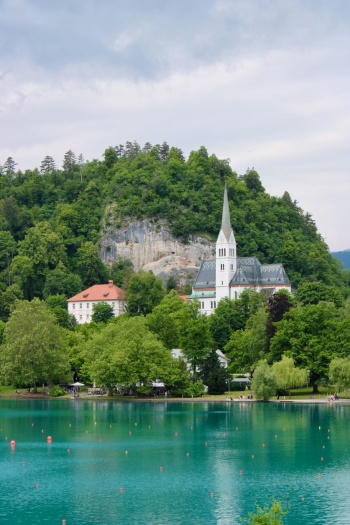
Less than an hour from the capital, Lake Bled is Slovenia’s picture-postcard destination. The emerald lake with its iconic island church and clifftop Bled Castle draws visitors year-round. You can rent a rowboat, hike the surrounding trails or simply enjoy a slice of kremšnita (cream cake) by the water. Using your mobile connection, you can check live webcam feeds to avoid crowds, reserve a table at a lakeside restaurant or navigate the driving route from Ljubljana.
Northwest of Bled lies Triglav National Park, a paradise for hikers, climbers and canyoning enthusiasts. The park encompasses the Julian Alps, the emerald Soča River and dramatic peaks like Mount Triglav. Mobile coverage is sporadic in the backcountry, so download offline maps and trail information beforehand. An eSIM can keep you connected in the valleys and at mountain huts that have signal, allowing you to share photos or check weather alerts.
Underground adventures await at Postojna Cave, one of the world’s largest karst cavern systems, and the nearby Predjama Castle, built into a vertical cliff. Book tickets online to skip the queues and use your device to translate the multilingual interpretive panels.
Coastal Charm and Vineyards
The short Slovenian coastline around Piran and Portorož offers Venetian-style architecture, fresh seafood and seaside promenades. Mobile connectivity is strong in town centres, letting you discover local concerts, ferry schedules or last-minute accommodation. In the hilly interior, the Vipava Valley and Goriška Brda wine regions reward travellers with excellent wines and agritourism stays. A data connection can help you navigate winding vineyard roads and contact local winemakers for tastings.
For history buffs, Ptuj, the oldest town in Slovenia, boasts a riverside castle and Roman ruins, while the Škocjan Caves, a UNESCO site, offer a dramatic underground canyon. Throughout your travels, a reliable mobile internet connection enhances flexibility, safety and the overall experience.
Slovenia: Culture, Cuisine and Practical Tips

Slovenia’s culture is shaped by its geography at the crossroads of Slavic, Germanic and Mediterranean influences. This is reflected in everything from the language, which has over forty dialects, to the cuisine. In the alpine northwest, hearty dishes like žganci (buckwheat spoonbread) and kranjska klobasa (Carniolan sausage) dominate, while the coast favours olive oil, grilled fish and seafood risotto. In the Prekmurje region in the east, you’ll encounter Hungarian-inspired gibanica, a layered pastry. Sampling local food is a highlight of any trip, and mobile internet can help you translate menus, find the best-rated restaurants or book a food tour.
Festivals and Traditions
Throughout the year, Slovenia hosts numerous festivals that reveal the local spirit. The Škofja Loka Passion Play, a medieval reenactment, takes place every few years and draws visitors from afar. In February, the Kurentovanje carnival in Ptuj is one of the most colourful and ancient traditions in Europe, where Kurenti don sheepskin costumes and bells to chase away winter. During the summer, Ljubljana’s Summer Festival fills the capital with open-air concerts, theatre and dance. Having a data connection allows you to check festival schedules, buy tickets online and navigate to venues.
Slovenians are passionate about outdoor activities. On weekends, families head to the hills for hiking, cycling or foraging. It’s not unusual to see locals picking wild mushrooms or herbs in the forests. Public drinking fountains are common in towns, and tap water is safe and excellent. A useful cultural tip: when entering someone’s home, it is customary to remove your shoes. In restaurants, a service charge is often included, but rounding up the bill is appreciated.
Getting Around
Public transport is well organised, with trains connecting major cities and buses reaching remote villages. Buying mobile tickets via an app can save time. Slovenia’s compact size makes it easy to explore by car, and using a navigation app with live traffic data is invaluable on the meandering mountain roads. Whether you’re uncovering less-visited gems like the idyllic Velika Planina shepherd settlement or enjoying a thermal spa in Rogaška Slatina, staying connected enriches your journey.
How to Activate Your eSIM for Slovenia

Before You Travel
First, confirm that your device supports eSIM technology. Most recent high-end smartphones, including recent iPhones, Google Pixels and Samsung Galaxy models, are compatible, but some may be locked to a specific carrier. If your phone is locked, contact your home carrier to unlock it before departure. It is also wise to check your device’s eSIM compatibility on the manufacturer’s website.
Installation Steps
Once you have purchased an eSIM plan, you will receive a QR code or manual installation details via email. While still connected to Wi‑Fi, open your device’s cellular or mobile settings and look for the option to add a mobile plan. Scan the QR code or enter the provided details. The installation process downloads the eSIM profile onto your device; this may take a few minutes. Make sure you are on a stable Wi‑Fi connection.
When the profile is installed, you can label your eSIM (e.g., “Slovenia Travel”) and decide how your phone should use it. For data, assign the eSIM as your primary mobile data line. Depending on the plan, you may need to enable data roaming for the eSIM, even within Slovenia, because some providers use roaming agreements with local networks. Check the plan’s activation instructions carefully: some eSIMs activate immediately upon installation, while others only activate when the device connects to a supported partner network in the destination.
Important Precautions
To avoid unexpected charges, turn off data roaming on your primary SIM line. If your primary SIM remains active for calls, consider disabling mobile data on it to prevent accidental usage. You may also set up call forwarding or use your eSIM’s number for calls if the plan supports it. Keep the QR code and any activation details stored securely in case you need to reinstall the eSIM. Do not delete an eSIM profile unless your provider confirms that it can be reinstalled without additional cost.
If you encounter issues after arrival, try restarting your device, checking that your eSIM is selected for data, and verifying APN settings if provided. Manual network selection can sometimes resolve connection problems, though not all eSIM plans permit it. Remember that coverage varies, and if you are in a remote area, a weak signal may not be a problem with your eSIM but rather the local network availability.
Ready to travel to Slovenia?
Choose your eSIM before departure and connect to mobile internet as soon as you arrive.