












Uzbekistan eSIM and Travel Guide: Stay Connected While Exploring the Silk Road
Essential travel information, mobile internet advice and useful tips for your journey to Uzbekistan.
Discovering Uzbekistan with Reliable Mobile Connectivity

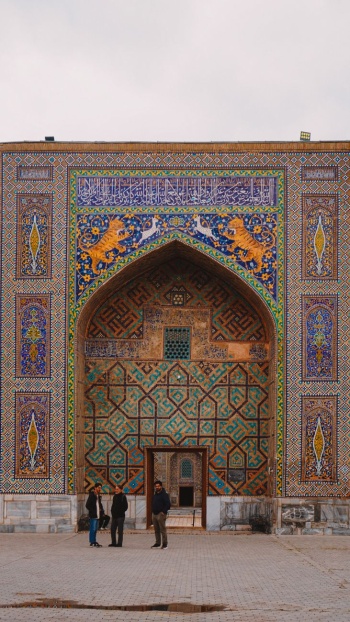
Uzbekistan, a jewel of Central Asia, welcomes travellers with its breathtaking Silk Road architecture, bustling bazaars, and warm hospitality. From the turquoise domes of Samarkand’s Registan to the ancient walled city of Khiva, this country offers an immersion into centuries of history and culture. While exploring Tashkent, Bukhara, or the remote Fergana Valley, having dependable mobile internet transforms your journey in practical ways. It allows seamless navigation through winding old towns using map applications, simplifies last‑minute accommodation and transport bookings, and provides instant access to digital tickets for trains or attractions. Staying connected enables smooth communication with local guides, family at home, or via translation apps when deciphering Uzbek or Russian signs and menus. For remote workers, reliable data ensures you can handle urgent tasks even from a chaikhana terrace. During emergencies, access to online information, embassy contacts, or ride‑hailing services can be invaluable.
In this context, an eSIM can serve as a convenient alternative to hunting for a physical local SIM card upon arrival or managing your home operator’s roaming arrangements. It eliminates the need to swap tiny plastic cards, allows you to keep your regular number active for calls and messages, and can be set up before you even board the plane. While it is not guaranteed to be the cheapest option in every scenario, the combination of flexibility, time saved, and the ability to compare plans online makes it a compelling choice for many visitors to Uzbekistan.
Mobile Internet and Coverage in Uzbekistan

Uzbekistan’s mobile network infrastructure has seen significant investment in recent years, with extensive 4G LTE coverage in most urban areas and along major transport corridors. Tashkent, the capital, enjoys solid 4G availability indoors and outdoors, and public places such as hotels, airports, and restaurants typically offer adequate signal quality. Other key tourist cities like Samarkand, Bukhara, and Khiva also benefit from good 4G connectivity in their centres, though signal strength may weaken inside thick‑walled historic buildings or in narrow alleyways. 5G deployment is in its early stages and is currently limited to selected parts of Tashkent and a few other cities, so visitors should not rely on 5G being available everywhere or at all. Devices that support 5G may still fall back to 4G or 3G depending on location and the specific eSIM plan.
Once you venture beyond the main cities, coverage becomes more variable. In rural areas, small villages, and especially in the desert regions between tourist hubs, signal can drop to 3G or even 2G, and there may be stretches with no service at all. The mountainous areas of the Tian Shan and Pamir‑Alay ranges, such as those near the Chimgan and Beldersay resorts, can experience patchy coverage due to rugged terrain. Indoor reception in remote guesthouses or yurt camps is often limited. Congestion may slow down data speeds during busy hours in popular bazaars or when many users gather for festivals. Actual network experience depends on your device’s supported bands, the local operator’s infrastructure, and the roaming partner selected by your eSIM provider. Always check your eSIM plan details for which networks are available and in what areas.
Principal Mobile Network Operators in Uzbekistan

The mobile market in Uzbekistan is served by several established operators, each with its own network footprint. Beeline Uzbekistan (operated by Unitel) is one of the largest, providing extensive 4G coverage in cities and towns, and has been among the first to test 5G. Ucell (Coscom) is another major player with a strong presence in populated areas and along highways. Mobiuz (formerly UMS) offers competitive 4G services and has been actively expanding its coverage. Perfectum is a smaller operator that relies on its own network and roaming agreements, primarily focusing on urban residential and business customers. In some regions, the state‑backed UzMobile brand may also appear, sharing infrastructure with other providers.
When you purchase an eSIM for Uzbekistan, the provider may partner with one or more of these networks. The specific partner networks are determined by the eSIM plan you select. Some plans offer access to a single operator, while others may include multiple networks, potentially allowing manual network selection. However, automatic switching between all available operators is not guaranteed and depends on the eSIM service configuration. 5G access is subject to both the partner network’s rollout in your area and the eSIM plan’s support for 5G. Virtual operators or international eSIM brands frequently rely on the infrastructure of these larger local companies, so you may notice the network name displayed on your device as one of the familiar brands rather than the eSIM reseller.
Sightseeing Highlights and How Mobile Internet Enhances Your Trip

Uzbekistan’s cultural treasures are concentrated along the ancient Silk Road, with dazzling cities that seem frozen in time. Tashkent, the modern capital, mixes Soviet‑era monuments with new museums like the Amir Timur Museum and sprawling bazaars such as Chorsu. In Samarkand, the Registan ensemble, Bibi‑Khanym Mosque, and Shah‑i‑Zinda necropolis leave visitors in awe, while interactive maps and online audio guides can enrich your exploration of this UNESCO World Heritage site. Bukhara offers a compact historic centre with the Kalon Minaret, Ark Fortress, and trading domes where having instant translation apps helps when bargaining for carpets or ceramics. Khiva’s Itchan Kala, a perfectly preserved walled city, is a living museum where a reliable connection lets you book guided walks or check opening times for minarets and madrasahs on the fly.
Beyond the famous cities, the Fergana Valley reveals a greener Uzbekistan, with silk‑weaving workshops in Margilan and pottery centres in Rishton. Mobile internet helps with arranging shared taxis or navigating to craft studios off the main road. Nature enthusiasts can head to Aydarkul Lake for swimming and camel rides, or to the Nuratau Mountains for hiking and homestays. In the west, the desolate ship graveyards of the Aral Sea near Moynaq and the impressive Savitsky Art Museum in Nukus are off‑the‑beaten‑path adventures where connectivity may be sparse, so downloading offline maps and translations in advance is wise. Whether you are photographing the majestic Ugam‑Chatkal National Park or navigating Tashkent’s metro—famous for its ornate stations—a functioning internet connection helps you share experiences, check transport schedules, and stay safe during your journey.
Culture, Traditions, and Practical Tips for Travellers

Uzbekistan’s culture is a rich tapestry woven from Turkic, Persian, and Russian influences, and understanding local customs can greatly enhance your visit. Hospitality is legendary; you may be invited to share a meal or a cup of green tea, and accepting with gratitude is polite. When dining, expect generous portions of plov (rice pilaf with meat and vegetables), shashlik (grilled meat skewers), samsa (baked pastries), and round non bread, which is treated with reverence—never placed upside down. Tea is served throughout the day, and it is customary for the host to pour and refill your cup multiple times. Markets overflow with dried fruits, spices, and vibrant textiles, and haggling is expected but should be done respectfully.
Regional differences are noticeable: Fergana Valley is more conservative, while Tashkent is cosmopolitan. Major festivals include Navruz (spring equinox, March 21) celebrated with music, dances, and sumptuous dishes, and Independence Day (September 1) with parades and fireworks. The Silk and Spices Festival in Bukhara showcases local craftsmanship. Transport habits range from the efficient high‑speed Afrosiyob trains connecting Tashkent, Samarkand, and Bukhara, to shared taxis and marshrutkas for shorter hops. Lesser‑known gems include the ancient Buddhist ruins at Fayaz‑Tepe near Termez and the starkly beautiful Ustyurt Plateau. As a traveller, dressing modestly—covering shoulders and knees—is appreciated, especially when entering mosques. Using eSIM data to access online guides about etiquette or translate phrases like “rahmat” (thank you) can help you navigate daily interactions with ease.
eSIM Installation and Activation: A Step‑by‑Step Overview

Before purchasing an eSIM for Uzbekistan, verify that your device is both eSIM‑compatible and network‑unlocked. Most recent smartphones from major brands support eSIM, but it is wise to check your manufacturer’s specifications. Purchasing an eSIM plan typically delivers a QR code via email. Once you have this, connect your device to a stable Wi‑Fi network and follow the installation process: navigate to your cellular or mobile data settings, select “Add eSIM” or “Add Data Plan,” and scan the QR code. Alternatively, you may enter the activation details manually if provided. During installation, you will be asked to label the eSIM (e.g., “Uzbekistan Travel”) and assign it as your data line. Ensure you choose the eSIM for mobile data, not your primary SIM, to avoid unexpected charges.
Some eSIM plans activate immediately upon installation, while others only activate when the device connects to a supported network in Uzbekistan. After arrival, you may need to enable data roaming for the eSIM, as many travel plans operate through roaming agreements. To prevent accidental data usage on your primary SIM, turn off data roaming on that line or disable it temporarily if you do not intend to use it for calls or texts. Be aware that using your primary SIM for voice calls or SMS may still incur standard roaming fees. Keep the QR code and any activation codes stored safely; deleting an eSIM could permanently disable it unless your provider confirms the plan is reusable. If you encounter connectivity issues, try restarting the device, checking that the correct APN settings are applied, or performing a manual network selection in areas with weak automatic registration.
Ready to travel to Uzbekistan?
Choose your eSIM before departure and connect to mobile internet as soon as you arrive.