
Egypt Travel Guide 2026 – Pyramids, Red Sea, Costs, Culture & Internet
Planning a trip to Egypt? This complete Egypt travel guide covers everything you need to know before you go: Cairo and Giza, the Pyramids, Luxor, Aswan, Abu Simbel, Alexandria, the Red Sea, Hurghada, Sharm El-Sheikh, Marsa Alam, Egyptian culture, accommodation, travel costs, food, transport, mobile networks, 4G and 5G coverage, eSIM options and practical travel tips.
Why Visit Egypt?
Egypt combines some of the world's most famous archaeological sites with the Nile, vast deserts, Mediterranean coastline and Red Sea beaches. Travellers can explore ancient temples and pyramids, cruise the Nile, dive among coral reefs, relax at beach resorts or discover the culture and energy of modern Egyptian cities.
Best Time to Visit Egypt
Egypt can be visited throughout the year, but many travellers prefer the cooler months for archaeological sightseeing and desert excursions. Summers can be extremely hot, particularly in Upper Egypt around Luxor and Aswan. Red Sea resorts remain popular throughout much of the year.
Egypt Weather
Egypt has a predominantly dry desert climate with abundant sunshine. Cairo can be hot in summer and cooler during winter evenings, while southern destinations such as Luxor and Aswan experience particularly high summer temperatures. Red Sea destinations benefit from coastal conditions but can still become very hot.
High Season and Low Season in Egypt
Travel demand and hotel prices vary by destination and season. Cooler periods are particularly popular for Cairo, Luxor, Aswan and Nile cruises. Red Sea resort prices can also rise around European school holidays, Christmas, New Year and other peak travel periods.
Cairo – Egypt's Capital
Cairo is a vast metropolis and one of the cultural centres of the Arab world and Africa. The city combines historic Islamic and Coptic districts, museums, markets, restaurants and modern neighbourhoods, while the Pyramids of Giza are located within Greater Cairo.
Pyramids of Giza
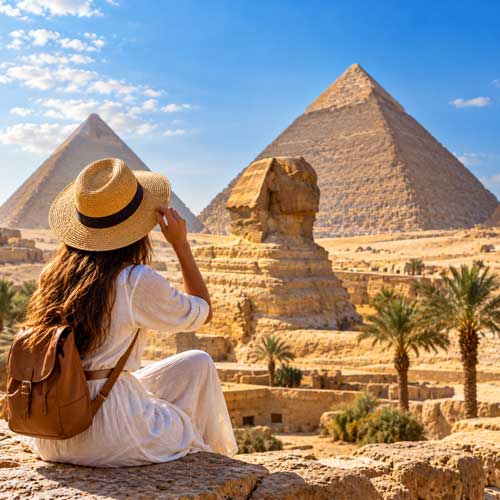
The Giza pyramid complex is Egypt's most famous archaeological destination. The Great Pyramid of Khufu is the only surviving Wonder of the Ancient World. Together with the pyramids of Khafre and Menkaure, the surrounding tombs and desert landscape, Giza is an essential stop for first-time visitors.
The Great Sphinx of Giza
The Great Sphinx is one of the most recognisable monuments in Egypt. The enormous limestone statue with the body of a lion and a human head stands beside the Giza pyramid complex.
Grand Egyptian Museum
The Grand Egyptian Museum near the Giza Plateau is one of the most important museum attractions for visitors interested in ancient Egypt. Travellers should check current opening information, ticket categories and exhibition access before visiting.
Saqqara
Saqqara is one of Egypt's most important archaeological areas and is home to the Step Pyramid of Djoser, regarded as Egypt's earliest monumental stone pyramid complex. Saqqara can be combined with Giza and Dahshur on an archaeological day trip.
Dahshur
Dahshur provides fascinating insight into the development of pyramid construction. The Bent Pyramid and Red Pyramid demonstrate important stages in the architectural evolution that eventually produced the famous pyramids at Giza.
Historic Cairo
Historic Cairo is a UNESCO World Heritage area filled with mosques, madrasas, traditional architecture and centuries of Islamic history. Exploring the old city provides a completely different experience from Egypt's ancient pharaonic monuments.
Khan el-Khalili
Khan el-Khalili is Cairo's famous historic market district. Visitors can explore narrow streets filled with shops selling jewellery, lamps, spices, textiles, souvenirs and traditional crafts while experiencing one of Cairo's most atmospheric neighbourhoods.
Coptic Cairo
Coptic Cairo contains some of Egypt's most important Christian heritage sites. Historic churches and religious monuments demonstrate another major layer of Egypt's long and diverse cultural history.
Luxor – The World's Greatest Open-Air Museum
Luxor stands on the site of ancient Thebes and contains an extraordinary concentration of temples, tombs and archaeological monuments. The Nile divides the city into the East Bank and West Bank, each containing major attractions.
Karnak Temple
The Karnak temple complex is one of Luxor's most impressive archaeological sites. Its monumental columns, courtyards, temples and ancient inscriptions demonstrate the enormous scale and importance of ancient Thebes.
Luxor Temple
Luxor Temple stands close to the Nile in the centre of modern Luxor. Visiting in the late afternoon or evening can provide a particularly atmospheric experience as the ancient structures are illuminated.
Valley of the Kings
The Valley of the Kings on Luxor's West Bank contains royal tombs decorated with remarkable ancient Egyptian artwork. Different tombs may be open at different times, and some require separate tickets.
Temple of Hatshepsut
The mortuary temple of Queen Hatshepsut at Deir el-Bahari is dramatically positioned against the cliffs of Luxor's West Bank. Its terraces and monumental architecture make it one of Egypt's most distinctive ancient sites.
Valley of the Queens
The Valley of the Queens contains tombs associated with royal women and children. The Tomb of Queen Nefertari is particularly famous for its exceptionally preserved and colourful decoration, although access conditions and ticketing can change.
Hot Air Balloon over Luxor
A sunrise hot-air-balloon flight is one of Luxor's most popular experiences, providing aerial views over the Nile, farmland, desert and archaeological sites of the West Bank. Operations depend on weather and local conditions.
Aswan
Aswan has a more relaxed atmosphere than Cairo or Luxor. The Nile, islands, granite landscapes and Nubian culture make the city an important destination on journeys through southern Egypt.
Philae Temple
The Temple of Philae is one of the most beautiful archaeological attractions around Aswan. Its island setting means visitors normally reach the temple by boat.
Abu Simbel
The temples of Abu Simbel are among Egypt's most spectacular ancient monuments. The colossal seated statues of Ramesses II dominate the façade of the main temple near Lake Nasser. Abu Simbel can be reached from Aswan by road or air.
Nubian Culture in Aswan
The Aswan region provides opportunities to learn about Nubian culture, traditions, food, music and colourful architecture. Visitors should choose respectful experiences that support local communities.
Nile Cruises
A Nile cruise between Luxor and Aswan is one of the classic ways to experience Egypt. Cruises typically combine river scenery with stops at archaeological sites along the Nile. Vessel quality, itinerary and included excursions vary considerably.
Felucca Sailing on the Nile
Traditional feluccas provide a slower and more atmospheric way to experience the Nile. Short trips are particularly popular around Aswan and can be a relaxing contrast to intensive archaeological sightseeing.
Alexandria
Alexandria is Egypt's major Mediterranean city and has a long Graeco-Roman and cosmopolitan history. Visitors can explore historic sites, museums, Mediterranean waterfront areas and seafood restaurants.
Bibliotheca Alexandrina
The modern Bibliotheca Alexandrina is one of Alexandria's major cultural landmarks and reflects the city's historic association with learning and the famous ancient Library of Alexandria.
Hurghada
Hurghada is one of Egypt's largest Red Sea resort destinations. Hotels, beaches, diving, snorkelling, boat trips and desert excursions make it particularly popular with European holidaymakers.
Sharm El-Sheikh
Sharm El-Sheikh is a major resort destination on the Sinai Peninsula. It is known for beaches, large hotels, diving, snorkelling and access to the coral reefs of the Red Sea.
Marsa Alam
Marsa Alam is a Red Sea destination popular with divers, snorkellers and travellers looking for a generally quieter resort experience. Marine life and coral reefs are major attractions in the region.
Dahab
Dahab combines Red Sea diving and snorkelling with a relaxed atmosphere on the Sinai coast. It is popular with independent travellers, divers, wind-sport enthusiasts and visitors looking for an alternative to larger resort centres.
Red Sea Diving and Snorkelling
Egypt's Red Sea is internationally known for coral reefs, clear water and diverse marine life. Hurghada, Sharm El-Sheikh, Dahab and Marsa Alam are major centres for diving and snorkelling.
Ras Mohammed National Park
Ras Mohammed near Sharm El-Sheikh is one of Egypt's best-known marine areas. Coral reefs, marine life and dramatic coastal scenery make it a major destination for snorkelling and diving excursions.
Siwa Oasis
Siwa is one of Egypt's most distinctive desert destinations. Palm groves, salt lakes, springs, desert landscapes and a unique local culture create an experience very different from Cairo or the Nile Valley.
White Desert
Egypt's White Desert is famous for extraordinary pale rock formations sculpted by wind and erosion. Desert excursions can provide dramatic landscapes and a completely different side of Egypt.
Mount Sinai and St Catherine
The mountainous St Catherine region of Sinai combines dramatic landscapes with major religious and historical significance. Visitors should prepare for temperature changes and check local travel conditions before planning excursions.
Egyptian Culture and Traditions
Egyptian culture combines ancient heritage with Arab, African, Mediterranean, Islamic and Christian influences. Family, hospitality and social relationships play an important role in everyday life. Visitors who show respect for local traditions are generally warmly welcomed.
Religion and Respectful Behaviour
Religion is an important part of everyday life for many Egyptians. Visitors should behave respectfully around mosques, churches and religious events and follow local rules when entering places of worship.
What to Wear in Egypt
Lightweight clothing is useful in Egypt's hot climate. More conservative clothing is appropriate when visiting religious sites and traditional neighbourhoods. At beach resorts, swimwear is normal within hotel and beach areas, while different standards may apply away from resorts.
Ramadan in Egypt
Travelling during Ramadan can provide a fascinating cultural experience. Daily schedules, restaurant hours and business opening times may change, while evenings can become especially lively after the fast is broken.
Arabic – Useful Language Information
Arabic is Egypt's official language. English is commonly used in many hotels, resorts and major tourism businesses, but learning a few Arabic greetings and expressions can make everyday interactions easier.
Egyptian Food – What Should You Try?
Egyptian cuisine includes dishes such as koshari, ful medames, taameya, molokhia, grilled meats, fresh bread and a wide range of desserts. Food is an important part of Egyptian social life and can be one of the highlights of a trip.
Koshari
Koshari is one of Egypt's best-known dishes, combining ingredients such as rice, pasta, lentils, chickpeas, tomato sauce and crispy onions. It is widely available and is particularly popular as an inexpensive and filling meal.
Is Egypt Expensive?
Egypt can offer excellent value for international travellers, although costs vary significantly. Local restaurants and transport can be inexpensive, while international hotels, private guides, premium Nile cruises, resort activities and major archaeological attractions can increase the total cost considerably.
Food Prices in Egypt
Local restaurants, bakeries and street food can be relatively inexpensive, while tourist restaurants, hotel dining and resort areas are generally more expensive. Prices in Cairo can also differ significantly from those inside international Red Sea resorts.
Accommodation in Egypt
Egypt offers everything from budget hostels and simple guesthouses to international hotels, Nile-view properties, desert lodges and luxury Red Sea resorts. Accommodation prices depend strongly on destination, season, hotel category and location.
Budget Hotels and Hostels
Budget accommodation is available in Cairo, Luxor, Aswan and other major destinations. Quality and facilities vary, so recent guest reviews, location and air-conditioning should be considered before booking.
Red Sea All-Inclusive Resorts
All-inclusive hotels are particularly common in Hurghada, Sharm El-Sheikh and Marsa Alam. Packages can include accommodation, meals and drinks, but inclusions vary considerably between properties.
Luxury Hotels in Egypt
Cairo, the Nile Valley and Red Sea destinations offer a wide selection of luxury hotels and resorts. Premium properties can include Nile or pyramid views, private beaches, spas, pools and extensive resort facilities.
When Should You Book Accommodation?
Booking early is useful around major holiday periods and during popular winter travel months. Red Sea resort prices can also vary substantially according to European holiday schedules and package-tour demand.
Money and Currency in Egypt
Egypt uses the Egyptian Pound (EGP). Travellers should check current exchange rates before departure because currency values can change. Cash remains useful for smaller purchases, tips and some local services.
Cards, Cash and ATMs
Cards are commonly accepted at many hotels, larger restaurants and tourism businesses, while cash remains important for smaller shops, markets and tips. ATMs are widely available in major cities and resort areas.
Tipping and Baksheesh
Tipping, often referred to as baksheesh, is common in Egypt for many tourism and service situations. Small tips may be expected for assistance, hotel services, drivers, guides and other services. The appropriate amount depends on the situation.
Getting Around Egypt
Egypt is a large country, so travellers often combine domestic flights, trains, private transfers, taxis and organised tours. The most convenient option depends on the distance, destination and travel style.
Domestic Flights
Domestic flights can save significant time when travelling between Cairo and destinations such as Luxor, Aswan and Red Sea resort areas. Travellers should check baggage allowances and schedules when booking.
Trains in Egypt
Rail services connect Cairo with Alexandria and destinations along the Nile Valley. Train classes and comfort levels vary, so travellers should check current schedules and booking requirements.
Taxis and Ride-Hailing
Taxis are widely available in Egyptian cities. App-based ride services can make pricing and navigation easier where available. Always confirm the method of payment and expected fare before using informal transport.
Driving in Egypt
Driving conditions can be challenging for visitors unfamiliar with local traffic. Many international travellers prefer taxis, private drivers, organised transfers or domestic flights rather than self-driving in major cities.
Mobile Internet in Egypt
Egypt has extensive mobile services across its major population centres and tourist destinations. Mobile data is useful for maps, ride-hailing, hotel communication, translations and travel planning. Coverage can vary in deserts, remote roads and isolated coastal areas.
Mobile Networks in Egypt
Egypt has four major mobile network operators: Vodafone Egypt, Orange Egypt, e& Egypt and WE. Network performance varies by location, and travellers may experience different signal quality between Cairo, the Nile Valley, Red Sea resorts and remote desert areas.
4G Coverage in Egypt
4G connectivity is widely available in Cairo, Alexandria and other populated areas as well as major tourism destinations such as Hurghada and Sharm El-Sheikh. Coverage becomes less predictable in remote desert regions and away from populated transport corridors.
5G in Egypt
5G services are available in Egypt and continue to develop. Availability depends on operator, location, device compatibility and network deployment. Travellers should not assume continuous 5G coverage throughout the country, particularly in remote areas.
Mobile Coverage in Cairo and Giza
Cairo and Giza generally offer strong mobile connectivity because of their dense population and extensive network infrastructure. Actual speed can still vary because of indoor coverage, congestion and local network conditions.
Mobile Coverage in Hurghada and Sharm El-Sheikh
Major Red Sea resort areas generally have good mobile connectivity around hotels, airports and populated tourism zones. Signal quality can vary during offshore boat trips, desert excursions and in remote coastal areas.
Mobile Coverage in Luxor and Aswan
Luxor and Aswan generally have reliable mobile connectivity within populated areas and major tourist zones. Coverage can become less consistent when travelling through remote desert areas or away from towns along the Nile.
Mobile Coverage in the Egyptian Desert
Travellers should never rely exclusively on mobile connectivity in remote desert regions. Signal may become weak or unavailable far from towns and major roads. Organised desert excursions should include appropriate communication and safety arrangements.
Wi-Fi in Egypt
Wi-Fi is available at many hotels, resorts, cafés and restaurants, but quality can vary considerably. Mobile data can provide a more convenient connection when travelling between attractions or using maps and transport apps.
Why Use an eSIM in Egypt?
An eSIM can provide mobile data without replacing your physical SIM card. Travellers can keep their primary SIM installed while using a compatible eSIM for internet access in Egypt.
20 GB or 50 GB – Which Egypt eSIM Should You Choose?
The 20 GB plan is suitable for many travellers who mainly use maps, messaging, browsing and normal social media. Travellers who expect heavier data use may prefer the 50 GB option, which also includes 30 minutes of calls and 50 SMS according to the package specification.
How Much Mobile Data Do You Need in Egypt?
Data usage depends on how you use your phone. Navigation, messaging and web browsing consume relatively little data, while video streaming, cloud backups, large downloads and frequent social-media video uploads can use significantly more.
Travelling Egypt with Children
Egypt can provide memorable family experiences, particularly around the pyramids, museums, Nile cruises and Red Sea resorts. Families should plan around high temperatures, travel distances and the amount of walking required at archaeological sites.
Egypt for Beach Holidays
Travellers who mainly want sunshine, swimming and resort facilities can focus on the Red Sea. Hurghada, Sharm El-Sheikh and Marsa Alam offer large selections of hotels and access to snorkelling, diving and boat excursions.
Egypt for History Lovers
Few destinations can match Egypt for archaeological travel. A classic history-focused itinerary combines Cairo and Giza with Luxor, Aswan and Abu Simbel, while longer journeys can add Saqqara, Dahshur and Alexandria.
Is Egypt Safe for Tourists?
Millions of international visitors travel to Egypt, but security conditions can vary by region and over time. Travellers should check current official travel advice before departure and follow local authorities' guidance, particularly when considering remote desert or border areas.
Common Tourist Scams and Hassles
Visitors to busy tourism areas may encounter persistent sales approaches, unofficial guides, unclear pricing or offers of assistance followed by requests for payment. Confirm prices in advance and use reputable guides, transport providers and booking services.
Health, Heat and Sun
Egypt's heat and strong sunshine can be demanding, especially during archaeological sightseeing. Drink sufficient water, use sun protection and plan breaks during the hottest part of the day.
Drinking Water in Egypt
Many international travellers prefer sealed bottled water for drinking. When travelling in hot conditions, carrying sufficient drinking water is particularly important.
Electricity and Power Plugs
Travellers should check the voltage and plug compatibility of their devices before travelling. A universal travel adapter can be useful when carrying several electronic devices.
How Many Days Do You Need in Egypt?
A short trip of around one week can combine Cairo with Luxor or a Red Sea resort. Ten to fourteen days provides much more flexibility for Cairo, Luxor, Aswan and the Red Sea. Longer trips can include Alexandria, Abu Simbel, Siwa and additional desert destinations.
Is Egypt expensive for tourists?
Egypt can be relatively affordable for international travellers, particularly for local food and some forms of transport. International hotels, private tours, premium cruises and resort activities can substantially increase the total cost.
What is the best time to visit Egypt?
Many travellers prefer the cooler months for archaeological sightseeing. Red Sea resorts can be visited throughout much of the year, although seasonal temperatures and wind conditions vary.
How many days do you need in Egypt?
Seven days is enough for a focused trip, while ten to fourteen days allows a more comfortable combination of Cairo, Luxor, Aswan and a Red Sea destination.
Does Egypt have 5G?
Yes. 5G services are available in Egypt, although availability depends on the operator, location, compatible device and current network deployment.
Which mobile networks operate in Egypt?
The major mobile networks are Vodafone Egypt, Orange Egypt, e& Egypt and WE.
Is mobile coverage good in Egypt?
Mobile coverage is generally good in major cities, populated areas and important tourist destinations. Coverage can be limited or unavailable in remote desert regions, offshore areas and isolated locations.
Can I use an eSIM in Egypt?
Yes, if your smartphone supports eSIM technology and is not restricted by a carrier lock. A travel eSIM can provide mobile connectivity while allowing you to keep your physical SIM installed.
Is 20 GB enough for a trip to Egypt?
For many travellers, 20 GB is sufficient for navigation, messaging, browsing, email and moderate social-media use during a 30-day trip. Heavy video streaming or frequent large uploads can consume data much faster.
Should I visit Hurghada or Sharm El-Sheikh?
Both are major Red Sea resort destinations. The better choice depends on your flight connections, preferred hotel, diving or snorkelling plans and the other destinations included in your Egypt itinerary.
Is Cairo or Luxor better for ancient Egyptian history?
Cairo and Giza are essential for the pyramids and major museums, while Luxor contains an extraordinary concentration of temples and royal tombs. Travellers focused on ancient Egypt should ideally visit both.
Can I combine the Pyramids and the Red Sea in one trip?
Yes. Combining Cairo and Giza with Hurghada, Sharm El-Sheikh or another Red Sea destination is a popular way to experience both ancient Egyptian history and a beach holiday.