
Where Can You Travel for €1,000 for One Week? 10 Destinations Outside the EU
Can you travel outside the European Union for one week with a total budget of around €1,000? Yes – with flexible travel dates, reasonably priced flights and smart accommodation choices, there are still destinations where an unforgettable seven-day trip can fit within or close to this budget. In this guide we compare Egypt, Morocco, Tunisia, Georgia, Turkey, Jordan, Armenia, Azerbaijan, Uzbekistan and India, including estimated flights, accommodation, food, local transport, activities and mobile internet costs.
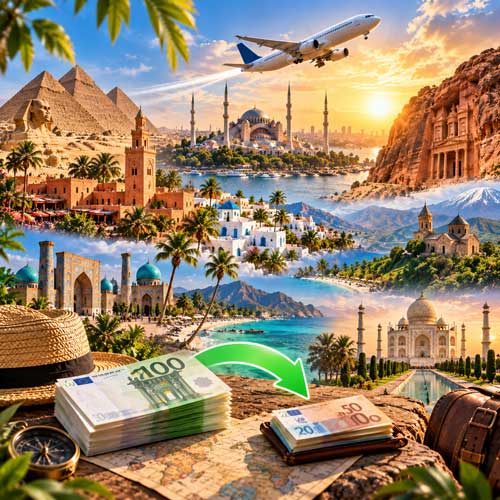
What Does the €1,000 Travel Budget Include?
For this guide, the target budget is approximately €1,000 per person for a seven-day trip from Europe to a destination outside the European Union.
The estimated budget includes return economy flights, seven nights of accommodation, food, local transportation and basic sightseeing or activities. Mobile internet is discussed separately because eSIM prices and data requirements vary by traveller.
These are planning estimates rather than guaranteed prices. Airfares and hotel prices can change dramatically depending on departure city, season, holidays and how far in advance you book.
1. Egypt 🇪🇬 – Ancient History and the Red Sea
Egypt can offer an extraordinary amount of travel experience for a relatively modest budget. Cairo and Giza provide some of the world's most famous historical attractions, while the Red Sea gives travellers the opportunity to finish the trip with beaches, snorkelling or diving.
A seven-day journey could begin with two or three days in Cairo and Giza. Visit the Pyramids of Giza, the Great Sphinx and Egypt's major museums before continuing towards the Red Sea. Hurghada is a practical option for travellers who want several days of relaxation after sightseeing.
Accommodation and food can remain relatively inexpensive compared with many European destinations, although major archaeological attractions, organised excursions and domestic transport can increase the total cost.
Egypt – Suggested 7-Day Itinerary
Day 1: Arrive in Cairo and explore the city.
Day 2: Pyramids of Giza and Great Sphinx.
Day 3: Museums, Historic Cairo and local markets.
Day 4: Travel to Hurghada or another Red Sea resort.
Day 5: Red Sea beach and snorkelling.
Day 6: Boat excursion, diving or relaxation.
Day 7: Final beach time and departure.
For a history-focused trip, Luxor can replace the Red Sea section, although additional domestic transportation may increase the budget.
2. Morocco 🇲🇦 – Marrakech, Mountains and Atlantic Coast
Morocco feels dramatically different from Europe despite being relatively close. Colourful markets, historic medinas, mountains, desert landscapes and Atlantic beaches make it possible to create a varied seven-day itinerary without travelling enormous distances.
Marrakech is a natural starting point. Spend several days exploring the medina, palaces, gardens and souks before taking a day trip towards the Atlas Mountains. Essaouira can then add an Atlantic coastal experience to the journey.
Morocco can be particularly good value when using traditional riads, local restaurants and public or shared transportation instead of luxury hotels and private tours.
Morocco – Suggested 7-Day Itinerary
Day 1: Arrive in Marrakech and explore Jemaa el-Fnaa.
Day 2: Marrakech medina, palaces and gardens.
Day 3: Souks, local food and hammam experience.
Day 4: Atlas Mountains day trip.
Day 5: Travel to Essaouira.
Day 6: Essaouira old town and Atlantic coast.
Day 7: Return and departure.
3. Tunisia 🇹🇳 – Mediterranean Beaches and North African Culture
Tunisia combines Mediterranean beaches, ancient history and North African culture while remaining relatively close to Europe. This makes it especially interesting when flight prices are low.
Travellers can combine Tunis with the ruins of Carthage and the picturesque village of Sidi Bou Said. Those interested in beaches can add Hammamet, Sousse or another coastal destination.
Tunisia can work particularly well for travellers who want an affordable mixture of sightseeing and relaxation rather than an intensive long-distance itinerary.
Tunisia – Suggested 7-Day Itinerary
Day 1: Arrive in Tunis.
Day 2: Tunis medina and museums.
Day 3: Carthage and Sidi Bou Said.
Day 4: Travel towards Hammamet or Sousse.
Day 5: Beach and old town.
Day 6: Local excursion or relaxation.
Day 7: Return and departure.
4. Georgia 🇬🇪 – Tbilisi, Mountains and Excellent Food
Georgia is one of the most interesting destinations for travellers who want dramatic landscapes, distinctive cuisine and historic cities without a Western European price level.
Tbilisi offers old streets, sulphur baths, restaurants and a lively cultural scene. From the capital, travellers can visit the Caucasus Mountains around Kazbegi or explore the wine region of Kakheti.
Food and accommodation can represent particularly good value, which means Georgia can leave more room in the €1,000 budget for experiences and excursions.
Georgia – Suggested 7-Day Itinerary
Day 1: Arrive in Tbilisi.
Day 2: Explore Old Tbilisi and sulphur bath district.
Day 3: Tbilisi food and cultural experiences.
Day 4: Travel to Kazbegi.
Day 5: Caucasus Mountains and Gergeti area.
Day 6: Kakheti wine region or Mtskheta.
Day 7: Tbilisi and departure.
5. Turkey 🇹🇷 – Istanbul, Food and Centuries of History
Turkey offers an enormous range of experiences, but for a seven-day trip on a €1,000 budget it is better to focus on one region rather than trying to see the entire country.
Istanbul alone can easily fill most of a week with the Hagia Sophia area, Blue Mosque, Grand Bazaar, Bosphorus, neighbourhoods on both the European and Asian sides and an enormous variety of food.
Alternatively, travellers visiting during warmer months can focus on Antalya and the Mediterranean coast. Combining Istanbul with Cappadocia is possible, but additional domestic flights, tours and activities can push the total budget higher.
Turkey – Suggested 7-Day Istanbul Itinerary
Day 1: Arrival and Sultanahmet.
Day 2: Historic Istanbul and major monuments.
Day 3: Grand Bazaar and surrounding districts.
Day 4: Bosphorus cruise and waterfront neighbourhoods.
Day 5: Asian side of Istanbul.
Day 6: Markets, food and neighbourhood exploration.
Day 7: Final sightseeing and departure.
6. Jordan 🇯🇴 – Petra, Wadi Rum and the Dead Sea
Jordan can be one of the most spectacular trips on this list, but it is also one of the destinations where staying below €1,000 requires more careful planning.
Petra alone is a bucket-list destination, while Wadi Rum offers desert landscapes and overnight camps. The Dead Sea provides a completely different experience and Amman adds markets, food and historical sites.
Entrance fees, organised desert activities and transportation between attractions can make Jordan more expensive than neighbouring budget destinations, so finding an affordable flight and accommodation is particularly important.
Jordan – Suggested 7-Day Itinerary
Day 1: Arrive in Amman.
Day 2: Explore Amman and nearby historical sites.
Day 3: Travel to Petra.
Day 4: Full day exploring Petra.
Day 5: Wadi Rum desert experience.
Day 6: Dead Sea.
Day 7: Return to Amman and departure.
7. Armenia 🇦🇲 – Mountains, Monasteries and Excellent Value
Armenia is a compact destination with a rich history, dramatic mountain landscapes and relatively affordable local costs.
Yerevan makes a convenient base for the first part of the journey, with cafés, markets, museums and restaurants. From the capital, travellers can take excursions to monasteries, Lake Sevan, Garni and Geghard.
Because many of Armenia's major attractions can be visited on day trips, travellers do not necessarily need to change hotels every night. This can simplify the journey and help control costs.
Armenia – Suggested 7-Day Itinerary
Day 1: Arrive in Yerevan.
Day 2: Explore Yerevan.
Day 3: Garni and Geghard.
Day 4: Lake Sevan.
Day 5: Monastery and mountain excursion.
Day 6: Local food, markets and museums.
Day 7: Yerevan and departure.
8. Azerbaijan 🇦🇿 – Baku and the Land of Fire
Azerbaijan combines a futuristic capital with historic architecture, Caspian Sea scenery and unusual landscapes.
Baku is the natural base for a short visit. The UNESCO-listed Old City sits beside modern towers and an impressive waterfront, creating one of the most distinctive cityscapes in the region.
Day trips can introduce travellers to mud volcanoes, Gobustan, the Absheron Peninsula and Azerbaijan's fire-related natural and cultural attractions. The country works well for a seven-day trip because many highlights are accessible from Baku.
Azerbaijan – Suggested 7-Day Itinerary
Day 1: Arrive in Baku.
Day 2: Baku Old City and waterfront.
Day 3: Modern Baku and museums.
Day 4: Gobustan and mud volcanoes.
Day 5: Absheron Peninsula.
Day 6: Local markets, food and free exploration.
Day 7: Departure.
9. Uzbekistan 🇺🇿 – A Journey Along the Silk Road
Uzbekistan offers one of the most unusual cultural journeys available around the €1,000 budget. Samarkand, Bukhara and Tashkent contain spectacular architecture and centuries of Silk Road history.
Once in the country, accommodation, meals and many everyday expenses can be relatively affordable. The biggest challenge for a €1,000 total budget is often the flight from Europe.
Fast rail connections between major cities make it possible to experience several destinations during a one-week journey without relying entirely on domestic flights.
Uzbekistan – Suggested 7-Day Itinerary
Day 1: Arrive in Tashkent.
Day 2: Explore Tashkent.
Day 3: Train to Samarkand and Registan.
Day 4: Samarkand historical sites.
Day 5: Travel to Bukhara.
Day 6: Explore historic Bukhara.
Day 7: Return journey and departure.
10. India 🇮🇳 – Maximum Travel Experience for Your Money
India can offer exceptionally low local costs compared with many international destinations. Accommodation, local meals and transport can all be inexpensive, although the flight from Europe represents a large part of a one-week €1,000 budget.
For only seven days, trying to see too much of India is a mistake. A focused itinerary around Delhi, Agra and Jaipur – often called the Golden Triangle – provides an excellent introduction to the country without requiring excessive domestic travel.
Travellers can experience Delhi's markets and monuments, visit the Taj Mahal in Agra and explore Jaipur's forts and palaces within a single week.
India – Suggested 7-Day Golden Triangle Itinerary
Day 1: Arrive in Delhi.
Day 2: Old Delhi and New Delhi.
Day 3: Travel to Agra.
Day 4: Taj Mahal and onward journey to Jaipur.
Day 5: Jaipur forts and palaces.
Day 6: Jaipur and local markets.
Day 7: Return to Delhi and departure.
Which Costs Can Change the Most?
The flight is usually the biggest variable in a €1,000 travel challenge. A ticket that costs €150 on one date may cost several hundred euros more during school holidays, Christmas, New Year or other peak periods.
Accommodation is the second major variable. Travelling alone can be more expensive because one person pays the entire room price, while couples can divide accommodation costs between two people.
Tours, alcohol, nightlife, shopping, checked baggage, airport transfers, travel insurance and visa costs can also push the final total above the estimates in this guide.
How to Find Cheaper Flights
Be flexible with both departure date and departure airport. Compare several nearby airports and avoid travelling during major public holidays whenever possible.
For destinations with expensive long-haul flights, booking early can make a major difference. Always compare the final ticket price including cabin baggage, checked baggage and seat selection rather than looking only at the advertised base fare.
How to Save Money on Accommodation
You do not necessarily need to stay in a hostel to travel for less. Guesthouses, apartments, locally owned hotels and simple three-star properties can provide private rooms at reasonable prices in many of these destinations.
Location matters. A slightly more expensive hotel within walking distance of major attractions or public transport can sometimes reduce the total trip cost by eliminating repeated taxi journeys.
How to Save Money on Food Without Missing Local Cuisine
Food should be part of the travel experience rather than something to avoid spending money on. Local restaurants, markets, bakeries and street-food establishments can often provide better value and a more authentic experience than restaurants located directly beside major tourist attractions.
A useful strategy is to combine inexpensive local breakfasts and lunches with one better restaurant meal each day.
Do Not Forget Travel Insurance and Entry Requirements
The estimated budgets in this guide focus primarily on flights, accommodation, food, local transport and activities. Travel insurance, visa fees or other entry-related costs may need to be added depending on your nationality and destination.
Always verify passport validity, visa requirements, entry rules and current travel advice before booking.
Mobile Internet on a €1,000 Trip
Mobile internet is now an important part of independent travel. Maps, public transport, ride-hailing, accommodation messages, airline applications, translation, restaurant searches and online tickets can all require connectivity.
An eSIM-compatible phone allows you to install a travel data plan without physically replacing your main SIM card. Data packages, prices, networks and activation rules differ by destination, so check the current offer for your country before purchase.
Can I really travel outside the EU for one week for €1,000?
Yes, it can be possible, particularly when travelling to destinations with relatively low accommodation, food and local transport costs. However, the final total depends heavily on airfare, season, departure airport and travel style. The €1,000 figure should therefore be treated as a target budget rather than a guaranteed fixed price.
Does the €1,000 budget include flights?
Yes. The estimates in this guide include an approximate return economy flight from Europe together with seven nights of accommodation, food, local transportation and a basic sightseeing budget.
Is €1,000 enough for Egypt for one week?
It can be. With reasonably priced flights and accommodation, Egypt can fit comfortably within a €1,000 budget for many travellers. Private tours, luxury Red Sea resorts and extensive domestic travel can increase the cost.
Is Morocco expensive for tourists?
Morocco can offer good value for independent travellers. Local restaurants, riads and public transport can keep costs relatively low, while luxury desert camps, private drivers and high-end accommodation can increase the budget significantly.
Which destinations have the lowest local costs?
Georgia, Armenia, Uzbekistan and India can offer relatively low everyday costs for accommodation, food and local transportation. However, cheap local prices do not automatically mean the lowest total trip cost because airfare must also be considered.
Which destination is good for beaches on a €1,000 budget?
Egypt and Tunisia can be particularly interesting for travellers looking for a combination of affordable travel and beaches. Turkey and Morocco can also offer coastal options depending on the season and itinerary.
Which destination is best for ancient history?
Egypt, Jordan, Turkey, Uzbekistan and India all offer extraordinary historical attractions. Egypt provides the Pyramids and ancient Egyptian sites, Jordan has Petra, Turkey has layers of Byzantine and Ottoman history, Uzbekistan is famous for Silk Road cities, and India offers monuments including the Taj Mahal.
Can Jordan really cost less than €1,000?
It is possible with a good-value flight, affordable accommodation and careful planning, but Jordan is one of the more difficult destinations in this guide to keep below €1,000. Petra, Wadi Rum activities and transportation can increase the total quickly.
Is India worth visiting for only one week?
One week is short for a country as large as India, so the key is to focus on one region. A Delhi, Agra and Jaipur Golden Triangle itinerary provides a realistic introduction without trying to cover the entire country.
Should I buy an eSIM before travelling?
An eSIM can be convenient because it can be prepared before departure on a compatible device. Activation conditions vary between packages, so always check whether your chosen plan starts at purchase, installation or first network connection.